Fall armyworm found for the first time damaging non-corn fields, ball fields and campus lawns; please report any sightings
The fall armyworm that arrived on the southwest airflow was reported yesterday (the 18th) by the Tainan City Government: on the 17th, traces of fall armyworm were found at the Asia-Pacific International Baseball Training Center in Annan District, Tainan City. This is the first confirmed case in Taiwan, China, outside of corn fields. Zou Huijuan, deputy director-general of the Bureau of Animal and Plant Health Inspection and Quarantine, said that Bermuda grass is a type of grass in the Poaceae family, and along with corn, rice, sorghum and others, it falls within the fall armyworm's range of food. Once suspected traces of fall armyworm are found in fields or on ball field turf, please report it to the Bureau of Animal and Plant Health Inspection and Quarantine or the local government so that pesticide application management measures can be taken; do not spray pesticides on your own.
Fun fact: The fall armyworm is especially fond of the Poaceae family. Besides corn, common turf grasses such as Bermuda grass, Taipei grass and centipedegrass also belong to the Poaceae family, and fall armyworm may appear on all of them.
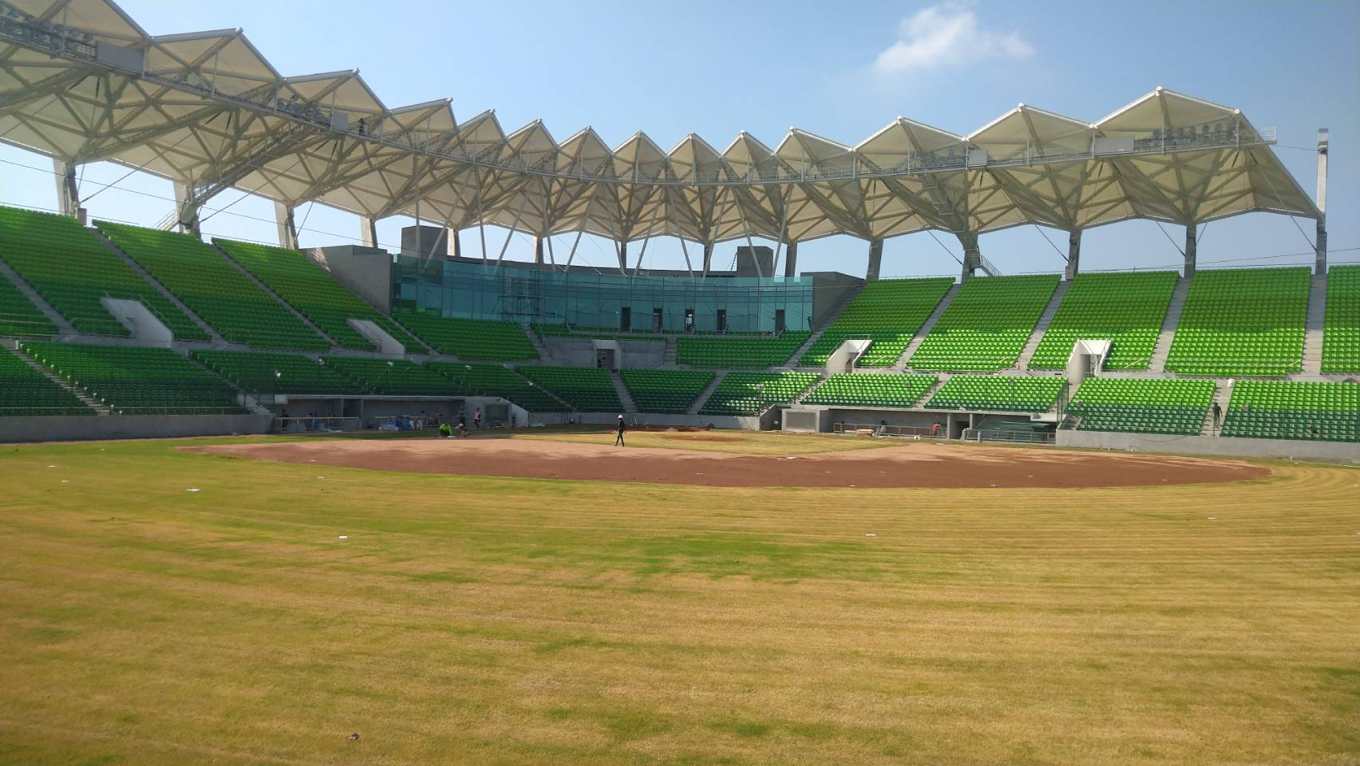
First case in Taiwan, China, of the insect being found outside a corn field
Zou Huijuan explained that this case is the first confirmed one outside a field area. According to foreign literature, the Bermuda grass in this case belongs to the Poaceae family, and plants in the Poaceae family are the fall armyworm's main food source. Field crops including corn, rice and sorghum, as well as non-crop poaceous plants, are all potentially at risk. This time it occurred in the lawn of a baseball training center, and the damage density across the overall area is very low.
In addition, the baseball training center is supervised by the Tainan City Government and the Ministry of Education. Farmland is inspected and reported once every 2 weeks, while non-farmland is inspected at irregular intervals by the respective governing agencies. After a sighting is reported, the district's agricultural research and extension station conducts an on-site survey and provides technical guidance on prevention and control. This is a non-farmland case, and the Tainan City Government will subsequently strengthen inspections and decide, based on the epidemic situation, whether continuous prevention and control is necessary.
Poaceae grasses are common on campus and courtyard turf; please report any traces of the insect and do not use pesticides on your own
Zou Huijuan said that the current epidemic situation in non-field areas consists of only this one case. The Bureau of Animal and Plant Health Inspection and Quarantine will continue to accelerate trials of biological control including natural enemies, the current evaluation of pesticide efficacy, and the development of other integrated control techniques such as cultural control. The response team will continue to take stock of the current control situation, which will be included in the future as reference for the third-stage farmer self-management measures.
Besides Bermuda grass, traces of fall armyworm may appear on other poaceous plants in major cities such as Taipei, especially on common turf plants such as Taipei grass and centipedegrass, which also belong to the Poaceae family. When suspected traces of fall armyworm are found in parks, communities, home vegetable gardens or courtyards, if the area is not large, consider removing the egg masses by hand; if the area is too large, you can directly report it to the local agriculture bureau for handling. Because the third stage has not yet been reached and no control methods other than pesticides have been announced, please do not use control pesticides on your own in non-farmland areas.
Boundaries between jurisdictions, residential courtyards and other places easily become blind spots in epidemic prevention
Yan Shenghong, associate professor in the Department of Biological Sciences at National Sun Yat-sen University, once mentioned that many tracts of land at the boundaries between jurisdictions have unclear boundaries, leading to unclear responsibility and no one managing them. In addition, residential courtyards, school gardens and vegetable plots in urban areas often lack care or have insufficient self-management, making it difficult for prevention and control information to reach them and creating potential gaps in epidemic prevention.
Zou Huijuan explained that inter-ministerial discussions have been held regarding the gaps in epidemic prevention. In this regard, if the public finds suspected traces of fall armyworm, they can directly report it to the Bureau of Animal and Plant Health Inspection and Quarantine or call the citizen hotline. Inter-ministerial division of labor has also been arranged, and each governed area has its corresponding unit to report to. This case, for example, is the result of inter-ministerial division of labor in preventing and controlling the fall armyworm.