Rural part-time job matching websites are on the rise in Japan, with remote part-time work helping people move to the countryside
In January of last year (2018), Japan's Ministry of Health, Labour and Welfare revised its guidelines on "promoting side jobs" (Guidelines on the Promotion of Side Jobs and Concurrent Employment), prompting major companies that had previously banned side jobs to begin lifting the ban, including Nissan Motor and Shinsei Bank. In the same year, according to a survey by Recruit Works Institute, among the working population with full-time status,33.5%, or more than one-third, were willing to take on side jobs. Against this background,2018was hailed as Japan's "first year of concurrent employment."
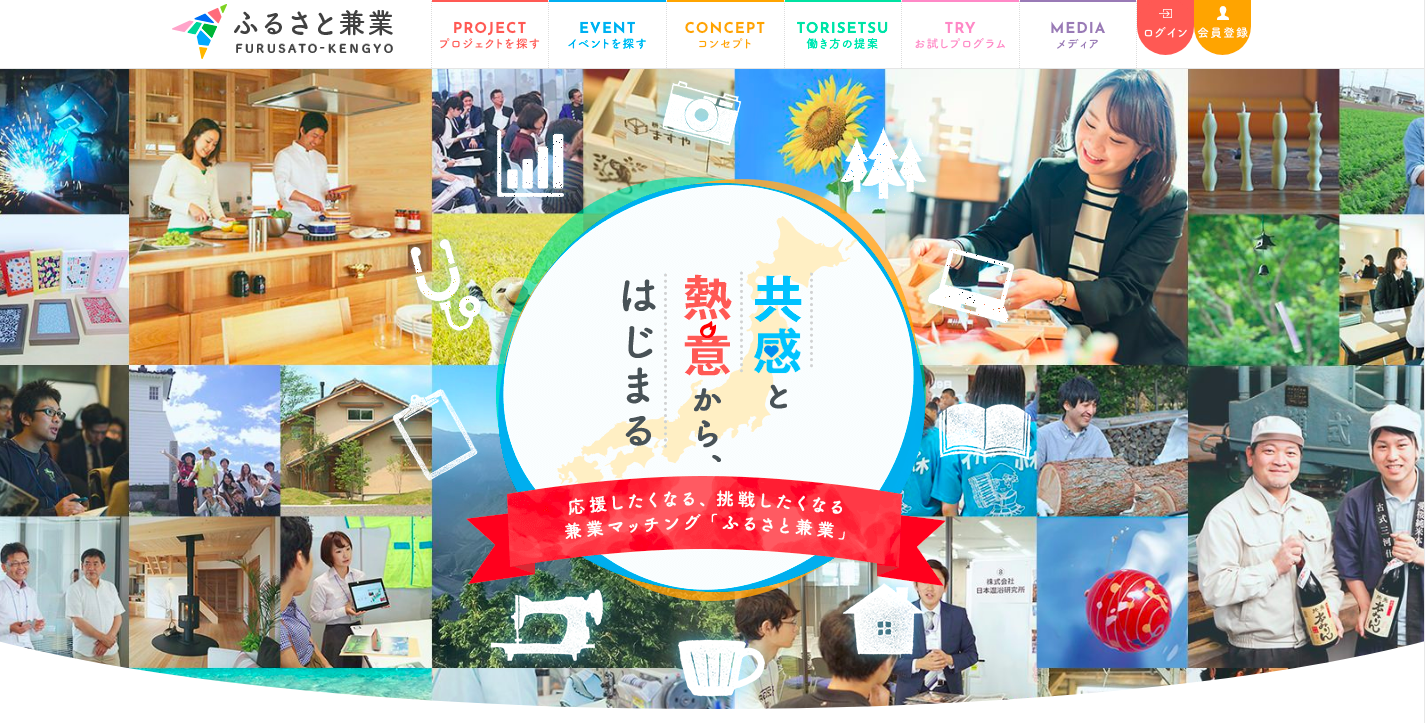
Amid this wave of deregulation, many part-time job matching websites sprang up like bamboo shoots after rain. Among them, several emerging websites differ from ordinary job-hunting sites by focusing on contributing to local regions, allowing people to work in the city while also working remotely part-time using their own expertise, becoming "related population"[Note1]。
Notes
[Note1] Related population: refers to the "third type of population" in local regions that is "more than sightseeing, less than migration." These people are not merely tourists making one-off visits to a region, but "fans of a certain place" who are interested in, passionate about, or even enamored with a certain region. Some may be considering the possibility of moving there, while others may be unable to do so due to the conditions of their current lives.
[Note2] Hometown tax: promoted by Japan's Ministry of Internal Affairs and Communications, implemented in2008. Its content is: allowing people working in cities to donate to local governments through this system and enjoy tax deductions and receive local gifts, in order to revitalize local economies. The founding concept is: as local cities see population decline and tax revenues become increasingly difficult, this system attracts people who live in large cities after finding employment to "give back to the hometown that raised them" part of the taxes they pay.