Will eating black nightshade cause poisoning? Cooked, it can be eaten safely; raw, no more than 5 grams per day
The Food and Drug Administration of the Ministry of Health and Welfare held a press conference today (the 3rd), calling on the public not to eat wild roadside weeds at will, specifically naming poisoning cases involving four plants: chinaberry leaves, American pokeweed, Taiwan coriaria, and black nightshade, and urging the public to avoid accidentally eating them. But "black nightshade" is a common edible wild vegetable in rural areas, and is an indispensable ingredient in Amis life. The news caused an uproar as soon as it came out.
In addition, according to information published by the Ministry of Health and Welfare on its website in the "Consolidated List of Raw Materials Available for Food Use," "chinaberry bark" is marked as "edible," but chinaberry leaves are named as not edible. After the press conference, a "Upstream and Downstream" reporter interviewed Yang Chen-chang, director of the Division of Clinical Toxicology and Occupational Medicine in the Department of Internal Medicine at Taipei Veterans General Hospital, who attended the press conference today as an expert scholar, as well as Ministry of Health and Welfare officials, to clarify the truth.
Chinaberry bark can be used as Chinese medicine, with a dosage limit
Yang Chen-chang, director of the Division of Clinical Toxicology and Occupational Medicine in the Department of Internal Medicine at Taipei Veterans General Hospital, said that so-called poisoning has two key factors: the first is the dosage consumed, and the second is the method of consumption.
Taking the chinaberry mentioned by the Food and Drug Administration as an example, the entire chinaberry plant is inedible, including its flowers, fruit, seeds, and bark, all of which are toxic. However, the bark is a Chinese medicinal material. In fact, many medicines that people take every day when sick have mild side effects or toxicity, but the human body will metabolize them. Unless a dose exceeding what the body can handle is consumed at one time, the toxicity will not take effect. Taking chinaberry bark as an example, an adult would need to eat at least more than 400 grams a day to have a poisoning problem. The intake of medicinal materials in Chinese medicine is within a safe range.
Liao Chia-ting, section chief of the Food and Drug Administration of the Ministry of Health and Welfare, said that chinaberry is a relatively special example, and discussions are currently being held with Chinese medicine practitioners, considering directly marking it on the website as "inedible."
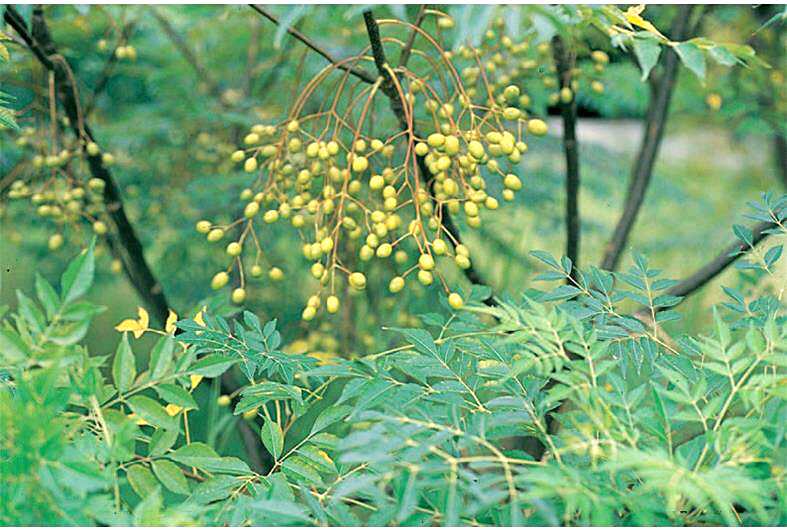
Plant identification ability is very important; water hyssop can be eaten safely
Yang added that plant identification ability is very important. Because commercially sold water hyssop looks similar to black nightshade, people in the wild may mistakenly eat black nightshade as water hyssop. Therefore, if one is unsure or not fully certain, it is best not to eat it raw at will.
Yang once again urged that when eating wild weeds and wild vegetables, the public should first verify or consult experts and only eat them after ensuring safety. If there are any doubts, it is best to avoid eating them to stay safe. In addition, when eating wild weeds and wild vegetables, there will be differences among plants and among people. Plants growing in different environments contain different nutrients and elements in their bodies, and each person's metabolic and digestive capacity and speed are different. If one already has a sensitive constitution, it is still best to be careful when eating.