Tea Region Shrinks, Yet Over Five Thousand Entries in the Dong Ding Tea Competition: Where Does the Tea Come From?
(Continued from previous article) A booming industry amid a shrinking tea region, this is a great oddity of the Lugu Dong Ding tea area.
In recent years, entries in the Dong Ding competition tea have still numbered over five thousand, the highest in the country. So where do all these "Dong Ding teas" come from?
In fact, everyone knows the truth: entries in the Dong Ding competition tea come from Alishan in Chiayi, and also from Zhushan and Shanlinxi in Nantou, and many are from tea merchants who buy high-mountain tea leaves from various places and bring them back to process and roast themselves for the competition.
As long as a regional specialty tea is popular in the market, its production area tends to expand outward, just like Alishan high-mountain tea, which now broadly refers to tea produced in the greater Alishan Township tea region.
Outsider Tea Blended In to Expand the Competition: Does the Lugu Tea Countryside Rely on the Competition to Keep Up the Tea's Image?
The original purpose of competition tea was to elevate Taiwan's tea-making skills and promote sales of regional specialty teas. Nowadays, through entering competitions, as long as one places, the price immediately multiplies several times over, which attracts heroes from all sides, as well as opportunists. In 2017, award-winning competition tea was once found to have come from as far away as Vietnam.
This problem does not occur only in Dong Ding. A tea farmer surnamed Liao in the Wenshan area told me that locally, many people blend low-cost overseas tea with Taiwan tea to deceive competition judges, and where profit beckons, it is impossible to guard against. According to regulations, competition tea entries must undergo pesticide testing, but analysis of the place of origin can only be carried out if someone reports it.
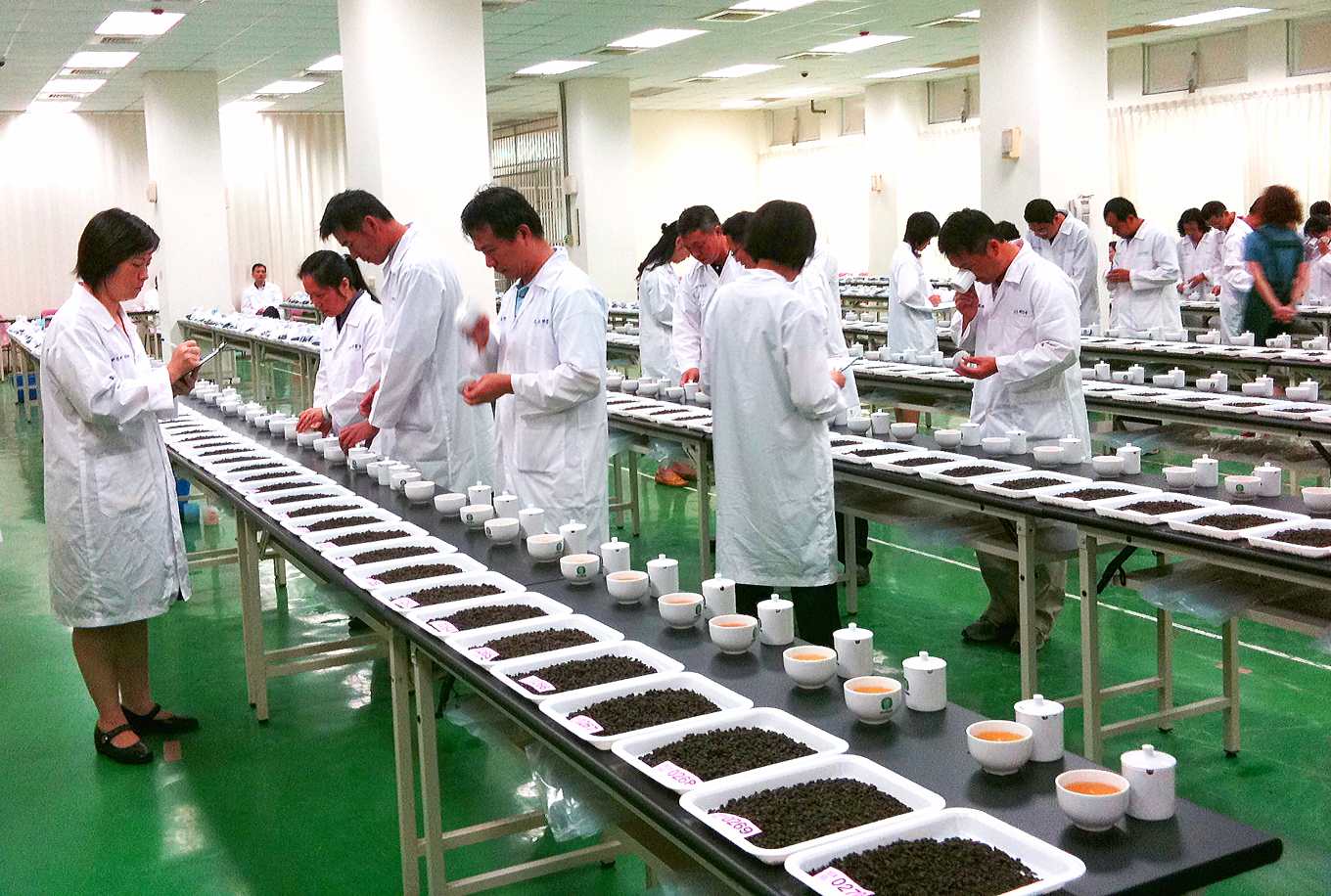
Since it was first held in 1976, the scale and prices of the Dong Ding Oolong tea competition have repeatedly hit new highs, and the 2018 winter tea competition reached 6,777 entries, setting a historical record. With an elimination rate as high as 46.3%, the fierce competition makes it Taiwan's most exciting tea industry carnival.
"This event has already surpassed the scale of the industry itself. The Lugu tea countryside is currently being propped up by the competition. If this largest-scale competition tea in all of Taiwan collapses, Taiwan's tea industry could collapse with it!" Relevant insiders issued this warning.
Facing a crossroads of transformation, how can origin tea hold its ground?
Dong Ding tea involves complex procedures and high technical skill. Now, facing changes in market tastes, it wants to achieve the same quality as high-mountain tea, but after cultivation and production costs rise, the market selling price cannot climb to match, creating the awkward situation of quality and price being neither high nor low.
While reviewing the rise and fall of Dong Ding tea, we also taste a pot of old tea that Lin Xianzheng stored thirty-one years ago. This was when Dong Ding tea faced a sales slump, and dealers wanted to buy it at one-third of the price, but Lin Xianzheng's grandmother insisted on not selling it cheaply, so it was preserved.
Savoring this tea carefully, it gives off a faint plum fragrance and sun-dried flavor, with a restrained aroma. Although its appearance is not especially outstanding, it has a lingering charm that makes one ponder. "If it had not been fully fermented and roasted back then, and if the tea's substance had not been sufficient, I'm afraid it could not have transformed so well," said Lin Xianzheng. As long as tea is made "by the book," time is your most powerful guarantor!
Dong Ding tea was once the pride of Taiwan. If the tea region continues to shrink, and if the traditional method cannot be retained, will there come a day when we can no longer drink true Dong Ding Oolong tea? (End of article)