Dong Ding Oolong Tea Loses Out to High Mountain Tea and Falls Out of Favor, The Disappearing Tea Mountains 01
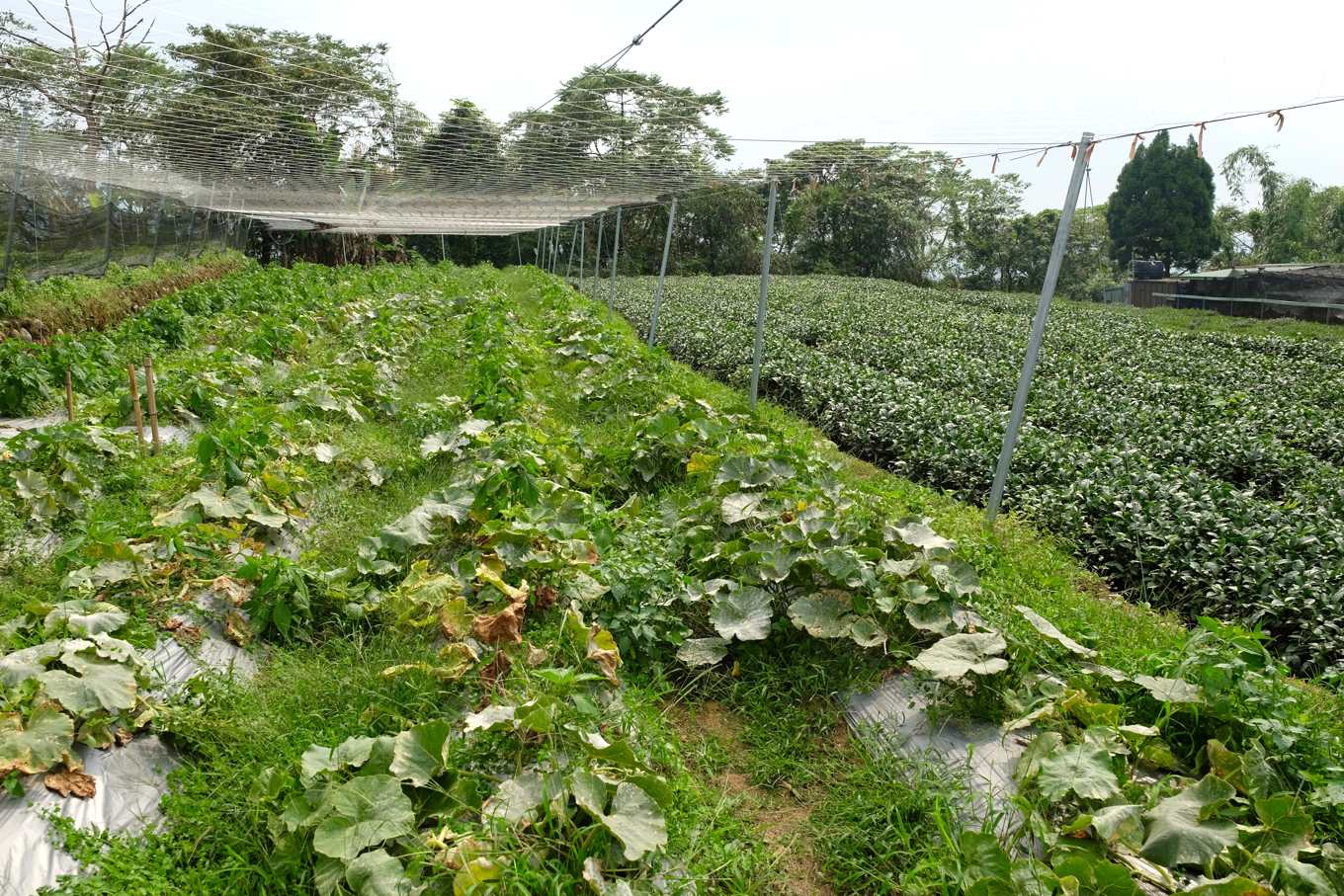
Arriving at Fenghuang Village in Lugu Township, Nantou, a stretch of green covers the hillside. I had expected to see the beautiful scenery of a tea mountain, but on closer look I realized that the lighter-colored plots were actually newly planted vegetable gardens. The once-famous Dong Ding Oolong tea plantations are gradually disappearing!
During the peak period of Dong Ding tea in the 1980s, during the spring and winter tea seasons, tea dealers scrambling for tea packed the tea region. At that time, the wholesale price of one jin of tea was already around 1,600 yuan, and the largest competition tea event in Taiwan pushed Dong Ding Oolong tea to the peak of fame and fortune.
Now, however, the planted area in the tea region has undergone considerable change. "Look, the nearby fields are either abandoned and overgrown with grass, or have all been converted to growing vegetables." Young tea farmer Chen Jiahong pointed at the vegetable field before him and said ruefully. Looking around, indeed there were green beans, zucchini, cucumbers, loofah, ginger, tomatoes, and so on, with quite a few bean trellises and net houses as well.
Although information on the Agriculture and Food Agency website shows that the tea region area still exceeds one thousand hectares, according to an actual survey by the local township office, the current planted area in the Lugu tea region is actually only 675.5 hectares, having sharply dropped from 1,984 hectares in 1999 to just one third of that. The planted area on Dong Ding Mountain has even halved from the previous 40 hectares.
An old tea farmer told me that very few people in the Dong Ding tea region now truly grow tea. Roughly speaking, the fields of Lugu Township can now be divided into four equal parts: growing tea, growing vegetables, growing betel nut, or otherwise being left abandoned.
Dong Ding Oolong tea-making skill is intricate, with no new blood to carry it on
In addition to the aging of the tea region, the intricate production method of Dong Ding Oolong tea, which relies on manual labor and experience to control key quality, is also one of the reasons it is difficult to pass on.
Lugu tea maker Chen Yaozhuo, now sixty-eight years old, is lean and agile in build, with smooth, ruddy cheeks. He said he has lived through an era with no mechanical assistance at all, when tea was rolled by hand and kneaded with feet, all the way to the modern era when machines lend their power and large-scale mass production arrived, and he has witnessed the whole history of Dong Ding tea's rise and fall.
Among the six major tea categories, oolong tea, with Tieguanyin and Dong Ding Oolong tea having the most labor-intensive production methods. The traditional method requires a two-day, one-night production process, and in the steps it places great emphasis on solar withering and stirring. "Sunlight opens the stomata of the fresh leaves, so the tea will be fragrant; if withering and stirring are done sufficiently, the flavor will also be rich and sweet with a lingering aftertaste." Lin Xianzheng, seventh-generation inheritor of Lao Lin Ji Tea Shop, recalled making tea around the clock as a child, and several times stirring until he fell asleep.
Dong Ding Oolong values solar withering and stirring, and great effort is devoted to the number and intensity of stirrings. When making tea, one observes whether the tea leaves are "soft-fleshed" and then decides how to handle each step. Besides visual observation, one must also listen to the sound of the tea leaves rubbing together: "make tea by looking at the tea." Good tea absolutely cannot be made by merely following an SOP by the book.
Compared with green tea and black tea, which can hand most of the production process over to machines, Dong Ding Oolong tea cannot be fully mechanized, and the old masters' hand skills remain a very important key to making tea. Chen Wanping, a tea farmer from the Xinjiayang tribe in Lishan, said her father, precisely because he recognized the good skills of the Lugu masters, specially asked them every year during tea season to come up the mountain and help make tea.
"But now many young masters make tea while scrolling on their phones, which makes people shake their heads." An old Lugu tea master said helplessly. Another tea farmer said that today's young masters rely too much on machines and their tea-making skills are not solid enough, which is also an inheritance crisis that urgently needs to be faced now.
Traditional "Dong Ding flavor" declines, the lower the fermentation level the more popular
In a research paper by Academia Sinica scholar Yu Shunde, it was once pointed out that in the 1970s Dong Ding tea consistently adhered to a traditional fermentation level of more than 40%, while today only about 20% or less remains, with the fermentation level retreating step by step. Although this is greatly related to the popularity of high mountain tea leading to the greening of Taiwanese tea and the change of heart in the consumer market (some also blame the chief judges of competition teas for driving the trend).
The Lugu tea region has three major competition teas each in spring and winter. In addition to the farmers' association event with the largest competition scale, the cooperative and the community also come out at the same time to rival it, forming three steel arenas for tea in the Dong Ding tea region. The judges and standards of the three events differ slightly, among which Yonglong Community emphasizes adhering to traditional flavor, but Chen Yaozhuo said that in fact only older masters like this traditional Dong Ding production method. "With high mountain tea aroma dominating, the judges will still choose to eliminate traditional Dong Ding, because they consider it to have 'mixed flavors' (not fragrant enough), saying young people today do not like to drink it."
A tea merchant selling tea in Taichung also confirmed this market phenomenon. "Some customers who have taken Teacher Chen Huantang's classes all declare first when they come to the shop, 'We don't want tea with too light a fermentation level!' But after tasting the tea, the one they order is always the one with the greener tea liquor color."
Taiwan tea pushing toward higher altitudes
Drinking tea is a subjective matter of taste, and "fond of the new and tired of the old" seems hardly unusual. Taking Ren'ai Township, one of the star high mountain tea regions, as an example, old tea regions such as Lushan, Wushe, and Gaofeng now have few people inquiring about them, but new tea regions climbing ever higher, such as Cuifeng, Cuiluan, Huagang, and Lixing, are now in high spirits.
As Dong Ding tea fields gradually decrease, many tea farmers have also turned to Dalun Mountain or to Shanlinxi (Yangzaiwan, Longfengxia) near Zhushan Township to develop new tea fields. Therefore, Chen Fangxuan, director of the Lugu Township Farmers' Association, said that although the tea fields on Dong Ding Mountain have been converted to vegetable fields, the actual tea garden area of the Dong Ding tea region has not decreased, it has only developed toward the high mountains. (Article not finished, please continue reading)