Black stem rot is a serious threat to succulents; here's how to prevent it
Once black stem rot strikes succulents, they die too quickly, and it is extremely difficult to treat, so let's look at how to prevent black stem rot in succulents.
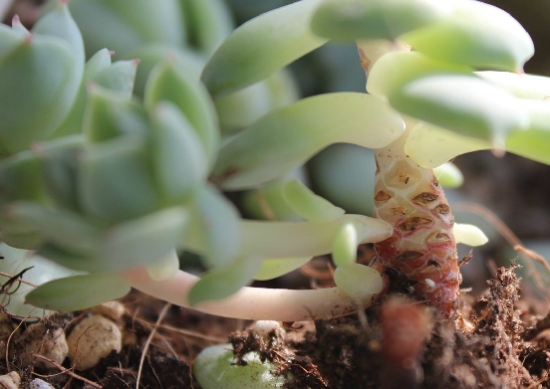
How to prevent black stem rot in succulents
1. Choose easy-to-grow succulents
Choosing succulents with strong vitality to grow is the best way to prevent black stem rot. Common varieties like Pachyveria 'Clavifolia' (winter beauty) basically thrive with hardly any care. And succulents like Haworthia (twelve) that almost never attract pests are also popular with many people. Of course, this is not to say you must choose your succulents this way; as long as you are prepared to lose it, buying even the most delicate succulent is fine.
2. Choose soil with good aeration and water control
The general mixed succulent soil on the market claims to have a high proportion of grit, but in reality cutting corners is everywhere, since after all, keeping costs down is the source of profit when the goal is making money. Ordinary mixed succulent soil not only has high soil density, but absorbed water is slow to evaporate; over time it compacts, water cannot penetrate when watering, bacteria and pests breed easily, and as more time passes the roots are suffocated. Combined with bad weather, succulents will die off in large numbers just because of this kind of soil. Black stem rot occurs very easily in dense soil: the roots are suffocated and rot, causing wounds from turning to mush, and pathogens take the opportunity to invade, leading to black stem rot. Therefore, people who have grown succulents for a long time will find that when using a high proportion of grit, or even pure grit, as long as care and weather are normal, the death rate of succulents drops a great deal. This is because grit, especially 6-12mm grit, has relatively large gaps between particles, providing ample air circulation and draining excess water. The most effective grit is akadama soil, and the most economical is volcanic rock. The more grit in the soil, the better it avoids the factors that cause black stem rot.
3. Always place drainage material at the bottom of the pot
We generally choose Leca (expanded clay pebbles) or cobblestones for the bottom layer, which can effectively drain excess water, increase the air circulation space and moisture evaporation space inside the pot, and prevent black stem rot from occurring under conditions such as high temperature and high humidity. Without drainage material, the chances of black stem rot occurring are much greater.
4. Try not to use top dressing, or use grit as top dressing