Halting the bleeding: justice for farmland! The "Factory Management Assistance Act" passes its third reading with a newly added sunset clause; illegal factories on farmland that fail to obtain registration within 20 years must exit
The draft amendment to certain articles of the "Factory Management Assistance Act", which governs the registration and management of factories on farmland, was finally passed by the Legislative Yuan today (the 27th), confirming the establishment of a "sunset clause". Illegal factories established before May 20, 2016 (105th year of the Republic of China calendar) must complete the procedures for registration and management, improvement, payment of assistance fees, registration, and land rezoning within 20 years; if they cannot complete these, the factories may not continue operating. Illegal factories newly added after May 20, 2016 (105th year of the Republic of China calendar) must be forcibly demolished. In response to the past predicament of local governments failing to act and the central government having no legal means to intervene, the amendment to the "Factory Management Assistance Act" also grants the central government the power to cut off water and electricity or demolish structures in accordance with the law.
Article 28-5 of the newly amended draft of the "Factory Management Assistance Act" stipulates that illegal factories on farmland with low-to-medium pollution shall apply for registration and management within 2 years after the amendment, and shall submit an improvement plan within 3 years. After applying for registration and management, they must pay an annual registration and management assistance fee each year until registration is obtained, and must obtain a specific factory registration within 10 years, and complete all legal procedures within 20 years. As for medium-to-high pollution factories, the government shall assist in transformation, relocation, or closure, and those that refuse to cooperate shall have their power and water supply cut off and be demolished in accordance with the law.
Regarding this outcome, Attorney Kuo Hung-yi, director of the Environmental Jurists Association, said, "Although not satisfied, having something is better than having nothing," because Article 28-10 of the law stipulates that illegal factories "in principle may be legalized on-site, and only in exceptional cases (medium-to-high pollution factories) must they relocate." The determination of what constitutes a "medium-to-high pollution factory" will become the next decisive battleground in defending farmland.
DPP Legislator Tsai Pei-hui: Drawing this line is not easy, but this historical legacy cannot be left unaddressed
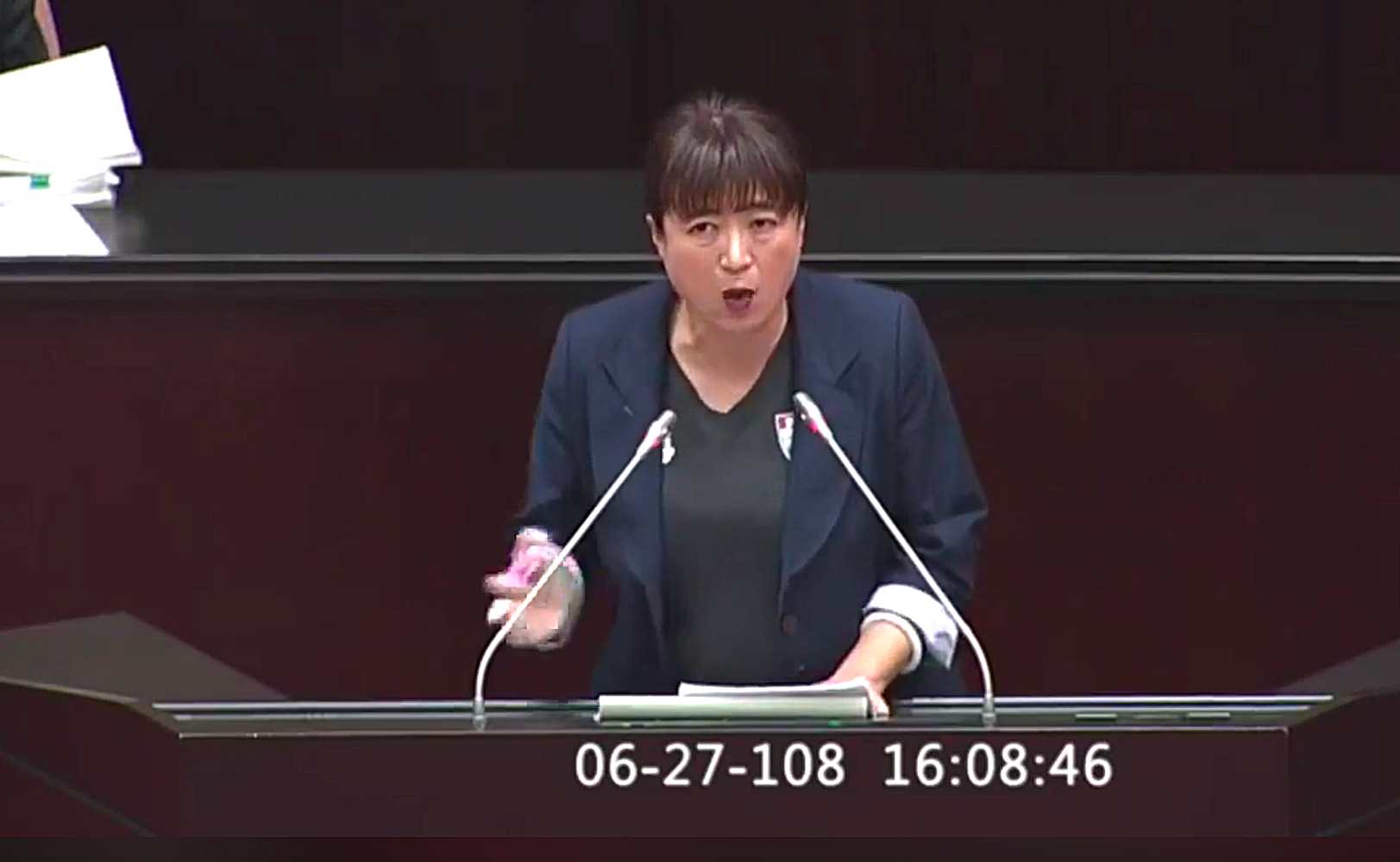
Democratic Progressive Party Legislator Tsai Pei-hui stated that if illegal factories on farmland are not dealt with, wastewater and air pollution will continue to contaminate farmland - can we really leave them unaddressed? This is a historical legacy. The amendment to the Factory Management Assistance Act provides three knives: first, medium-to-high pollution factories will be relocated or shut down; if local authorities fail to act, the central government can cut off water and electricity. Low-pollution operators must properly handle industrial safety, environmental safety, and other issues, and only by meeting the standards can they obtain a specific factory registration certificate; 10 years after obtaining the registration certificate can they truly become legal.
Tsai stated that the current situation is not just industry versus agriculture, but also "industry versus industry," meaning that legal manufacturers must pay high costs to operate, while illegal factories can operate at low cost due to their illegal status, creating unfair competition within industry. Tsai Pei-hui said, "This law is not simple; drawing this line is not easy."
"Citizen lawsuits" not included; environmental groups: existing reporting mechanism is virtually useless
Wu Hui-chun, executive secretary of the Changhua Environmental Protection Union, pointed out that since 2017, the Changhua Environmental Protection Union and civic groups have reported 29 cases of newly built illegal factories on farmland. We have repeatedly sent official letters demanding that the policy of "report and demolish immediately" be truly enforced, but due to local governments' dereliction of duty and indulgence, not a single one has been demolished. During this period, we have continued to receive complaints from citizens about newly built illegal factories on farmland, and 9 more cases have been added to date. Precisely because government agencies are negligent in enforcement, illegal factory operators, seeing that government agencies do not act, build without restraint and fill every available space.
Civic groups have repeatedly demanded that the "Factory Management Assistance Act" include "citizen lawsuits," allowing residents and civic groups near illegal factories to seek judicial relief and require local governments to actively enforce the law. Deputy Minister of Economic Affairs Wang Mei-hua believes that a reporting mechanism already exists and that there is no need to add "citizen lawsuits," but environmental groups say the current reporting mechanism is fundamentally useless and express strong regret that "citizen lawsuits" were not included.