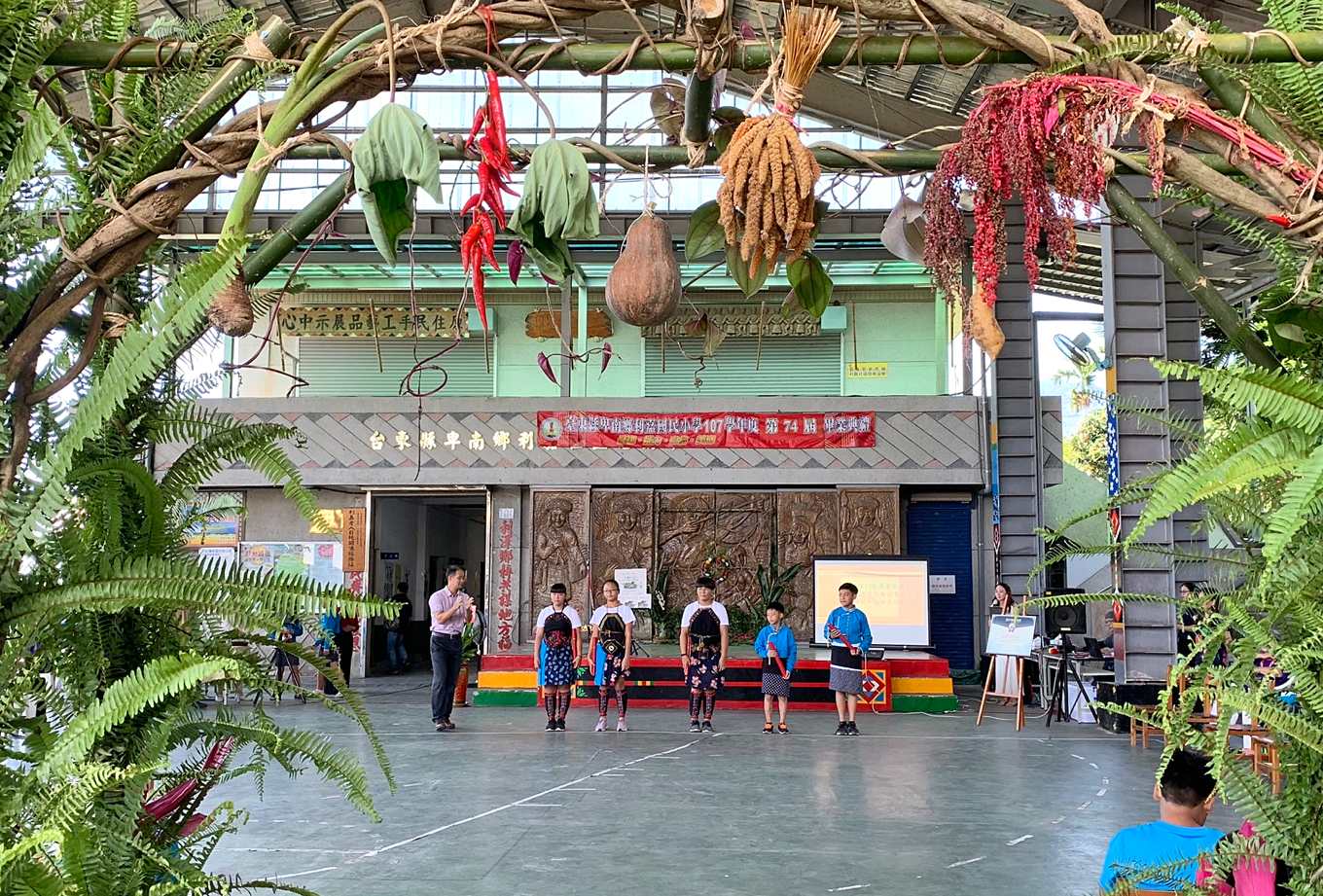
The itch-inducing and diuretic plants are the vegetables of Likavung children
A corner of the tribe: beside the slope of the activity center, among several betel nut trees standing at attention, a decorative fence is visible -- today it might be a "dreamcatcher" or a "flower wreath," and two days later it might be a "spider with a human face." The adults first sketch out the shape and framework of the design, changing materials with the seasons; the children use their ingenuity to fill in the greenery and red flowers -- the school, separated by a natural-style fence, looks out across layers upon layers of the industrial road, homes, and activity center.
In mid-June, when the sun blazes like fire, the graduation song rings out at the activity center beside the natural-style fence. Five graduates of Taidong Beinan Lijia Elementary School pass through a plant archway built and decorated with taro leaves, millet, red quinoa, cucumbers, and other vegetables, vines, and trees, symbolizing their step into a new stage of life. The stage backdrop is decorated with pineapple, shell ginger fruit, sword fern, yam, and more -- these plant friends accompany the children present day and night in the fields, forest paths, vegetable gardens, campus, and on the tribal dining table. And the life wisdom they have passed down through their close connection with the children's ancestors, from the mountains and countryside, handed down generation after generation, has been collected into the book "You Are My Vegetable: Likavung Life Plants."