How to grow succulents? A detailed guide to classification and care precautions
Succulents have captivated many people with their natural cuteness, and many flower lovers simply cannot stop collecting them, so adjectives like “naturally dorky”, “pollution-free” and “healing” are commonly used to describe succulents. Today I will introduce the types of succulents and how to grow them.
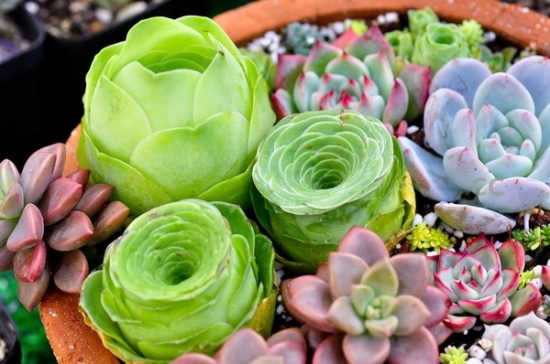
According to the different parts of the succulent plant where water-storage tissue is found, succulents are divided into three major types:
1. Leaf succulents:
The leaves are highly fleshy, while the stems are less fleshy, and the stems of some species are woody to a certain degree. Examples include species in the Aizoaceae, Crassulaceae, Liliaceae and Agavaceae.
2. Stem succulents:
The plant's water-storage tissue is mainly distributed in the stem; some species have segmented stems with ribs and tubercles, and a few species have slightly fleshy leaves, but these usually fall off early. Representative examples are succulents in the Euphorbiaceae and Asclepiadaceae.
3. Caudiciform succulents:
The fleshy part of the plant is concentrated at the base of the stem, and this part is especially swollen. The shape of the swollen stem base varies by species, but it is mainly spherical or nearly spherical, sometimes half buried in the ground, with no segments, ribs or tubercles. They may have leaves or the leaves fall early; the leaves grow directly from the top of the swollen stem base or from slender branches that suddenly taper and are almost non-fleshy, and sometimes these slender branches also fall early. Representative examples are succulents in the Dioscoreaceae, Cucurbitaceae and Passifloraceae.