The Complete Guide to the Flower Language and Symbolic Meanings of the Peony
The peony is a famous traditional Chinese flower. It is elegant and charming, noble and luxurious, combining the beauty of color, fragrance, and grace, and it captivates people. Throughout history, many poets have written poems praising it. For example, a Tang poem praises it: “Its fine name is called the King of a Hundred Flowers.” And in the Song ci “On the Love of the Lotus,” it is written: “The peony is the rich and noble one among flowers”; this famous line has been passed down through the ages. “King of a Hundred Flowers” and “Flower of Wealth and Honor” thus also became alternate names praising the peony.
People of the Tang Dynasty loved peonies even more. During the peony blooming season, they once held a grand peony festival, and the people of Chang'an came out in full force, as if drunk and crazed. The imperial palace also valued peonies greatly. The poet Li Zhengfeng praised it as “national beauty” and “heavenly fragrance,” and the Tang emperor admired this greatly. “National beauty and heavenly fragrance” thus became another elegant name for the peony. With its distinctive richness, nobility, and luxuriance, the peony has been regarded in traditional Chinese consciousness as a symbol of prosperity, happiness, and peace.
Peony flowers are large and gorgeous, and have always been regarded by people as a symbol of wealth and prosperity. Legend has it that China's first empress, Wu Zetian, spoke drunkenly after drinking and ordered all flowers to bloom together in the depths of winter. The other flowers did not dare disobey, but only the peony defied the decree and did not bloom, showing its steadfast integrity. In a rage, Wu Zetian banished the peony to Luoyang. Because of this, however, the peony won even more people's love and admiration. To this day, the peonies of Luoyang are still extremely famous. Peonies come in rich colors, and their implied meanings differ:
The peony is a precious flower unique to our country. It is noble and luxurious, rich and dignified, and richly fragrant. It has long been known as the “national beauty and heavenly fragrance” and is praised as a symbol of wealth, auspiciousness, and prosperity.
The flower language of the peony: completeness, deep affection, wealth and honor.
Peony: completeness, deep affection, wealth and honor, noble and luxurious, life, expectation, faint love.
Red peony: a red flower with broad, generous petals, called the king of a hundred flowers; its flower language is “wealth and honor, completeness,” and its attribute is fire. Another flower language: I will cherish your love.
Purple peony: a peony with purple petals; its flower language is ‘embarrassment,’ and its attribute is dark.
White peony: noble and pure, dignified and elegant, with myriad charms, national beauty and heavenly fragrance, a person who keeps their word. Flower language: cherish yourself.
Green peony: life, expectation, faint love, giving with all your heart.
Black peony: love even in death In fact, there is no purely black peony in the peony family; people customarily call deep red and deep purple peonies black peonies.
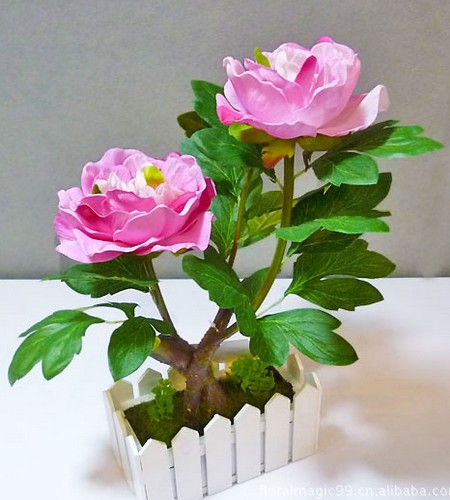
Pink peony: noble and luxurious, magnificent. Flower language: believe in me!
Yellow peony: supreme, self-exalted above all.