What is the flower language and symbolic meaning of the lingzhi mushroom?
Lingzhi, also known as Ruizhi or Ruicao, is a legendary immortal substance. In ancient legend, eating it was said to ensure immortality and even entry into the ranks of the immortals. Therefore it is regarded as an auspicious object. For example, a deer holding lingzhi in its mouth represents longevity, and the head of a ruyi scepter is shaped like lingzhi to signify good fortune.
The profound symbolic meaning of lingzhi in China's long history deeply influenced Japan, Southeast Asia and other regions; in particular, lingzhi as a "elixir of immortality," immortal herb and auspicious object was first accepted in Asia.
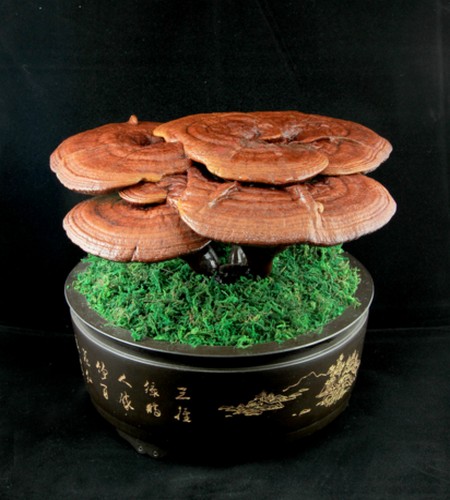
The culture of flower language seems to have originated in the West; behind each meaning lies a strange story, sometimes tender and sorrowful, sometimes full of grievances and joys; flowers are endowed with complex meanings and become a medium through which people express their feelings.
In ancient Chinese culture, "lingzhi" differs from the lingzhi of modern biological concepts; it does not focus on displaying its natural attributes but rather on expressing its social attributes, having been elevated into a symbol of communication between humans and nature, so what is pursued is spiritual likeness rather than physical likeness. Lingzhi is bright in color and graceful in shape, and in legend it is the incarnation of Yaoji. Yaoji was the youngest daughter of the Yan Emperor; she was clever and beautiful, but she died young before she married. The symbolic meaning of lingzhi is that a lingzhi mushroom grew at the place where she died, so people say lingzhi is the incarnation of beauty. Since ancient times, lingzhi has also always been regarded as a precious medicinal material. China's oldest surviving traditional Chinese medicine classic, the Shennong Bencao Jing, records 365 medicines, divided into upper, middle and lower grades. Among the 120 upper-grade medicines, lingzhi ranks above ginseng as a supreme medicine and has effects such as "benefiting the heart qi, calming the spirit and soul, tonifying the liver and boosting qi, and preventing aging and extending life." Among the people, lingzhi is called the deity of "longevity, fortune and emolument, and good luck and happiness."
"Ask the world what love is, that it makes people pledge life and death to each other." That thing called love really is a matter of life and death! Those who do not have it want it, while those who have it worry about gaining and losing it, anxious all day long. But once you truly possess it, it is like an elixir that moistens your heart at every moment and brightens your life!
The flower language of lingzhi is "love." Think about it: compared with that thorny rose, it seems even more fitting!