Differences Between Herbaceous Perennials and Woody Flowering Plants, and Key Points on Their Habits and Care
For friends who love growing flowers and plants, in order to grow your own plants well, you need to understand them in advance, especially their growth habits. People generally grow herbaceous perennials and woody flowering plants, but before you start growing them, have you figured out which ones are herbaceous perennials and which ones are woody flowering plants? What are the differences between herbaceous perennials and woody flowering plants?
Herbaceous perennials mainly refer to flowering plants whose roots and stems in the soil can successfully overwinter, and whose aboveground parts can sprout and grow again the following spring, and may even flower and bear fruit. Woody flowering plants mainly refer to flowering plants whose stems and branches grow relatively robustly, have hard texture, and readily become lignified; trees and shrubs generally belong to the woody flowering plants.
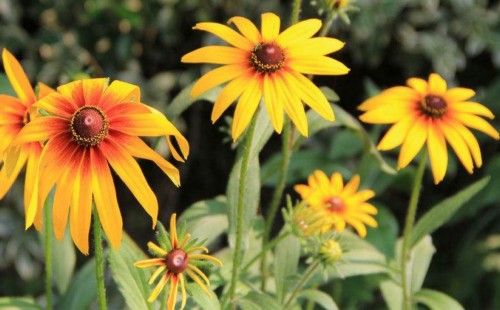
For example, the black-eyed Susan that many friends like to grow is a herbaceous perennial plant. Its flowering period is generally from June to September, and it can be grown both in pots and in the ground. If grown in the ground, it has extremely strong adaptability to the environment; it is not only drought-tolerant but also cold-tolerant, and it is not strict about soil conditions, making it very easy to grow and keep alive. Moreover, black-eyed Susan is very easy to care for and manage. Even if grown in pots, as long as you put in a little care, it is very easy to grow well.
The oxeye daisy is also a herbaceous perennial plant, usually reaching a growth height of 50-60 cm, and some can even reach a height of 1 m. This flowering plant mostly blooms white, very elegant and understated, with a flowering period mostly from May to September. But this plant can be sown early in winter, and when it blooms, it is very beautiful and graceful.
Penstemon is likewise a herbaceous perennial plant, with flowers mostly in mixed colors, and its flowering period is generally from May to June, though some varieties can continue until July. This plant, which opens mixed-color flowers, is quite ornamental because of its rich flower colors, and it slightly prefers a semi-shady growing environment. Its cold tolerance, however, is relatively poor, so whether it is planted in the ground or grown in pots, necessary safeguards must be taken to control the temperature.
And ornamental tree species such as osmanthus belong to the woody flowering plants. Its flower buds mostly begin to swell in early to mid-February, but it is quite sensitive to temperature, likes to grow in a relatively warm environment, and is very lacking in cold tolerance. However, when this woody flowering plant blooms, it can give off a fragrant scent, and besides greening the environment and being ornamental, it also has relatively high medicinal value!