Reasons for enclosed cultivation of succulents and key points for understanding plants
For succulents, enclosed cultivation is also a care method, but not all succulents are suitable for enclosed cultivation, and even for succulent varieties that can be enclosed-cultivated, it is usually only suitable at a certain stage. Even for different succulent varieties, the methods of enclosed cultivation are not the same. So, what are the reasons for enclosed cultivation of succulents?
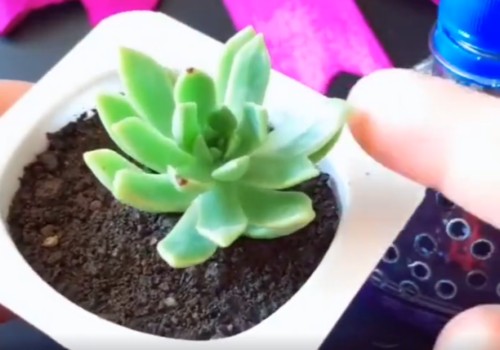
Enclosed cultivation is usually meant to help succulents adapt to the current environment, especially indoor or greenhouse spaces, thereby promoting better plant growth. If enclosed cultivation is done well, not only will the plants grow vigorously, but their ornamental value will also be higher. But if enclosed cultivation is carried out at the wrong time and place, not only will it fail to promote succulent growth, it may even cause root suffocation, root rot, and many other adverse growth conditions.
If the succulent varieties we grow are in relatively good condition and growing vigorously, then under normal circumstances there is no need for enclosed cultivation. But if the succulents we grow are weak and in poor growing condition, sometimes it is necessary to place them in a specific environment for enclosed cultivation to encourage them to grow vigorously. But not all succulents are suitable for enclosed cultivation, and not all succulents that can be enclosed-cultivated will grow well after enclosed cultivation.
First, the succulent varieties we choose are very important. Second, in terms of timing, enclosed cultivation should preferably be carried out in spring and autumn. Third, the enclosed cultivation environment should be relatively clean and sterile. During enclosed cultivation, succulents are often more prone to breeding harmful bacteria, so before carrying out enclosed cultivation we must sterilize and disinfect all materials that may be involved, including the environment, and we must make sure nothing is overlooked. Only in this way can we reduce or avoid the breeding of harmful bacteria or pathogens and provide protection for the healthy growth of succulents.
Some gardening friends think that enclosed cultivation and ventilation are a contradictory pair, but in fact this is not the case. Ventilation is to keep the ambient air fresh and dry, while enclosed cultivation is to create a growing environment for succulents that suits the current conditions. Although we can use it as a care method to manage succulents, it also has certain limitations. We cannot keep succulents in an enclosed cultivation environment all the time, especially in summer, when the vast majority of succulents cannot be enclosed-cultivated, otherwise problems such as root rot are likely to occur.
Moreover, winter and summer are often the seasons when succulents more easily enter a dormant state, so enclosed cultivation is generally not recommended then either, especially for beginner gardening friends, because improper care may cause the plants to die, with the result that the loss outweighs the gain. Not only that, if succulents have just been transplanted into pots or have wounds, they are usually not suitable for enclosed cultivation, otherwise wound infection is likely to occur, because enclosed cultivation is usually carried out in a relatively high-humidity environment.