What is vermiculite? Learn to distinguish plant morphological characteristics
Gardeners who enjoy growing flowers and plants in pots have generally come into contact with or used vermiculite, especially when growing succulents, where vermiculite is used very frequently. So, what is vermiculite? Why is it favored by so many gardeners? Today, the editor will share some knowledge about vermiculite with you.
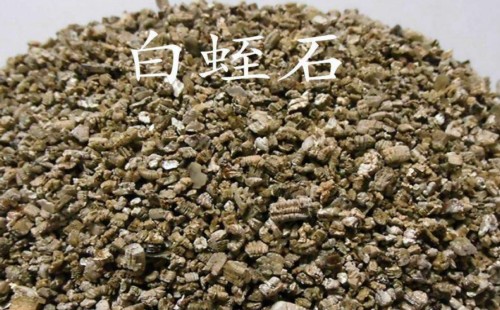
In fact, vermiculite is an inorganic, non-toxic mineral naturally formed under high-temperature conditions, and it is a product that expands due to the effect of high temperature. This is a relatively rare silicate mineral in nature, and its crystal structure presents as a monoclinic system. Although it looks somewhat similar to mica in appearance, it is a completely different substance from mica.
Vermiculite is produced from granite during hydration, and it is generally formed together with asbestos. Because ion exchange occurs during use, it greatly promotes the nutrient elements in the soil. In daily life, the good properties of vermiculite are highly sought after by potting enthusiasts. So, what characteristics does vermiculite have?
Vermiculite has the characteristics of improving soil looseness, enhancing soil air permeability, and also has strong water absorption capacity and little susceptibility to temperature changes, so when mixed with soil, it largely promotes plant growth. At the same time, vermiculite greatly promotes nutrient elements, so when growing plants, the application of nutrients or fertilizers can be reduced. Especially in today's popular soilless cultivation techniques, vermiculite plays a key role and is one of the indispensable raw materials.
Vermiculite is also relatively easy to crush, and it easily expands after fully absorbing water. For potting enthusiasts, it is mainly used for growing succulents. Compared with many other substrates, its advantages are also very obvious: it is not only breathable and water-retentive, but also has very strong water conductivity. Because of these characteristics, it has a very prominent and positive effect in promoting plant root germination and growth.
However, the disadvantages of vermiculite cannot be ignored either, namely that it is easily broken and is not suitable for potting large old-stem succulents. Generally, it works relatively well when used during the sowing and seedling stages of plants. Therefore, for cultivating succulents, vermiculite can play an important role, but for large mature plants and old stems, in terms of promoting growth, it has no obvious advantage compared with many other substrates.
At present, the vermiculite on the market suitable for growing succulents commonly includes two types: white vermiculite and yellow vermiculite. Among them, white vermiculite is very suitable for cultivating small succulent seedlings and promoting them to root quickly. Even without mixing other media into the vermiculite and using it directly on its own, it still has a very good effect.