What happens when a money tree lacks water? Understanding plant habits and care
Whether a potted money tree is used for ornamental purposes, to accent a home environment, to purify indoor air, or even to improve home feng shui, it is often very practical. It is clear that the potted money tree has many uses for household users, so it is also very widely used. Perhaps this is exactly why potted money trees are so popular and sell so well on the market! However, if you want a potted money tree to fully realize its value, care and management work is very important.
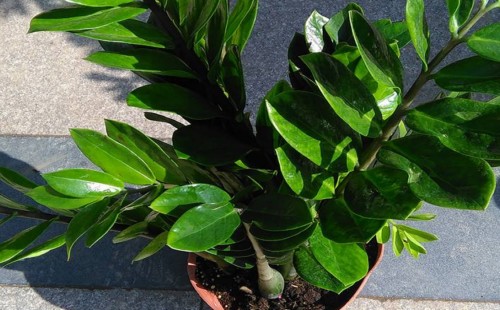
The money tree was originally a plant native to the tropical regions of Africa, so it prefers a warm, high-temperature growing environment. At the same time, it is not hard to see that the money tree also has the characteristic of being drought-tolerant. But the money tree being drought-tolerant does not mean it does not need watering; it simply cannot tolerate water and is afraid of being flooded. Generally, it is more suitable to keep the potting soil environment slightly dry, and only after the potting soil has dried should you water it thoroughly, avoiding giving it half-watering. So, what happens when a money tree lacks water?
The stems and branches of the money tree are round and plump, and its leaves are thick and full, because they store a fair amount of water. Also, the money tree is a plant with underground tubers and fleshy rhizomes. These characteristics are also very similar to those of succulents, and perhaps this is exactly why it is drought-tolerant but not water-tolerant! Generally, during short periods of drought and little water, the money tree will rely on consuming its own moisture to sustain life. However, if the water shortage is severe and lasts too long, the plant will still show signs of poor growth.
When a potted money tree is subjected to drought and water shortage for a long time, because the water and nutrients stored in the plant itself are used up and cannot be replenished in time, the plant will show various signs of poor growth. At first, it may show small, thin, drooping leaves, along with wilting and curling, while the stems and branches will gradually become shriveled, showing obvious signs of dehydration. And if we do not remedy it in time, the plant will next show yellowing and falling stems and leaves, until it eventually dies.
Water shortage in a money tree and overwatering or excessively high humidity can sometimes show the same symptoms of poor growth, mainly reflected through its stems and leaves. But there are also differences between the poor growth symptoms caused by water shortage and those caused by overwatering, so we usually need to pay more attention and observe carefully to determine whether the plant lacks water or has too much water, and only then can we treat the root cause, taking scientific remedial measures while adjusting humidity, to avoid bringing us even greater losses.