What do corn poppy seeds look like? Let us get to know the habits of this plant
The corn poppy (Papaver rhoeas), a flowering plant that combines both understated elegance and delicate beauty, can be considered a fine specimen in the world of flowers and plants. Although the petals of the corn poppy are rather thin and tender, its flower colors are extremely rich and varied, and it is often an excellent flowering plant for beautifying flowerbeds and flower borders in spring. Of course, many people also like to grow it as a potted plant or use it as a cut flower for appreciation. I believe friends who are familiar with this flower all know that it can be seen in many parks in our country.
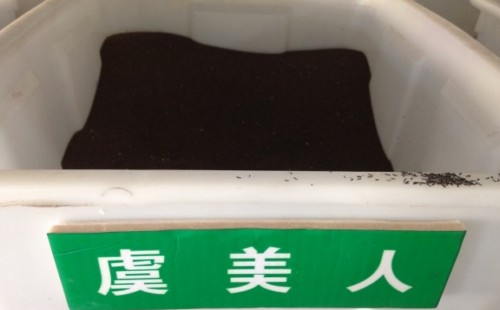
Like many flowering plants, the corn poppy can generally be propagated by sowing seeds. However, corn poppy seeds are rather tiny, often only 1 mm in length, and very inconspicuous, so it is easy to imagine that sowing them must pose a certain challenge. So, what do corn poppy seeds look like? Below, let us join the editor in getting to know the seeds of the corn poppy!
The seeds of the corn poppy are very delicate and tiny, appearing grayish-black. If you set them aside and do not pay attention, you might mistake them for grayish-black impurities! However, if we lean in closer and observe carefully, we find that the seeds of the corn poppy are actually quite plump and full!
Of course, since there are many varieties of the corn poppy, not only do the flower colors differ, but even the color of the seeds shows certain differences. Especially in recent years, many new varieties have been developed, and the differences are quite noticeable. But in general, their color is mostly black or brown. However, when sowing, we need to select plump seeds, because such seeds tend to be of higher quality and have a higher germination rate, though this requires us to carefully identify and screen them.
The corn poppy has relatively strong cold and frost resistance, and its ability to adapt to climatic environments is also stronger than that of many flowering plants. In addition, its seeds are rather tiny and light, and after maturing they easily drift everywhere with the wind, so they spread and reproduce very easily. Therefore, it is widely planted across the vast regions of Northern Europe and is deeply loved by people.
Moreover, the corn poppy produces a huge number of seeds; each plant can bear thousands upon thousands of seeds, and they must be harvested in time when they mature, otherwise they are easily carried by the wind to places far and near. Even so, a large number of seeds still cannot be harvested in time and successfully, and they scatter across the land, and the following year young plants will grow from the soil again.
The corn poppy is mostly propagated by sowing to raise seedlings, and it is very suitable whether grown in the ground or in pots. When sowing, be sure to cover the seeds with a thin layer of soil, because the seeds are indeed too light and are easily blown away by the wind. But at the same time, do not cover them with soil that is too thick, because the seeds are small and lack the vigor to push through; if the soil covering is too thick, it often affects the germination rate, or at least results in uneven growth.