How to grow succulents well? A tutorial on beheading propagation
As people's living standards improve, more and more people like to grow some green plants at home, adding a touch of green to the household and allowing them to enjoy the vitality of plants without leaving home. But now the balcony area of apartment buildings is limited in size, and very large plants take up too much space. Moreover, many office workers are busy all day and rarely have time to care for their beloved plants. Ordinary plants have relatively high light requirements, and the spacing between buildings is generally quite close, so the time during which they receive light each day is very short. This causes many plants to grow poorly due to poor light and poor ventilation. In addition, they have relatively large water needs, and a slight lapse in care can cause death from lack of water. At this point, a type of succulent and fleshy plant known as a “lazy person's plant” came into people's view.
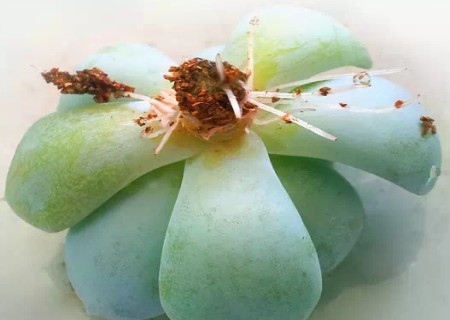
Spring is the season when all things revive, and it is also a golden season for succulent propagation. Everyone knows that succulents can be propagated through sowing, leaf cuttings, root cuttings, beheading, and so on, but many flower enthusiasts do not have a deep understanding of beheading propagation. Below, the editor will sort it out for all flower enthusiasts.
1. What is beheading propagation
Beheading refers to the process of artificially cutting off a plant's growing point. Beheading is a means of succulent propagation. Beheading is also one of the shaping methods for succulents. Through beheading, leggy succulents can be made to sprout side shoots, and succulents that have lost their ornamental value can gain new life. Beheading is even more an important treatment method for succulents. Through beheading, the transmission of pathogens can be blocked and healthy tissue can be saved.
2. The specific steps of beheading
1. For leggy plants that need beheading, first let the leggy plant receive a period of normal light so that the legginess at the growing point is inhibited, and then carry out the beheading. For those that need propagation, the plant should at least have adapted to its pot before beheading, in order to increase the side shoot sprouting rate and survival rate of the base. There are no restrictions for plants being rescued.
2. For beheading due to legginess and beheading for propagation, a certain amount of leaves should be retained on the base to increase the number of side shoots that sprout and their growth. For plants such as those in the genus Aeonium, whose stems are thick and whose leaves only grow in clusters at the growing point, the cut can be made close to the base of the leaves.
3. Except for rescuing plants, beheading should be carried out on sunny days and during the growing season. The resulting wound can be covered with fungicide powder or sulfur powder to avoid secondary infection.
4. For rescue-type beheading, the diseased tissue should be completely separated. Cut away as much as possible toward the healthy tissue. After cutting, the wound should be fully dried before the next step of cuttings.
3. Outline for beheading a single plant