Succulent Watering Tips and Cutting Propagation Methods
As is well known, cutting is an important means of succulent propagation. For hobbyists propagating succulents in a home environment, it is also relatively easy to carry out, and the hardware requirements are not high, so it is widely used by many plant lovers.
What kind of material gives a higher survival rate when used for cuttings? Why is it said that succulents are more likely to root if left to dry for a while? Is it good for succulent cuttings to receive light? Why can succulent leaves placed on a stone slab grow small pups and roots? Why do leaves placed on moist soil surface not only fail to grow roots but instead rot? What temperature is good for cuttings, and is it good to take cuttings in summer? After reading this article, none of the above questions will be a problem. Watch it together with the steady succulent propagation methods, and succulent cuttings will never stump you again.
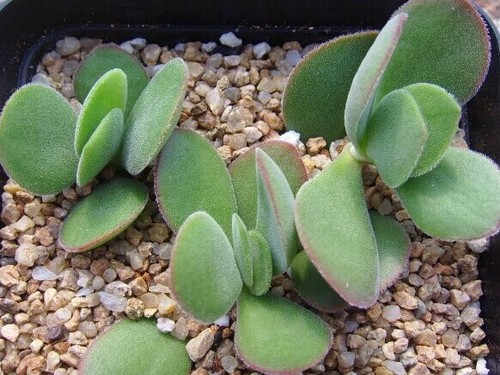
Echeveria pulvinata 'Frosty', also a tough and common variety. Passing by, I like to propagate it by branch cuttings. In spring, summer, and autumn, it can be grown outdoors with no pressure, and water droplets will not collect in the center. In winter, it must be moved indoors.
These two mixed pots of cuttings were taken recently. They include varieties such as Firestorm (Crassula capitella 'Campfire'), Autumn Beauty (Sedum 'Autumn Joy'), Graptopetalum 'Jogeoshi', Qianchuan (Crassula perforata), Echeveria pulvinata 'Frosty', Rainbow Jade (Sedum rubrotinctum), and Deer Antler Begonia (Monilaria moniliformis), accented with golden grass, grown outdoors.
The general process of cutting: First, cut side branches from the old stem, preferably with four or more leaves. Second, place the cut branches in a cool, ventilated place and let them dry for four or five days to let the wounds heal. Third, insert the branches into moist soil medium; those with stems can be inserted directly, while those without stems, such as Sedum japonicum 'Tokyo Sun', should have a small hole dug and be placed head up and tail down, then put the pot in a bright, ventilated place. Fourth, after about a week, begin watering, watering thoroughly. After that, water when the soil is dry, and water thoroughly each time.