How to Trim Roots of Succulents and How to Sow Succulent Seeds
Regarding the method for sowing succulent seeds, many first-time gardening enthusiasts are somewhat unsure. The following steps for sowing succulent seeds are the actual practice of one gardening enthusiast. For the specific process, enthusiasts can make slight adjustments according to their own actual situation; no need to follow it exactly and copy it step by step.
Many beginners think that sowing is a highly technical matter. In fact, sowing is really simple. As long as you do the following three things, germination will definitely be no problem.
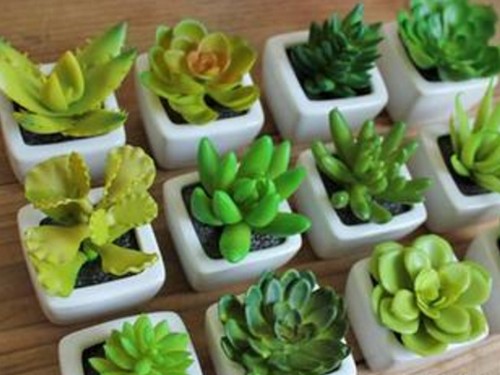
First: suitable temperature (15-30 degrees). Of course, the optimal germination temperature differs for different seeds. Humidity, light, and so on will all affect the germination rate, and this requires gradual study.
Second: the seeds are not fake. There are still many fake seeds, for example, ones that grow into lettuce, and ones that have been deliberately roasted, and so on.
Third: strictly follow the sowing tutorial. Experts may each have their own set of methods, but for beginners, it is still better to strictly follow a general sowing tutorial. Once you become skilled later, you can gradually improve.
Must-read before sowing:
1. Seeds must be sown at a suitable temperature. If the temperature is too high or too low, it is easy for the seed germination rate to be low or for none of them to germinate at all. Generally, the following continuous temperatures are needed for sowing: Sedum, 20°C; Lithops, 15~25°C; Conophytum, around 15°C; Cactaceae, 30°C.
2. The seeds of each variety must be sown in one pot or one seedling box; the seeds of multiple varieties cannot be sown in the same pot or seedling box! Many people easily sow multiple varieties in the same seedling box, causing newly germinated seeds to need light while ungerminated seeds need to avoid light, making it impossible to handle.
3. The soil used for planting needs to be disinfected. It is recommended to add water to the soil, stir it until wet, put it in a plastic bag, do not seal the bag opening, and place it in a microwave to heat and disinfect. Select microwave, 10 minutes. After taking it out, spread it into the pot, and once it has cooled completely, it can be used. Microwave-treated soil can effectively remove insect eggs, weeds, and pathogens.
Sowing process:
1. Prepare the sowing container and the soil for sowing. The soil should have relatively fine particles, drain well, allow air through, and have a certain water-retention capacity. Here, a mix of 3 parts peat soil, 1 part perlite, 1 part vermiculite, and 1 part akadama soil is used. You can use the media you have on hand and pair them according to the above principles:
2. Spread a thin layer of bottom stones at the bottom of the small square box to help the plants drain and retain moisture. If there are no bottom stones, you can replace them with 3-6 mm bark, ceramsite, or even small stones picked up by the roadside.
3. Put the soil into the pot, level the surface, soak in water, and keep soaking until thoroughly saturated.