A Detailed Guide to Succulent Cutting Propagation and Bonsai Styling Methods
If you are used to seeing colorful mixed succulent arrangements, take a look at succulent bonsai featuring a single succulent as the star. Although they are just very simple common varieties, the grower's care plus the tempering of time, combined with suitable accessories, cannot help but make one's eyes light up. Succulents are deeply loved by plant enthusiasts for their adorable appearance, their small footprint, and the fact that they do not require much care. Many plant enthusiasts often joke: “Once you fall into the succulent pit, it is as deep as the sea.” In fact, there is no need to pursue rare varieties; as long as you put your heart into shaping them, “common varieties” will also shine brightly.
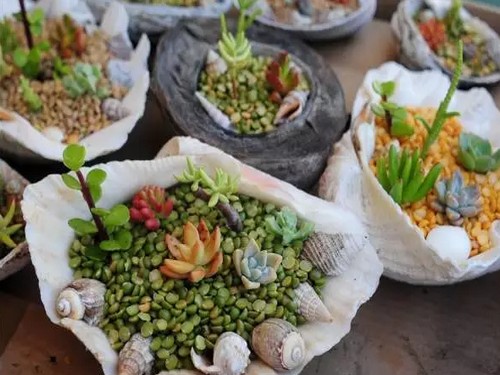
To make succulent bonsai, square, rectangular, or oval flower pots are commonly used, and the size of the landscape is determined by the size and depth of the pot. Because succulents are drought-tolerant and need very little water, you can also use various containers from around you, including cute coffee cups and transparent glass covers. When making it, first spread an appropriate amount of growing soil in the pot. Common granular soil and akadama soil on the market are good for succulent drainage. Then place mountain-shaped stones in appropriate positions according to the composition, and then plant the succulents.
When choosing plant materials for making succulent bonsai, it is best to use varieties with small plants, natural forms, and strong constitutions. You can plant a single species as a single plant, or plant multiple species and several plants together in one pot, but the primary and secondary roles must be clearly distinguished. The layout mostly adopts a natural style. According to the decorative scholar's rocks or other accessories, the focus should be on highlighting natural wild charm. Never put plants with greatly different growth habits together.
For succulents of the Crassulaceae family selected for making bonsai, the plants are required to have unusual, aged forms, obvious main trunks, and branches, able to show the large from the small and display the bearing of a big tree. Commonly used ones include jade plant (including its varieties Hobbit jade plant, dwarf jade plant, golden jade plant, sunset jade plant, tricolor jade plant, universe tree, etc.), Kume no Mai, red-tipped echeveria, blue bean, red makeup, small pine green, Festival of the Little People, Cooper's kalanchoe, Echeveria runyonii, black prince echeveria, and others. Materials are usually obtained by cutting propagation, generally carried out in the growing season. You can cut robust and full branches, let them dry for 3 to 5 days, and after the wounds are dry, insert them into well-drained soil, then keep it slightly moist; they root and survive very easily. In addition, you can also look for old stump materials that have grown for many years and have aged forms to make bonsai. Some species, such as various jade plants, red-tipped echeveria, and red makeup, can be successfully propagated by leaf cuttings, but they grow slowly and take a long time to take shape, so they are not recommended.
According to the characteristics of Crassulaceae succulents, the styling can create many forms of bonsai, such as forest style, formal upright style, slanting style, semi-cascade style, cascade style, and literati style, and can also present the plant ecological landscapes of foreign deserts, mountain ranges, and other places, to show the diversity of nature. When styling, you should base it on the plant's own characteristics and combine bonsai techniques, maximize strengths and avoid weaknesses, and create bonsai with a unique style.