How to trim the roots of succulents? Master the method to grow them well
A few years ago I asked a veteran grower in the succulent circle: how should succulents be fertilized? The veteran said he basically does not use fertilizer; succulents mostly originate from arid regions with poor soil, and he had never heard of anyone fertilizing them. With annual root trimming, watering and the little fertility in the soil are enough for them to grow.
If anyone else had told me this I would basically have laughed it off, but looking at this grower's 10-plus years of experience and his collection of over a thousand pots, believe it or not, I believe it.
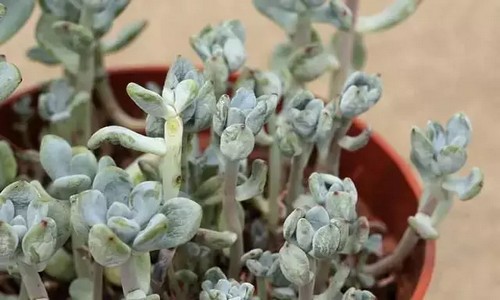
These past two years we have also tried trimming the roots of a very small number of succulents (the greenhouse does not have the manpower to trim every single one), and we did indeed find that these plants grow better.
Of course, not trimming the roots does not necessarily mean the succulent will die; it just absorbs poorly, and only in extreme cases will death or damage occur. The more common situation is that when the roots are poor, no matter how you water, the succulent looks shriveled like it is dying.
When should roots be trimmed? And how should it be done?
Usually the best time to trim roots is right when the growing season begins, which is also why we are publishing this article today. Spring and autumn growing seasons, after all~~~~
Plant root systems are generally divided into taproot systems and fibrous root systems. A taproot system is like a radish root, with one main root and fibrous roots growing around the main root; a fibrous root system, such as that of the narcissus, has no thick main root, only fine fibrous roots. Among succulents, I have not yet seen any authoritative institution publish a classification of taproot and fibrous root systems, but from everyday observation I have found some similar ones; whether they can be placed into these categories we do not know, but in any case we understand what kind of roots need trimming. (Here a picture from an encyclopedia is cited)
What usually needs trimming is roots that have aged and whose absorption is blocked. These roots all share one thing in common: the center of the root no longer has any fleshy part; it is either dried up or heavily lignified.