How to Grow Succulents? Detailed Guide to Top-Dressing Methods and Techniques
Nutrient deficiency in succulents is not common, but fertilizer burn on the roots is encountered quite often. As mentioned earlier, the osmotic pressure of succulent roots is mainly discussed in relation to over-fertilizing. The result of over-fertilizing is often that the plant rots every time you fertilize. But to make succulents grow more beautifully and relatively faster (which gives a great sense of achievement), fertilizing is a very important part. Once you can keep succulents alive, you should move on to growing them well.
However, from a conservative standpoint, it is generally better not to fertilize succulents when you first start growing them. This is because succulents are not particularly heavy feeders, and the trace elements in ordinary soil are usually enough to cope. Fertilizing is mostly done with liquid fertilizer, which can easily cause side effects similar to improper watering. The main reason lies in the mindset of trying to pull up seedlings to help them grow and rushing for quick results, which is most likely to occur when growing succulents. After all, succulents have their own unique physiological characteristics. Although we can, to a certain extent, increase their growth rate by changing the local environment, we cannot fundamentally change them, otherwise failure is inevitable.
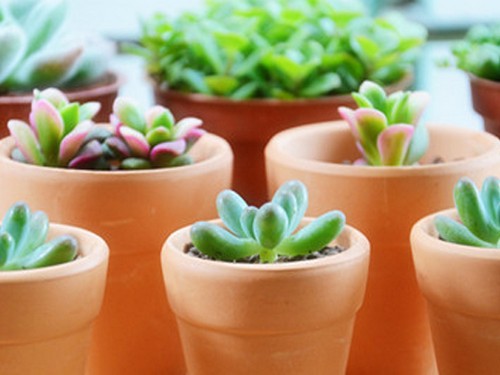
Besides base fertilizer, succulents can also be given top-dressing at the appropriate time. The situation here is relatively more complex, because although they are all called cacti, different varieties differ considerably due to their own inherent characteristics. What is more, succulents belong to different families and genera; although they all share drought tolerance, the differences among them are still great, so they must be treated differently and fertilized with caution. For some robust varieties, such as those in the genera Opuntia, Echinopsis, Mammillaria, and Ferocactus, during the growing season there is no problem at all as long as you follow the principle of "light fertilizer, applied frequently."
For some varieties that grow extremely slowly, such as those in the genus Ariocarpus, Ariocarpus kotschoubeyanus, and Aztekium ritteri, as well as succulents in the genus Lithops, it is better to water less or not at all. That is to say, fertilizing, like watering, must match the growth rate of these varieties themselves. The more a variety needs less watering, the less fertilizer it can be given. However, some succulents are often given quick-acting fertilizer during cultivation to increase the temperature difference and promote growth, with remarkable results. So fertilizing must be adjusted according to the growth condition of the succulents, which can create a virtuous cycle.
In addition, there is another situation in which you should fertilize, namely when the succulents are flowering.
Plants need to consume a large amount of nutrients for flowering and fruiting, not just the phosphorus fertilizer we mentioned earlier. Flowering and fruiting is an important life cycle for plants, so at this time all the tissues of the plant will cooperate with this important action of reproducing offspring, including: the stem will thicken to prevent lodging caused by too-heavy flowers and fruits. The root system will grip deeper to help absorb more nutrients. Some plants will even shed leaves appropriately to avoid blocking insect pollination and fruit exposure to light.