Key Technical Points and Precautions for Pruning and Shaping Potted Roses
How to prune roses is definitely a challenge for beginner flower lovers, and pruning can bring benefits such as promoting buds, promoting flowers, renewing the plant's branches, reducing pests and diseases, concentrating nutrients to supply strong branches for flowering, improving the plant's ventilation and lighting conditions, and controlling the plant shape. Below, let us look at the principles and specific operation steps of rose pruning.
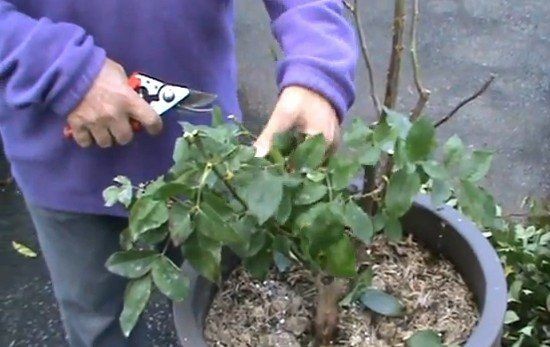
1. Pruning targets for potted roses:
Inward-growing branches, crossing and overlapping branches, dead branches, and diseased branches are all targets for pruning;
2. Master the timing of pruning:
In spring, prune branches or cut flowers after flowering;
In summer, cut off diseased and weak branches and blind flower branches;
After the Start of Autumn, cut off the aged branches formed after summer (secondary and above);
In winter or before bud break in early spring, carry out heavy pruning (except for small seedlings and climbers).
3. Specific operation methods for rose pruning
1. For transplanting and pruning budded seedlings or tall seedlings, place them in a cool and ventilated spot to recover, do not expose them to strong sunlight, nourish the roots and wait for them to recover. Once new buds sprout and leaves unfold, it means the recovery is successful.
2. Pruning buds on budded seedlings for transplanting——the cut is also made about 1 cm above the axillary bud or a complete five-leaflet leaf. When the branch is long, cut off half its height; when short, cut off one third of its height.
3. For shrubs that are not tall, lightly prune after summer flowering, with the pruning position 1 cm above the five leaflets.
4. For small and medium seedlings of miniature roses, remove inward-facing buds to avoid poor ventilation and poor growth.
5. For upright rose varieties, the side buds have poor sprouting ability, and the Queen is initially lazy in flowering; after flowering, prune moderately to encourage side buds.
6. Pruning floribunda roses——cut about 1 cm above a plump axillary bud. Side buds will sprout in clusters; at positions with many buds, remove the secondary buds.
7. Rose branches will lean toward the direction pointed to by the top bud. Cut upright growing branches to an outward-growing bud, and cut outward-spreading branches to an inward-growing bud. Cut about 6 mm (1/4 inch) above the bud. If the cut is too close, it will damage the bud; if too far, it will not only look bad but also easily cause branch canker.
8. For roses with branches on only one side and few branches, you can only keep them to pull and fill in the position. Once the branches on the other side have grown fully, you can untie them. When growing flowers on a balcony, pay attention to the plant's light balance and often turn the flower pot to avoid one-sided excessive growth of branches caused by phototropism.