How to prune and shape a potted plum blossom? A detailed guide to pruning methods
The Southern Song poet Yang Wanli wrote a poem praising plum blossoms: “At first it seemed the fragrance broke through the nose, but once it passed there was no scent and no flavor; in the still dusk the flowers seem about to sleep, not knowing they have been intoxicated by their own fragrance.” This describes the subtle fragrance of plum blossoms. The plum tree has an elegant posture, with gnarled trunks spreading like a canopy, sparse branches slanting crosswise, vigorous and ancient-looking, making it the most beautiful of all. The best time for viewing is during the flowering period, generally from February to March. If you want it to bloom at Spring Festival, about 40 days before Spring Festival place the plum bonsai in a greenhouse at around 10°C, ensure sufficient sunlight, and spray water frequently. The plum stump bonsai has beauty of color, beauty of form and beauty of charm, and is excellent in color, fragrance and flavor alike.
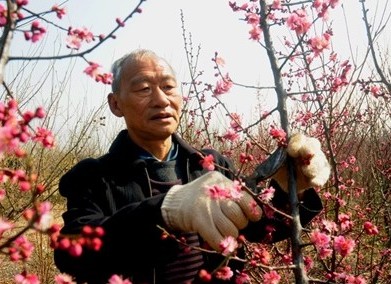
For some early woody flowering plants that bloom before leafing out, their flower buds generally form in the summer and autumn of the previous year. If pruned before sprouting in early spring, the flowering branches will be cut off or the flower buds knocked off. Therefore pruning should be done within 1 to 2 weeks after flowering. But at this time the plant has already begun to grow and the sap is flowing fairly vigorously, so the amount pruned should not be too large. The plum blossom is one of these plants and should be pruned within 1 to 2 weeks after the flowers fade.
The leaf buds of the plum blossom have strong sprouting ability and branch-forming ability. Flowering branches can be divided by length into three types: short, medium and long. Medium branches under 20 cm have the highest flowering rate; short branches about 2 cm long can also bloom; long branches over 30 cm bear fewer flowers, with only a few at the tips. The flower buds of the plum blossom mostly grow on new branches of the current year, and old plum branches often produce latent buds that develop into short branches and can bloom.
The main branches of the plum blossom grow vigorously and do not easily produce flower buds, so long branches should be cut back to encourage lateral short branches to form that same year, until flower buds form in the summer and autumn of that year. In addition, cut off useless water sprouts and weak, thin, diseased and pest-infested branches. The plum blossom is a light-loving plant, so while pruning, cut off as many overlapping and shading branches as possible to let it receive sufficient light; only then will it have lush leaves and abundant flowers.
For field-grown plum blossoms, shaping and pruning can be done within 20 days after flowering. The natural tree shape should be taken as the main form for the plum blossom; cut off crossing branches, upright branches, dead branches and overly dense branches, and cut back the lateral branches to promote abundant flowers and lush leaves. After potted plum blossoms are planted in pots, heavy pruning should be carried out to lay the foundation for making a bonsai. Usually a plum stump is used as the scenic subject, with plum blossoms of various forms grafted on. Maintain a certain temperature, and the plum blossoms can be seen in full bloom at Spring Festival. If you want it to bloom on “May Day”, you need to maintain a temperature of 0-5°C and a humid environment, move it outdoors in early April, and keep it in a place with sufficient sunlight and good ventilation, and it will bloom around “May Day”.