Detailed Explanation of Bonsai Pruning and Shaping Techniques and Methods for Asparagus Fern
Asparagus fern (Asparagus setaceus) is very familiar to everyone, so do you have this kind of distress? The asparagus fern grows really too fast, and as a result it has a bunch of foliage on top of its head, while below there are just a few bare stems, which looks quite ugly. Everyone wants to prune it, but it took so much effort to grow it this big, so how could you bear to cut it? What if you cut it badly? In short, there are all kinds of worries!
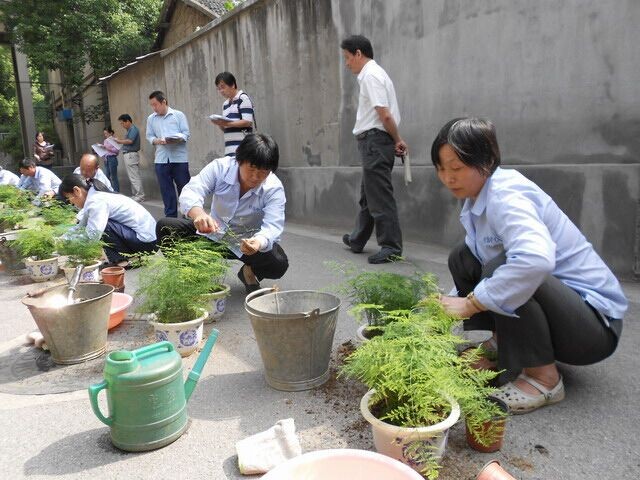
For asparagus fern, we mainly adopt two shaping methods: one is to do a good job of prevention in the early stage, and the other is helpless pruning.
I. Shaping methods:
1. Pot control method: the size ratio of the flower pot to the plant should be 1:3, which can limit root growth and keep the plant size unchanged.
2. Remove the growing point: when a new bud grows to 2-3 cm, remove the growing point, which can promote new branches and leaves on the stem, and can control it from growing vines, making the branches and leaves spread out horizontally and the plant shape continuously fuller.
3. Make use of the phototropism of asparagus fern: turn the flower pot in a timely manner to correct the growth shape of branches and leaves and keep the plant shape unchanged.
4. Physical obstruction method: that is, use a piece of cardboard to press down branches and leaves or block sunlight, so that when the branches and leaves grow, upon encountering an object blocking them, the stems turn or bend as they grow, thereby achieving the purpose of shaping.
II. Pruning methods:
(1) Tower type: choose 2-3 tall, upright and elegant stems as the main peak, remove all growing points on the stems, and set the plant height at 30-35 cm. The remaining branches and new stems should not be higher than the main peak. For new buds, whether to remove the growing point can be decided according to the thickness of their stems. If their stems are thicker than the stem of the main peak, they should be removed; if thinner than the main peak, they need not be removed and can be allowed to grow. At the same time, it is also necessary to use the physical obstruction method and its own phototropism to constantly adjust the plant shape.
(2) Double-clump type: plant two asparagus ferns in the pot, one tall and one short, with the tall one about 30 cm and the short one about 18 cm. During the growth period, shape them in the same way as the tower-type asparagus fern.
(3) Natural type: mainly based on the naturally growing plant shape of asparagus fern, still using basic methods such as removing growing points, physical obstruction and making use of its phototropism, so that the branches and leaves spread out and give people a natural beauty.
It should be noted that shaping asparagus fern must be combined with controlling fertilizer and water. That is, at a room temperature of 15-18°C, water thoroughly once a week to keep the potting soil moist (it is advisable that a finger can press into it). Do not fertilize or fertilize less.
Asparagus fern should be repotted once a year, with the pot size increasing year by year. If you do not change to a larger pot, you can turn over the pot, remove part of the small root tubers, replace with new soil, and plant it back in the original pot. Usually pay attention to renewing stems and branches, and promptly remove senescent, diseased and damaged stems and branches.