Soil-free hydroponic method for garlic and step-by-step illustrations
Garlic is a vegetable that people generally love. The parts used for food include green garlic, garlic scapes, and garlic cloves. Whether it is green garlic, garlic scapes, or garlic cloves, they all have a special pungent odor. Its active ingredient is allicin, and it also contains pyruvic acid and ammonia. In other words, from the time garlic sprouts from a bulb until it grows back into a bulb, the transformation of its internal nutrients at each growth stage does not produce toxic substances.
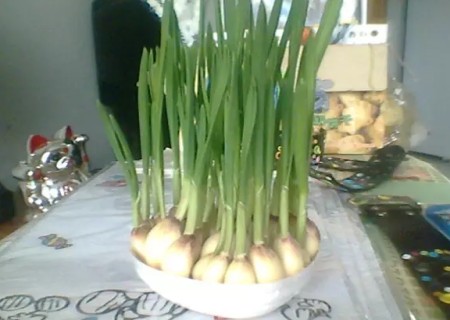
In fact, if the garlic has sprouted and you have bought too much, you can cultivate it in water. It can be enjoyed as an ornamental plant, and after the garlic grows tall, you can eat the garlic sprouts. It is both economical and practical.
Garlic hydroponics has always been very common in China. For young flower enthusiasts, garlic hydroponic methods still need to draw on the experience of other flower enthusiasts. This article is a flower enthusiast's experience in making a garlic hydroponic bonsai, for reference by flower enthusiasts. The steps for making a garlic hydroponic bonsai are as follows:
Materials: sprouted garlic; a container, unrestricted, any kind of container will do, with a plate or bowl being most suitable! Time: from late September to the Spring Festival of the following year, with October to December being the best time!
The steps/methods are below:
1. Select suitable garlic. Generally, garlic with a high degree of plumpness is of better quality. Press the surface of the garlic with your hand. If it is too soft or has depressions, it means the garlic may already be rotten, and this kind of garlic cannot be used for hydroponics.
2. Peel off the outer skin, choose a pretty plate and put the garlic in it, arrange them together, directly exposing the garlic cloves, and place them in a container (a relatively large container can be used)! Some can be squeezed in appropriately to make the garlic stand upright.