Fall armyworm was spotted in Taiwan, China years ago? Experts and scholars come forward to debunk the rumor
The fall armyworm is a globally important pest wanted by the United Nations Food and Agriculture Organization (FAO), mainly damaging economic crops such as corn, rice, sorghum, cotton, cruciferous plants, cucurbits and solanaceous plants. It invaded China in early this year and then quickly spread to 18 provinces. In Taiwan, China, the first fall armyworm case was found on the 8th of this month. As of noon today (19th), the cumulative number of confirmed cases of fall armyworm larvae in the country had reached 98, of which 64 had been destroyed and 9 had been treated with pesticide spraying, totaling 73. It has now entered the second stage of control, "pesticide treatment."
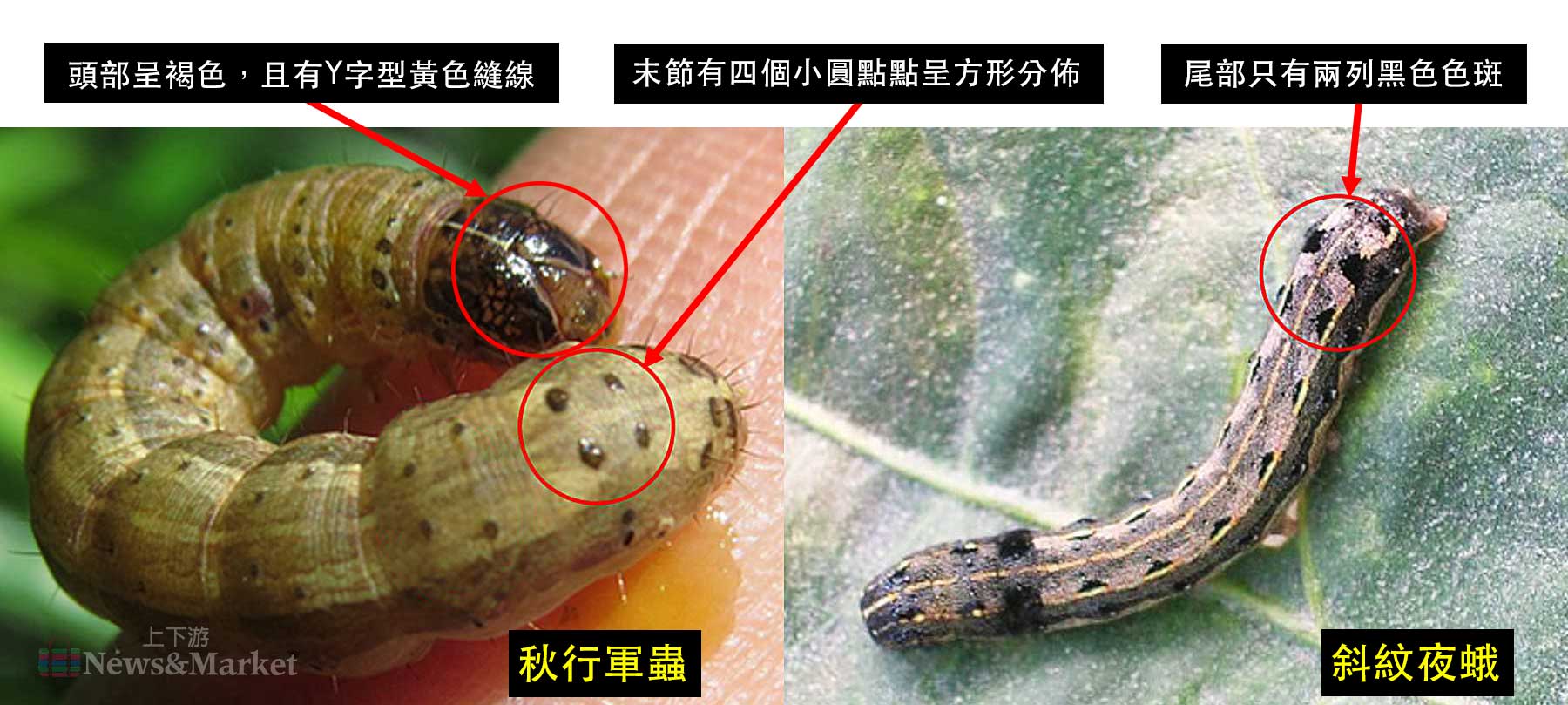
Faced with a field pest that could cause enormous damage in the country, many farmers assert that they have "seen this bug long ago" and that it "was spotted in Taiwan, China ten years ago," questioning why disease prevention agencies and experts and scholars are only "hunting the bug" with major efforts "this year." What is the truth? Is it widely rumored online that "fall armyworm has long existed in Taiwan, China"? This is how experts and scholars see it and say it.
Monitoring expert: Surveys were launched last year. Various armyworms were found, but there was no fall armyworm
According to information from the United Nations Food and Agriculture Organization (FAO), fall armyworm is native to the Americas. It invaded Africa in 2016, then spread to India, Sri Lanka and Yunnan, China in 2018, and in early this year (2019) it rapidly spread across more than ten provinces in China.
Before June 8 of this year in Taiwan, China, neither scholars conducting field monitoring, nor teams surveying fauna, nor the universities and agricultural improvement stations in various places that accept plant and insect samples sent by farmers and provide diagnostic and identification services, had found any trace of fall armyworm. No fall armyworm adults were captured in sex pheromone traps for moths in various places either.
Hsieh Chia-hung, assistant professor in the Department of Forestry and Nature Conservation at Chinese Culture University, who is responsible for the main work of molecular identification of fall armyworm, said that from June last year to early March this year, the research team conducted biological control experiments in corn fields in Chiayi, Yunlin and Hualien, going to the fields every month to investigate pest conditions. "Various armyworms were found, such as tobacco cutworm, beet armyworm and rice armyworm, but no fall armyworm was found."
If insect bodies are found in the "second stage," mandatory spraying is launched, with pesticide use guided by improvement station experts
Because adults and multiple pieces of evidence have been found on the main island, confirming that fall armyworm has already reproduced a second generation in Taiwan, China, the "Fall Armyworm Disaster Emergency Response Team" (abbreviated as the "response team") urgently announced on the 18th that it was immediately entering the "second stage" of control: once fall armyworm eggs, pupae, larvae or adults are found, they must be reported so that controlled zones can be delineated. Signboards will be set up in controlled zones to prevent unauthorized people from entering and leaving, and one set of sex pheromone traps will be hung per hectare around them for monitoring. As for pesticide use, local governments will uniformly procure pesticides and cover labor costs for spraying operations.
The response team explained that the pesticide application procedure will be guided by improvement station experts, and pesticides with different mechanisms of action will be used in rotation. At present, 11 pesticides are available, including spinetoram, novaluron, flubendiamide, chlorantraniliprole, flonicamid, indoxacarb, hexaflumuron and Bacillus thuringiensis. Relevant regulations on stopping pesticide use during the safety period will be followed to ensure that crop harvesting and sales are not affected. The control period lasts until the end of the current growing season of the crop. Because crops in the field area can still be harvested, no crop compensation will be carried out.
Farmers should not spray pesticides on their own. Organic farmers may choose Bacillus thuringiensis or use chemical substances after reporting
The response team stressed that farmers must not spray pesticides on their own. At present, they should actively patrol fields and report immediately, allowing experts to guide pesticide use, which is conducive to control.
As for organic farmland, after insect bodies are found, Bacillus thuringiensis may be chosen for control. If chemical substances are used, farmers need to notify the certification body in advance, and the certification body will determine the control scope and control period. Products produced during this period may not be labeled "organic," but this ultimately does not affect their certification qualification.