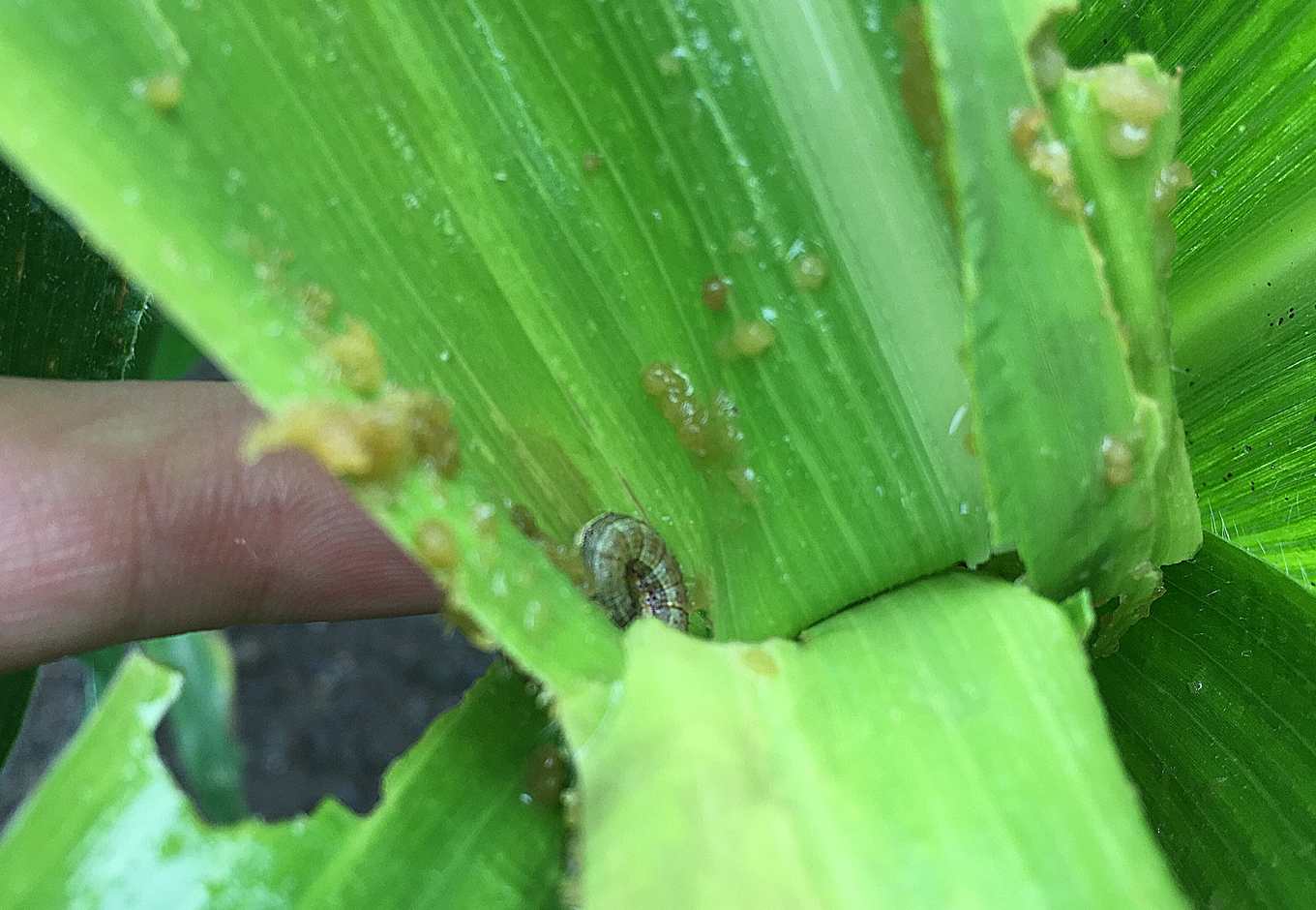
Fall Armyworm 0613"Pest Control Combat Manual! Identify the pest by appearance, droppings and bite marks, expert: Fall armyworm easily develops resistance, "only use pesticide when you see the pest"
The fall armyworm, which strikes fear into farmers, is spreading in Taiwan. Its main host plant range includes 76 families and 353 species, mainly damaging economic crops such as corn, rice, sorghum, cotton, cruciferous plants, cucurbits and solanaceous plants. It may also appear in non-agricultural areas, such as schools, home vegetable gardens, plants in military camps, and golf course turf.
In Taiwan, after fall armyworm was successively found in Tongxiao, Miaoli on the 8th, Toucheng, Yilan on the 10th, and Lucao, Chiayi on the 10th, two more confirmed cases were added today (the 13th), respectively from corn in Luye, Taitung and baby corn in Datong, Yilan. Both the corn-preferring and rice-preferring biotypes are present. The "Fall Armyworm Disaster Emergency Response Team" has so far received a total of 78 reports from the public, distributed across Yunlin, Taichung, Hsinchu and other counties and cities, and is awaiting morphological identification by experts.
How should Taiwan grasp the critical 14-day "golden eradication period"? Should farmers apply pesticides in advance? How should physical control be carried out? What natural enemies does the fall armyworm have?
Young larvae and eggs cluster together, so they can be cleared in one go by seizing the timing
One generation of the fall armyworm is about thirty days, and it takes about ten days to grow from larva to adult. If the weather is hot, this may be shortened to seven days. Therefore, before it grows into an adult capable of flight is the best time to eliminate it. Professor Xu Rujun of the Department of Entomology at National Taiwan University said that the most troublesome thing about this pest is that it is "very good at flying." Adult fall armyworms can fly 100 km in one night and 1,000 km in a lifetime. Its host range is even broader than that of the tobacco cutworm and beet armyworm, so it should be cleared completely in one go while the eggs and larvae are concentrated.
She further discussed disease prevention practices based on the fall armyworm's growth cycle: The fall armyworm prefers to lay eggs on lower leaves, and larvae hatch after 1-3 days. Within 3-6 days, they are in the first to second instar stage. The larvae usually act in groups and especially like to eat the tenderest parts of the leaves, the new tender leaf growth points where the leaf meets the stalk. Obvious holes and gaps appear on the leaves, similar to the feeding marks of leaf moths.