A roundup of common banana varieties: What are the differences between Beijiao, Xianrenjiao, and Baodaojiao in fruit characteristics?
Do you like eating bananas? Then do you know which banana varieties are commonly sold in the market? Would you like to learn about them? Let's take a look at the introduction of the three banana varieties below!
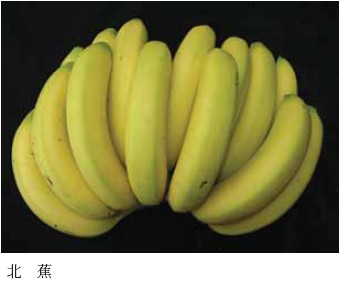
Beijiao
Alias: None
Origin: Introduced from South China during the Qing Dynasty Qianlong period (1736-1795), belonging to the [Cavendish banana group], currently the most important cultivated variety of banana in Taiwan, China.
Fruit characteristics: Bow-shaped or slightly bow-shaped, unripe fruit is green, after ripening it becomes more yellow, the flesh is pale yellow, the texture is fine, the taste is sweet and fragrant, and the quality is excellent. On average 8-9 hands of fruit, the fruit fingers are about 20-25 cm long, and the bunch weighs about 25 kg, and can also reach 30-35 kg.
Xianrenjiao
Alias: Ganjiao, Qiongjiao
Origin: It is a bud sport of Beijiao, discovered in Zhuzikeng, Taichung, in the early years of the Republic of China. It has strong adaptability to poor mountainous soil, and is planted most in the central region.
Fruit characteristics: The banana flesh is fragrant and sweet, hence the name "Ganjiao" (sweet banana), and because the fruit shape is like a bow, it is called "Qiongjiao" in Taiwanese. The most common varieties are Beijiao and Xianrenjiao, with soft flesh, sweet and delicious. The best ones have plump fruit fingers, less obvious ridge lines on the outer edge of the peel, and a rounded tip at the end of the fruit. Bananas have an excellent after-ripening effect; when the peel has slight black spots, the flavor is at its best and is generally called sesame banana, but if the peel turns completely black, it has already undergone qualitative change and the flavor is lost.
Baodaojiao
Alias: Xinbeijiao
Origin: Selected and bred from tissue-cultured progeny plants of the traditional provincial variety Beijiao, named in the 90th year of the Republic of China (2001), commonly known as [Xinbeijiao].
Fruit characteristics: The peel is dark green, medium in thickness, the ripe fruit is bright yellow, turning yellow evenly and uniformly, and the flesh is milky white, sweet and fragrant.