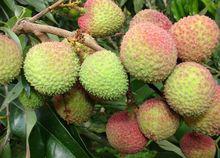
Differences Between Yu He Bao and Fei Zi Xiao Lychees and a Taste Comparison
Taiwanese fruit is in great demand in mainland China, and many fruit growers and Taiwanese businessmen went to mainland China to grow the highly popular lychee. Unexpectedly, because of low costs and cheap prices, it severely hurt the export market for Taiwan's Yu He Bao! The original order of about 3 million Taiwan jin per year was completely snatched away.
The fruit trees are heavily laden, and these large, plump lychees are the especially valuable Yu He Bao. In the first batch to hit the market, the price has already been called at 190 yuan per kg, advertised as having fragrant, springy flesh with plenty of juice and especially high sweetness! Grower: "Wow, this one is higher, this one is about 22 degrees."
With sufficient rain this year and good weather, Yu He Bao is not only especially sweet, but its yield has also increased by 20 to 30 percent over last year. However, although the domestic market price looks promising, overseas orders have been taken by mainland China's Fei Zi Xiao, and so far there is still not a single one.
Zhang Qingrong, director-general of the Dashu Farmers' Association: "The main thing is competition on price, because their side is cheap, and they plant on a large scale." Grower: "Because the mainland government gives large subsidies, Taiwanese businessmen are very willing to go to mainland China and sell their goods to Canada and the United States."
Comparing lychees across the strait, Fei Zi Xiao produced in mainland China has smooth skin and fewer bumps, tastes rather sour, has a sweetness of around 15 degrees, and is a bit small; it takes about 23 fruits to make 1 kg. Its only advantage is its price. Whether at the place of origin or for export, the price is only 1/5 of Taiwan's.