The Bureau of Animal and Plant Health Inspection and Quarantine will announce that the insecticide "Exzolt" is legal for treating chicken lice, ending the underground use of drugs in poultry farming
In the past, there were no legal veterinary drugs available for use on poultry in chicken farms, leaving hens to suffer from chicken lice. Some egg farmers had no choice but to risk using drugs of unknown origin, which ultimately led to the 2017 island-wide outbreak of the "pesticide fipronil" egg contamination storm in Taiwan, China. But because the chicken lice problem remained unsolved, eggs were still found to contain excessive fipronil residues as recently as this year (2019), affecting the food safety of the people.
To solve the "underground drug use" problem, the Bureau of Animal and Plant Health Inspection and Quarantine is currently focusing on the insecticide "Fluralaner" (Exzolt). Its mechanism of action is similar to that of fipronil. The EU approved its use in poultry in 2014, and it can "dual-action" kill the chicken lice and chicken mites commonly found on farms. It has recently passed the consultation meeting of the Food and Drug Administration and entered the final review stage. It is expected to be announced in early June, and is expected to end the problem of illegal drug use in poultry farming at the source.
No legally recommended drugs for poultry farming; illegal drug use leads to a food safety crisis
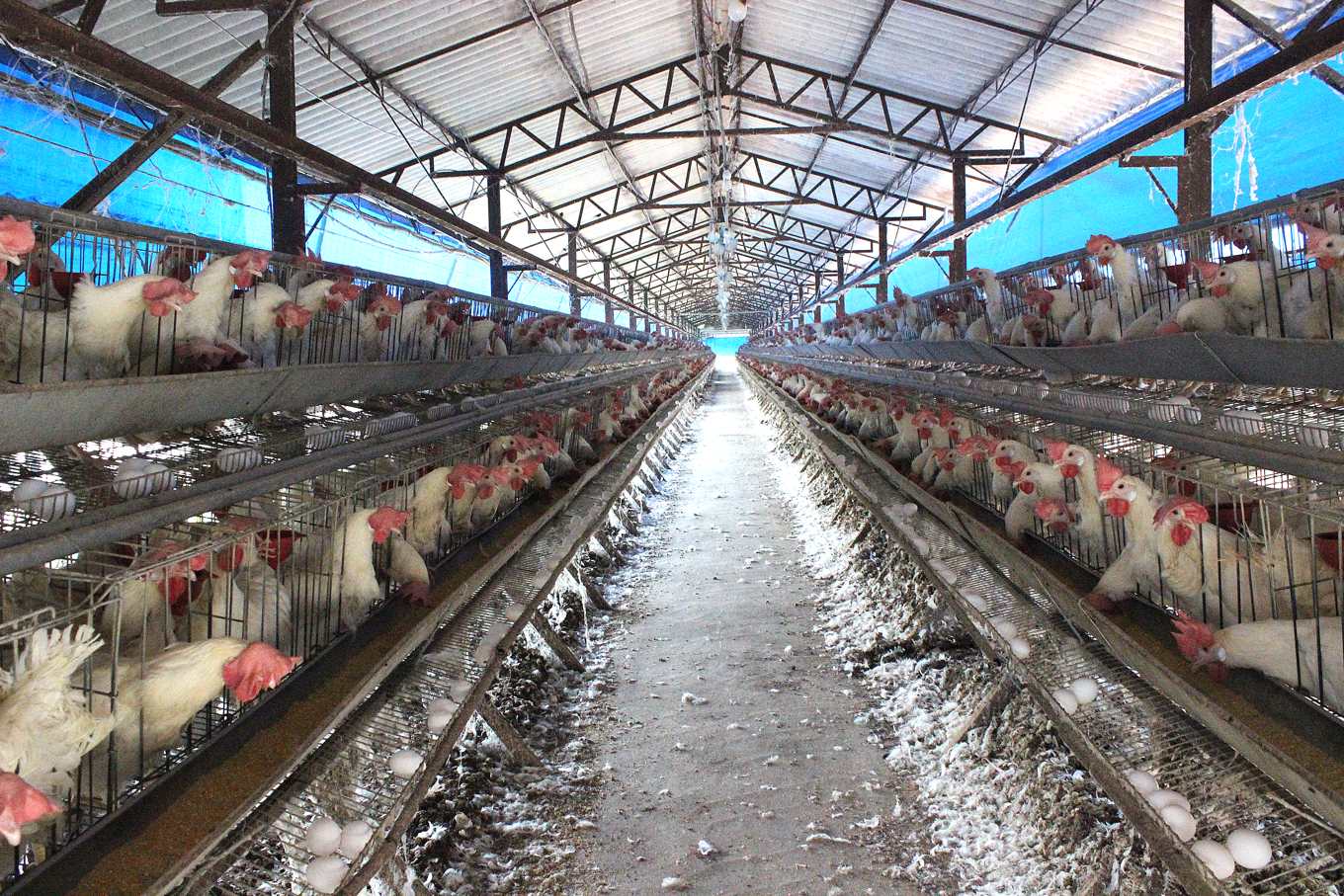
There are nearly 40 million laying hens raised across Taiwan, China, producing 20 million eggs per day and 7.5 billion eggs per year, with the largest numbers raised in Changhua, Pingtung, Tainan and Chiayi. Domestic laying hen farming is mainly cage-based, and with three generations of chickens - old, middle-aged and young - raised together, chicken houses are difficult to disinfect. At present, the government has not announced any legal drug for chicken lice, and chicken farmers often use drugs illegally to kill parasites.
The "fipronil eggs" incident that spread across Taiwan, China in 2017 was caused by egg farmers improperly using the "pesticide fipronil" to eliminate external parasites in the environment and on the bodies of chickens. It not only affected 1.24 million laying hens and more than 700,000 to 800,000 eggs, but also severely damaged consumers' confidence in domestic egg products. More than a year later, in early this year, another laying hen farm in Changhua broke out with a toxic egg scandal, again because eggs were found to have excessive fipronil levels.
In fact, domestic chicken farmers have suffered in silence, because Taiwan's, China's climate is hot and humid, and farms have long been plagued by chicken lice and chicken mites. In addition, in the past there were no legal drugs that could be used in chicken houses, so egg farmers could only helplessly watch chicken lice crawl all over the cages, sighing: "Saving the chickens is not okay, and not saving them is not okay either. If we save them, there are drug residues; if we don't save them, the whole farm gets infected."
Egg farmer: Will only use it after confirming there are no side effects
Zhuo Ji-wen, owner of Yongtai Ranch in Taitung, which operates enclosed poultry houses and is equipped with environmental control facilities such as water curtains, said that in order to effectively control disease and keep chickens healthy, the ranch adopts all-in-all-out management, regularly cleaning and disinfecting empty houses, and only welcoming the next batch of hens after completion. "Even so, the chicken lice problem still exists. (Chicken lice) like to hide in the feathers, which affects the chickens' eating, and in severe cases can even cause the egg production rate to drop by 10%."
The eggs produced by the ranch are checked through production traceability, and the hens' drinking water and feed must undergo irregular inspections. "Officials previously did not recommend any drugs, and we did not dare to use them either. We could only watch the insects crawl, because consumers are now very demanding about food safety." Regarding the fact that an alternative drug is about to pass review, he admitted it is "a good thing," but said he would not be "in a hurry to use it," stating that he would first refer to relevant reports and confirm there are no side effects before daring to try it.
Another egg farmer surnamed Zeng, who runs a traditional chicken house (open-style poultry house), also takes a reserved attitude toward the "new drug." He pointed out that although the chicken lice and chicken mite problem is serious - "every time we collect eggs we see them scurrying around, and it is even more obvious when picking up dead chickens; the whole hand is covered with chicken mites!" - it is not severe enough to damage the hens' egg production rate (at most 1-2%). It is just that older-generation chicken farmers do not like poultry farms being infested by pests, so "as soon as they see insects, they kill them, spraying everywhere." In addition, because officials were passive and negative in the past and did not recommend drugs, egg farmers have long failed to establish correct concepts of drug management on chicken farms.
Now the Bureau of Animal and Plant Health Inspection and Quarantine is studying and revising the approval of Fluralaner for deworming chickens. In response, he also reminded, "All drugs have residues; the only question is whether they exceed the limit." If this drug is used for a long time and resistance develops, egg farmers will have to increase the dosage, "and after accumulation, there is no telling whether the total residue will exceed the limit." He said outright that he would not consider using the drug at present, and would need to observe the market response before making a decision.
Note: Data shows that this trial referred to toxicological tests from the EU and Japan, and, based on the dietary habits of the people, food intake, and international standard food basket data, proposed the "Fluralaner temporary tolerance standard." It calculated that the Fluralaner intake from daily consumption of chicken meat products and egg products would be 53.654 μg (National Food Consumption Database) and 352.549 μg (international standard food basket), respectively. This value is below the upper limit of the recommended daily safe intake for a 60 kg adult: 600 μg / person (10H / kg bw x 60 kg), showing that this tolerance standard is acceptable.