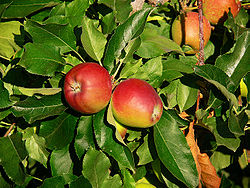
What are the characteristics of Gala apples? Is their production higher than Red Delicious?
Gala apple is a clonally propagated apple variety with a mild, sweet flavor. According to the US Apple Association, in 2018 its production surpassed Red Delicious, making it the most-produced apple variety in the United States. This was the first time in more than 50 years that any other apple variety outproduced Red Delicious.
Gala apples are uneven in color, usually with vertical stripes or mottling, and are overall orange in appearance. They are sweet, with a fine texture and aromatic, and can be added to salads, cooked or eaten raw, and are especially suitable for making sauces. Gala apples are covered in pale yellow to orange skin highlighted with pink to red stripes, with the hue varying according to the ripeness of the apple. Their dense flesh is creamy yellow and crisp, delivering a mild sweetness and a plant-like aroma. Galas allowed to reach the peak of their sweetness on the tree will have a deeper red hue and a slightly sweeter flavor.
Seasons/availability:Gala apples are grown in both the Southern and Northern Hemispheres and are available year-round.
Current facts:Gala apple is a cross between Golden Delicious and Kidd's Orange Red, and is currently one of the most widely grown apples in the world. It has an impressive pedigree, related to the Delicious and Cox's Orange Pippin varieties. It is also the parent of several varieties, including Jazz, Royal Gala and Pacific Rose.
Nutritional value:Gala apples are an excellent snack fruit because they are low in calories, high in water content, and provide a fair amount of vitamins A, C and B. They also contain a type of dietary fiber called pectin, which has been shown to lower cholesterol levels and help prevent heart attacks. They also contain trace amounts of boron, which is highly regarded for its ability to help build strong bones.
Applications:The delicate flavor and texture of Gala apples shine in fresh preparations. They are ideal for fruit, green and chopped salads. Add small cubes to fruit salsas and chutneys. Slice and add to hamburgers, paninis and crostinis. Their sweetness becomes milder when cooked, making them a perfect match for baked goods when combined with more intensely flavored apples such as Granny Smith, Arkansas Black, Pippin and Mutsu. Pears, winter squash, onions, pecans, turkey, curry, cottage cheese, cheddar and Swiss cheese all pair well with Gala apples.
Geography/history:Gala apple was developed in 1934 by New Zealand apple breeder J.H. Kidd. Commercial sales began in Europe and the United States in the 1980s. Gala apples grow well in both warm and cold climates, so they can be grown in apple-growing regions around the world.