A Field Visit to a British Free-Range Egg Farm
A friend from a British restaurant invited me to visit a "free-range egg farm" (free-range egg farm), and of course I agreed right away! The farm is located in Gloucester, and from London we took a train for about three hours to get there.
Compared with traditional intensive poultry farms, "free-range chickens" (also called free-range chickens) do not have to be trapped in cramped cages all day, but can move around in open barns and even go outside for a walk freely! (1) (Actually, when I went back to the mainland to my hometown as a child, the chickens at my relatives' homes all wandered around everywhere. Those count as free-range chickens too, right?)
This visit was arranged by the restaurant's egg supplier, presumably in the hope that the restaurant staff would understand how their eggs are produced and feel more confident about using their eggs.
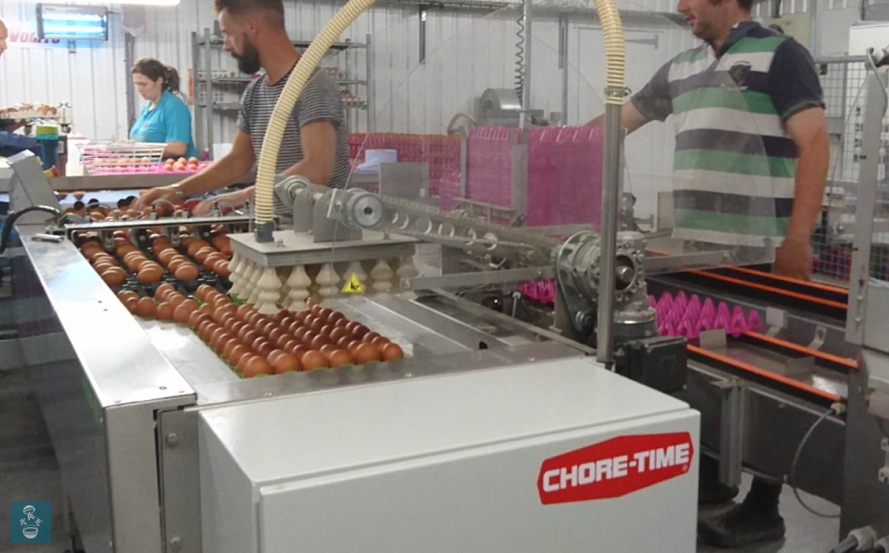
I thought that as soon as I entered the farm, hundreds of chickens would fly over and surround me, but the first thing we saw was"machine"not"chickens"- an "automatic egg loading machine", methodically arranging eggs into boxes.
Several workers stood beside the conveyor belt, pulling out cracked eggs and cracking them on the spot, storing the egg whites and yolks separately.
"Some eggs do not meet the standard and have cracks, so they cannot be sold whole, but their yolks and whites can still be sold!" the staff member leading the tour explained to us.
"If there is money to be made, of course they would use every part of the egg." I thought to myself, how could anyone let a business opportunity go.
(1) According to the egg information website of The British Egg Industry Council (The British Egg Industry Council), EU laws on egg sales stipulate that "free-range egg farms" must ensure that hens have continuous access during the daytime to a ranging area mainly covered with vegetation, and the stocking density must be no more than 2,500 chickens per hectare. In addition, based on the usable area of the hen house, there must be no more than 9 hens per sq m, and each hen must have 15 cm of perch.
Original text here