Agricultural Products Management Act passes first reading, small farmers gain legal basis for primary processing on farmland
Small farmers' processed products will no longer fall into a regulatory no-man's land, and will not only be legalized but also benefit exports! The draft amendment to the Agricultural Products Production and Certification Management Act smoothly passed its first reading in the Legislative Yuan this morning (the 24th). By the end of July at the earliest, the Council of Agriculture will formally establish a streamlined system covering agricultural products from production to primary processing.
Council of Agriculture Minister Chen Chi-chung stated that a "primary agricultural processing facility" certificate is equivalent to the "factory registration certificate" under the jurisdiction of the Ministry of Economic Affairs, and can meet the processing needs of small farmers with smaller scale and relatively simple processing operations. Hu Chung-yi, Director-General of the Agriculture and Food Agency, emphasized that whether to apply for a "primary processing facility" depends entirely on farmers' needs; those with small output can simply continue producing in the original manner. The purpose of this legal basis is to provide those with larger scale who wish to place products on major sales channels and expand marketing with the ability to obtain "factory registration" status through a "primary processing facility" certificate.
The processing categories initially expected to apply are four major types: "drying," "grinding," "milling," and "roasting," covering more than 200 processed product items, using a positive list approach, such as dried fruit, tea bags, and shelled peanuts. However, those who have obtained traceability processing certification or organic processing certification are not subject to these four category restrictions. For example, the four categories do not include alcohol, but if a farmer produces organic plums, the processed plum wine can be included in the scope of a processing facility.
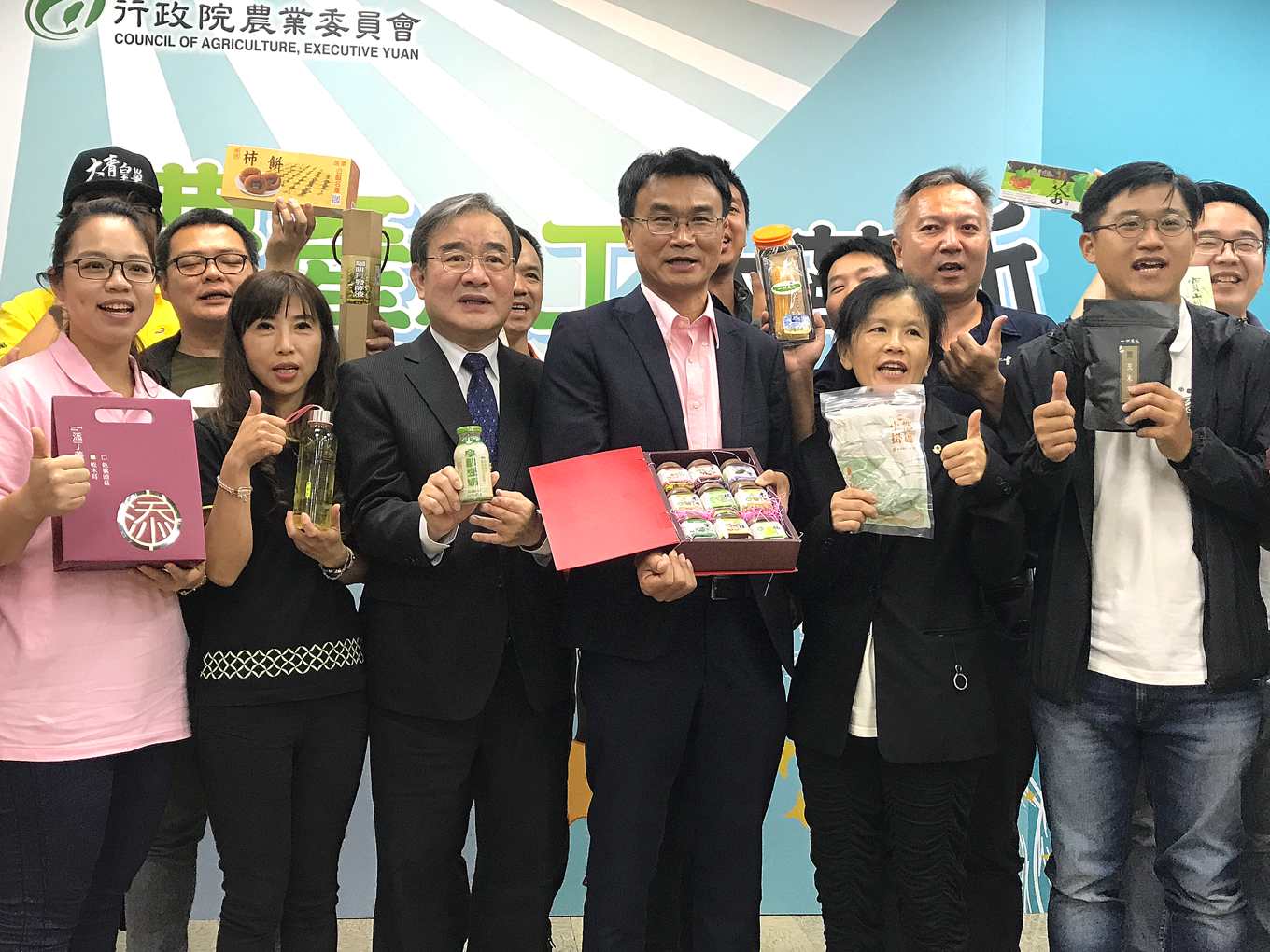
Farmers: Self-processing offers greater flexibility, no longer constrained by factories
Lu Kuan-chuan, chairman of the Taichung City Gonglaoping Industrial Development Association and also a farmer, stated that 90 percent of the Gonglaoping community are farmers, mostly growing organic oranges and persimmons. Farmers who want to develop processed products must commission factories to produce them. "Factories require minimum orders starting at over a thousand kilograms, but our volume is not large enough, making it harder to manage." In addition, they must accommodate the factory's "operating schedule." "Persimmon leaves are harvested in April, and oranges are in season in December, but factories cannot adjust production to match the growing season. Once we couldn't get a slot for three months, and the oranges just sat there until the end of March."
Lu Kuan-chuan pointed out that future plans involve joining with community farmers to jointly apply for a processing facility and do the processing themselves. This would lower production costs, pass savings back to consumers, increase farmers' willingness to develop processed products, and help small farmers with sales channel access.
"Opening a path for farmers to walk," processed products can go international
Liu Yu-ling, chairwoman of the Miaoli Young Farmers Association, said her family has run an organic farm for many years. "But we don't have factory registration, so we can't get onto many sales channels. Even if foreign companies think our products are good and want to take them back, there's no way to make it happen." As for negotiating cooperation with factories, limited output and high prices quoted by factories also deter farmers.
She believes that a "primary agricultural processing facility" can help small farmers' products gain legal status and achieve the same negotiating level as products made by large general food manufacturers. "As long as we can get onto sales channels, there will be more exposure and more companies will come to us for cooperation." In the long term, this helps stabilize agricultural production and marketing, reduce production and marketing losses, and increase small farmers' income.
Lin Chi-chih, chairman of the Nantou Pineapple Cooperative, who purchases pineapples in Nantou and hopes to develop a local brand, deeply agrees. He stated that what makes Taiwan's agriculture precious is its rich agricultural products and diverse small farmer processed goods. However, "consumers now have very high demands for food safety, and although small farmer products are circulating, no one is regulating them."
Therefore, after this law passes, it can break through the difficulties small farmers face in obtaining factory registration for processing and being unable to place products on shelves for sale. "It's about opening a path for farmers to walk, helping these wonderful agricultural products find a way to be sold!" It is expected to allow Taiwan's distinctive small farmer products not only to take root in Taiwan but also to have the opportunity to be marketed internationally.