Red dragon fruit yields keep climbing while income halves: should we rescue it or return to fundamentals?
Red dragon fruit production increases year after year, exceeding what the domestic market can absorb, and the summer peak season is about to begin. Farmers are all on edge, secretly saying: "This year is very dangerous!" Last year the government stepped in with subsidies to buy up the crop, but it only delayed the outbreak of the problem. Many experts and farmers believe red dragon fruit should be allowed to return to market mechanisms and be naturally eliminated, taking the short pain rather than the long one.
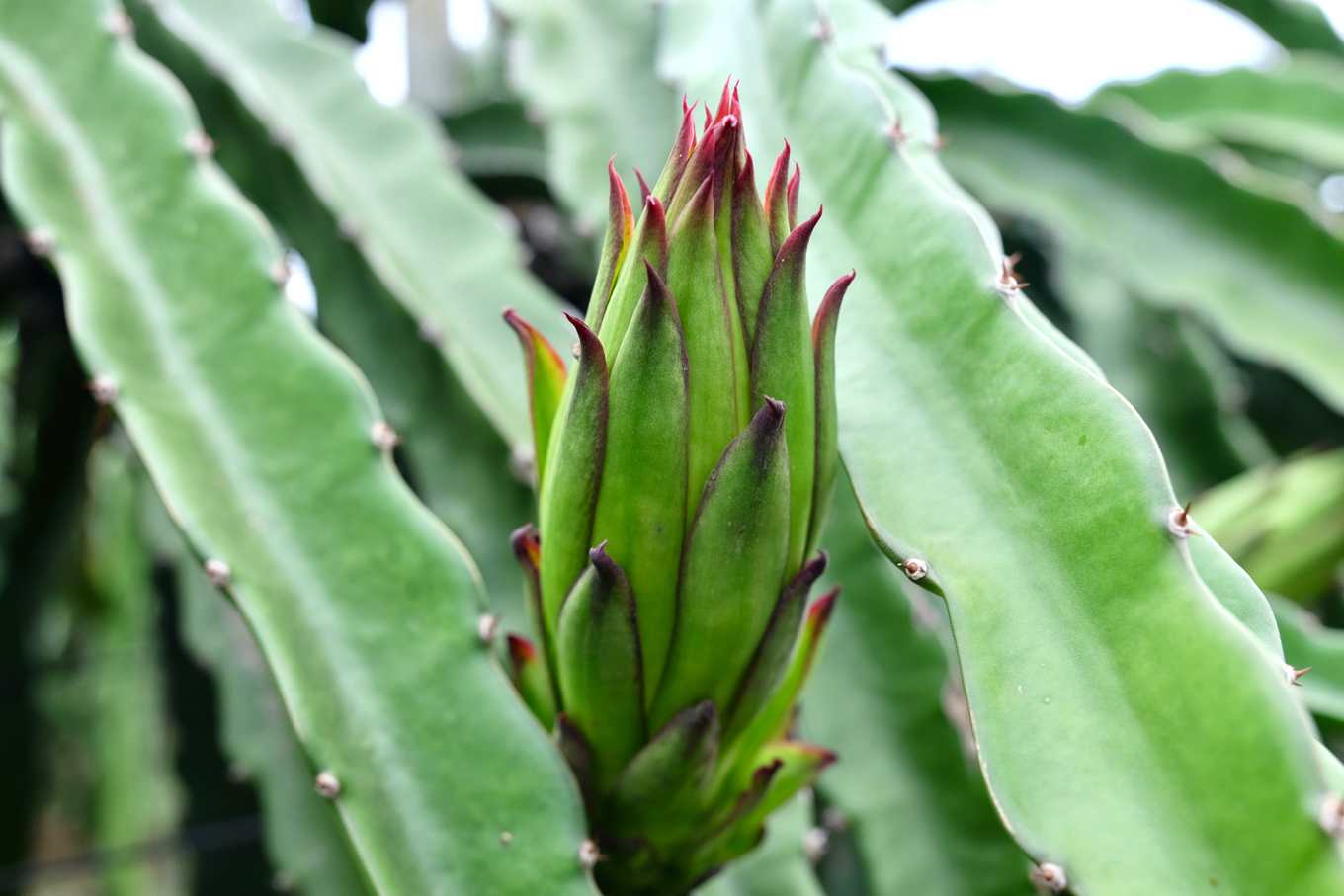
Right now is the flowering period for red dragon fruit, and there is still very little fruit on the market. Looking up past years' agricultural wholesale prices, in early May of previous years the average auction price of red dragon fruit on the Taipei market was still over one hundred per kilogram, but this year it is less than seventy. The hidden concern has already surfaced. "The volume is still so small now, and the price is already this low!" Farmers worry that after mass production begins in late May, the price will be even less optimistic.
For the past five years red dragon fruit has been on the verge of collapse, often named as "the next fruit to crash." This year agricultural authorities strongly urged farmers to increase flower thinning to ensure quality, but some farmers, worried about poor prices, would rather leave more fruit and try to make up in volume what they lose in price. This could very well put the cart before the horse and make the collapse prophecy come true.
Red dragon fruit is like an unexploded bomb year after year. How should the possible unsold crisis be handled? Flower thinning, production-period adjustment, export, and processing are the four directions for defusing the fuse. Please see the industry analysis in the following two articles.
Chen Mengsong points out the key to light-based production-period adjustment: "The premise is that the fruit tree branches must be plump and full, and summer fruit must be greatly reduced, producing only below fifty percent of the original amount." For example, in a normal summer 12 batches of fruit can be produced, including large and small batches; there are about six large batches, and this must be reduced to producing only two to three batches. Only then can the fruit trees retain sufficient nutrients, and when light-based adjustment begins afterward, the flower volume will be greater.
However, this approach means farmers must thin flowers more thoroughly in summer, which is relatively labor-intensive and also requires fighting the "can't bear to let go" mentality. Chen Mengsong points out that the average price of light-adjusted fruit is about one hundred, while the current annual average price is only around thirty-something. It is up to farmers to weigh for themselves whether it is worthwhile after including electricity and labor costs.
The price gap between good and poor quality is gradually widening, and farmers suggest letting the market naturally eliminate the back ranks.
Consumers often feel that red dragon fruit on the market varies greatly in taste; some are incomparably sweet and fragrant, while others are bland. Jiang Yilu says, "It is very easy to grow red dragon fruit to the point of producing a crop, but it is not easy to make sure it tastes good."
Therefore, farmers who emphasize quality usually have their own sales channels and take the home-delivery premium route, while the harvests of ordinary farmers vary in quality. When fruit that is smaller and poorer in appearance and thin in flavor floods the market, it drags down the average price of red dragon fruit.
Fruit farmer Chen Hongjun analyzes that when prices were good in the past, small fruit could also sell fairly well, and farmers would think of "winning by volume." Now the price gap between large and small fruit has widened. "The front ranks have their own channels, and their prices are relatively stable; the back ranks will naturally be eliminated by the market." Therefore he believes the government does not need to intervene, and farmers will find their own way out.
"The more you subsidize, the more it lingers on the brink of death." Fruit farmer Hong Zhaoru also believes it should return to commercial mechanisms. "If there is no money to be made, farmers will cut the trees down." (This article is to be continued, please keep reading)
(2018) How can red dragon fruit break out of the siege after a price crash? Jiang Yilu and Lin Mengzi breed new lines, hoping new varieties will replace the old market
(2018) Council of Agriculture: Dragon fruit volume is high but production and sales are not unbalanced; creative processing, pizza and desserts raise value
(2017) From attractive high prices to rush planting and falling prices | Dragon fruit: fluctuating production and sales, how to solve it?