Glyphosate import tolerance relaxation for miscellaneous grains pre-announced: why should it be withdrawn? Civic group and Lin Shu-fen question it
The herbicide glyphosate has sparked international controversy over its carcinogenicity, even losing three consecutive lawsuits with sky-high damages awarded, yet Taiwan's Food and Drug Administration (hereinafter "FDA") under the Ministry of Health and Welfare pre-announced on April 23 the addition and relaxation of glyphosate residue tolerances for multiple imported miscellaneous grains, triggering questioning and opposition.
The Taiwan GMO-Free Promotion Alliance held a press conference today (the 15th), demanding that the FDA withdraw this pre-announcement amending glyphosate residue standards, and publicly disclose the assessment data to explain the basis for relaxing the standards. Legislator Lin Shu-fen said that currently the FDA tests imported miscellaneous grains using the "pre-relaxation" standards, and as of March this year (2019) the pass rate has been as high as 90%, so she does not understand why the standards need to be rolled back and the residue tolerances relaxed?
In response, FDA Deputy Director-General Lin Chin-fu replied that as long as a manufacturer files an application, the FDA will conduct the review according to SOP. Regarding the various opinions and questions raised at the press conference, he said the FDA will conduct further research and analysis before making a final decision.
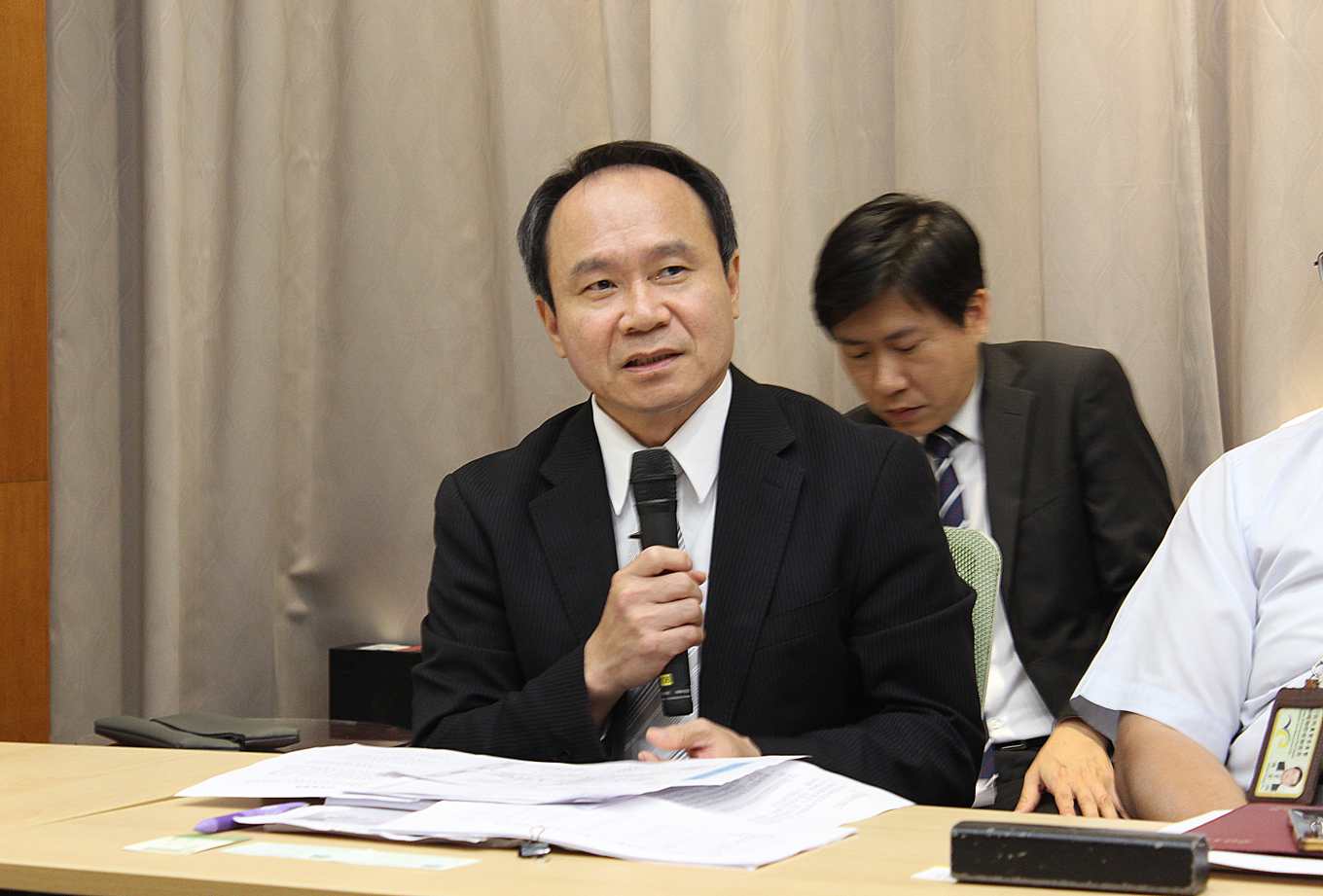
FDA: After manufacturers apply, assessment follows SOP
Regarding the above questions, FDA Deputy Director-General Lin Chin-fu responded that as long as a manufacturer files an application, the FDA follows the SOP process. The review stage has now ended, and it has entered the public comment period, which is the stage of listening to opinions both for and against within the 60 days of the pre-announcement publication.
Lin said that regarding the scientific research paper report raised by Kuo Hua-jen, further research and analysis will be conducted. As for the internationally contentious glyphosate issue with heated debate between both sides, can Taiwan conduct its own experiments to carry out the most appropriate research on the dietary habits and health of Taiwanese people? Lin said that regardless of domestic or foreign pesticide reviews, they all involve established regulations and required documents, and reviews are conducted according to process. If a manufacturer wants to conduct its own testing, then it would be done through an impartial third party. However, in the current case of this glyphosate addition, international data is still the main basis for assessment.
Will Monsanto's assessment data be made public? FDA: Due to confidentiality considerations, it is not convenient to disclose
Liao Chia-ting, Section Chief of the Food Safety Assessment Section of the Food and Drug Administration, provided further explanation on what documents applying manufacturers need to submit. He said manufacturers will be required to provide physicochemical property data, safety assessment data, animal toxicity test data, field residue dissipation time data, and then compare exposure risk against local Taiwanese dietary habits.
As for whether the highly controversial Monsanto, which filed this application, can have the contents of its submitted documents made public for the public and experts from all sides to examine whether there is risk, Lin said he can only say that Monsanto has provided all the data it should provide, but due to confidentiality considerations for applicants, it is currently not convenient to fully disclose them.
Agricultural Research Institute: After assessment, still under safe exposure risk
Tsai Wei-jen, head of the Applied Toxicology Division at the Agricultural Chemicals and Toxic Substances Research Institute of the Council of Agriculture, which mainly conducts pesticide assessments, said the data adopted in this assessment were mainly from relevant international assessment agencies and international journals. Reports submitted by assessment agencies must comply with Good Laboratory Practice (GLP) to be included as main assessment items. However, if a report is not a GLP report but still has discussion value, it will still be included in the assessment discussion.
Tsai explained that pesticide assessment considers three points: hazard identification, epidemiology and exposure risk. In the hazard identification part, estimates closest to humans are derived from tests on different animals.
But regarding the epidemiology part, he admitted that because there are many variable factors, "some (experiments) show (harm to human body), some show none." He believes more researchers' data is needed to sufficiently support and directly prove that many harms are related to glyphosate, and he thinks this part is indeed currently lacking. As for exposure risk, this time it increased from 7.9% ADI to 12.6%, and he believes that even after the increase it remains under safe exposure risk.
Regarding the statement that the assessing units lean toward the European Food Safety Authority (EFSA) and the United States Environmental Protection Agency (EPA), Tsai responded that they also referenced data from the International Agency for Research on Cancer (IARC), but he also pointed out that the Joint Meeting on Pesticide Residues (JMPR), also under the World Health Organization, takes an opposing view to the International Agency for Research on Cancer (IARC) on the glyphosate issue.
He said that the Agricultural Chemicals and Toxic Substances Research Institute has included all relevant international data and documents in its assessment considerations. However, he also said the government needs to continue paying attention to reports related to glyphosate.