Introduction to the characteristics of Tainung No. 1 passion fruit, are the seedlings grafted?
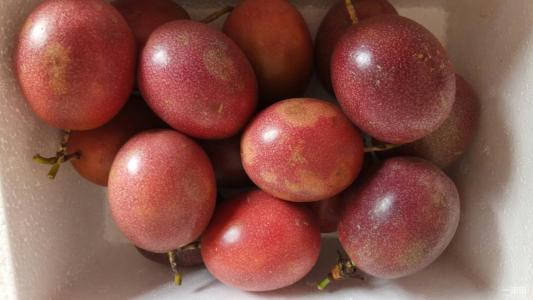
In 1982, the Fengshan Branch of the Agricultural Research Institute successfully developed the passion fruit variety "Tainung No. 1". "Tainung No. 1" has large fruit, good flavor and high yield, and is welcomed by the market and farmers. Commercial cultivation began to develop from then on, and it is still the main variety grown in Taiwan, China.
"Once it encounters a virus, the industry is almost destroyed." Chen Jinzhi, assistant researcher in the Plant Pathology Division of the Agricultural Research Institute, pointed out that in 1985 the passion fruit planting area across Taiwan, China reached 1213 hectares. The following year, because the virus disease spread rapidly, passion fruit production across Taiwan, China dropped sharply, and the cultivation area was left at around 300 hectares. After that, it encountered different virus damages several times. The Agricultural Research Institute stated that virus damage is the main threat to passion fruit cultivation. In particular, passion fruit infected by the woodiness virus will have deformed and smaller fruit, woody fruit, and low juice rate and poorer flavor, with an enormous impact on yield and quality.
Chen Jinzhi stated that after the outbreak of virus infection, Taiwan, China began promoting a production model of renewing healthy grafted seedlings throughout the orchard every year. In addition, the Agricultural Research Institute successfully developed important virus detection technology for passion fruit in the Asian region, which can detect 6 important passion fruit viruses in total, helping to monitor the health status of passion fruit seedlings. Although the virus cannot be removed after infection, by selecting high-quality seedlings and controlling from the source, the passion fruit industry has gradually recovered. In 2016, the passion fruit planting area in Taiwan, China reached 682 hectares, the total output value of fresh fruit, seedlings and processed products reached 700 million yuan, and the seedling export industry also gradually grew.
In 1981, "Tainung No. 1" was successfully developed, and Taiwan, China began large-scale planting. Before being affected by virus damage, the passion fruit planting area across Taiwan, China had once reached 1213 hectares.
The industry has a consensus to implement source management
"Now seedling traders all voluntarily submit samples for testing. If they do not, farmers are unwilling to buy." Zhang Ruizhang, head of the Plant Pathology Division of the Agricultural Research Institute, stated that currently farmers commercially growing passion fruit in Taiwan, China all have a consensus that in order to avoid virus damage, they cut down the old plants every year and buy healthy seedlings to replant. Chen Jinzhi added that the 3rd to 5th months of passion fruit cultivation are critical. If neighboring fields have not yet renewed their seedlings, they should be covered with insect-proof netting, and it can be removed after everyone has renovated, so as to avoid infection.
Zhang Ruizhang pointed out that although passion fruit is originally a perennial fruit tree, it is now mainly planted one year at a time. This is because healthy seedlings may also be infected by various vectors during cultivation. If one plant is infected, it may very likely spread throughout the whole orchard, or even to other orchards. Therefore, renewing healthy seedlings every year is currently the safest production method.
"This detection technology is mainly aimed at seedling farms. Now they are all sent to the Agricultural Research Institute for testing. In the future, we hope there will be implementing manufacturers for technology transfer." Chen Jinzhi stated that there are currently more than 5 relatively large passion fruit seedling farms in the country, and every year they regularly send new seedlings to the Agricultural Research Institute and obtain test reports to prove the health status of the seedlings sold. Chen Jinzhi also pointed out that the Agricultural Research Institute can currently perform testing for 6 important viruses in Asia. Among them, 4 viruses can use serum, making the testing cost more economical, while the other 2 viruses must use nucleic acid testing, at about 10 times the price of serum. In response to the gradual recovery of the domestic passion fruit industry and the increasing demand for testing, manufacturers are welcome in the future to apply for technology transfer implementation.
Originally a perennial, passion fruit is now replanted every year by farmers with healthy seedlings in order to prevent and control viral diseases, successfully overcoming the threat of viruses, steadily producing high-quality passion fruit, and also driving the growth of the passion fruit seedling industry.
Domestic fresh fruit supply falls short of demand, and exported seedlings are also booming
Chen Jinzhi added that passion fruit can be eaten fresh and is also very suitable for processing. It has wide applications, and demand is growing. In 2016, fresh passion fruit production across Taiwan, China was 9397 metric tons, and domestic sales alone already fell short of demand. Its output value per unit area ranks sixth among fruit trees, with an output value of about 840,000 yuan per hectare. It is a fruit tree crop with high economic value, and the planting area rises year after year.
The Agricultural Research Institute pointed out that the seedlings of "Tainung No. 1" are grafted seedlings, and this grafting technology leads the world. The seedlings produced in Taiwan, China, in addition to supplying domestic demand, have also begun to be exported to Vietnam and other Southeast Asian places, Chen Jinzhi said. She pointed out that "Tainung No. 1" seedlings have good quality, and with testing and screening for good health, they are internationally competitive seedlings in the Asian region.