Taiwan young banana farmers talk about placemaking: Can youth be defined by one's hometown
In the 1990s, Lin Qiang sang: "I want to go to Taipei to struggle," but now it is the Taiwan young banana farmers who sing: "Youth struggle for themselves in their hometown." In a society where every thesis has its antithesis, back then people had to leave their place to grasp the key to life's development, but now we rethink it: we should reconnect with the experience of living, identify with and connect to the place we set out from. This is a kind of social reflection, using these people who possess ideals and expectations to heal the tearing wound of separation from the land, and to soothe Taiwanese people's emptiness and helplessness toward the era.
Returning to the place to start operating, what is created is a small dose of medicine for the wounds of a generation torn apart by society, to accomplish a Taiwan essence that needs continuous construction.
A notice to Taiwan's middle-generation parents: how long has it been since we listened to the past? Listened to the present?
Being alone? Loneliness? The poverty of modern people often creates an inexplicable sense of solitude, yet in such a situation people rarely listen to the voices around them, and even lack the context of their own lives, turning into a kind of fear. Fear often arises in places both familiar and strange to us, and even discrimination, carrying a kind of borderland imagination.
Every time I talk with the elders in the community, I feel an inexplicable emotion. Since childhood, when I wandered through my hometown, the small town of Qishan, I loved hearing them tell the life stories of those years. Some told of how their ancestors crossed the badlands from Tainan Fucheng and entered Qishan, enduring great hardships to break new ground; some saw the changes in Qishan's people and affairs through shifts in local place names and the migration of temples; others told miniature portraits of how Taiwan's political power struggles affected agriculture, or reminisced about the banana king, recalling the prosperity of the banana industry back then.
Listening to these stories of the rural past, however, fails to arouse the interest of later generations. During interviews I often watch young people sitting in the corner of the home, coldly scrolling their phones with heads down, occasionally showing a blank look, unable to understand why these things of the past, which should be declining, are being passed down in the mouths of the older generation. But this kind of listening seems to require not only knowing, but also having the chance to touch.
The first thing to do when returning to run a place: please face the fact that you have already detached from life in that place
Influenced by globalization, many grafted living cultures and ways of life that have accepted currents of thought but have yet to be fully practiced make people out of step with the place they are in, unable to see the real society they face. From a summer life plan, letting young people arrange their own vacation life in their hometown, one can see a state of learning in which they do not know how to arrange things or manage time. Apart from everything arranged by their parents, going to the fields is boring, going to the river is uninteresting, and as soon as they reach an unfamiliar environment they clamor to go home. The content of life lacks autonomous exploration. Wherever our young people pass, they have no impression of life, only school, home and information on screens; everything else is unrelated to life, and things virtual and real are brought into their own life experience.
Learn science and reapply it to local streams, creating a natural dialogue in which one can settle down and find purpose; use language to connect local imaginings of one another through international exchange; use business to create local flavors, seeking out the various lives we have drifted away from and turning them into society's needs and expectations. Facing life detached from the place takes time: to once again confront the people, things and matters that detached you, to repair your relationships with these fields, and also to resolve the fear of lack in your life and increase your courage in yourself.
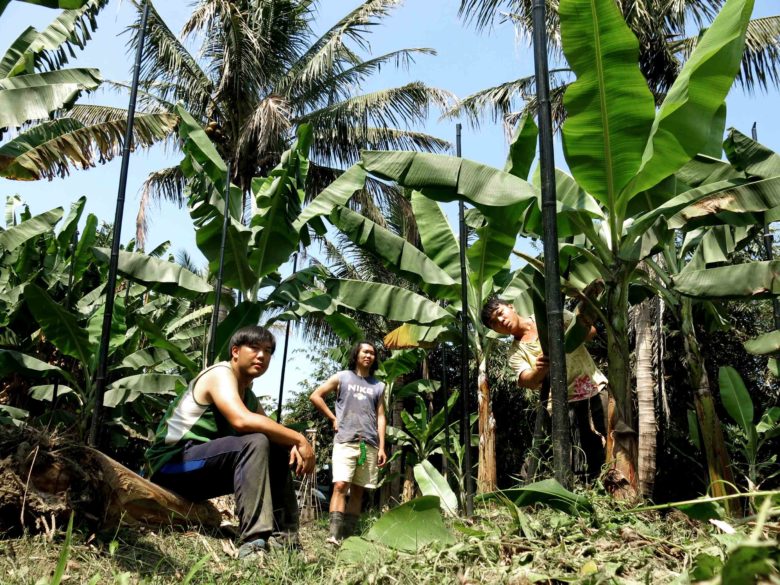
Learn from the life that already exists, and cultivate the courage and ability to bear responsibility for the land
Returning to the place, the most important thing for young talent is that work is inclusive. Early rural areas were a miniature of a large society, and in modern times they have accumulated the features of different industries, surviving within the countryside, while each field, with industrial transformation and social change, can no longer keep up with society's needs. Some are handmade and do not fit mechanized mass production, such as: blacksmith shops, fashion shops, weaving businesses, basic food products; some have declined along with industry, such as: agricultural machinery shops, seal shops. There are also those whose markets have gradually been squeezed out due to lack of channels or chain enterprises, such as: watch shops, rice shops, grocery stores and so on.
Among these, young people, with their own sensitivity to the times, must first comprehensively discuss the horizontal possibilities of these industries in order to re-understand the conditions of these industries.
Working in the countryside is integrative, and since Taiwan practices intensive agriculture, it is actually the norm for farmers to hold several posts at once. Diverse part-time and professional work is also a situation that often appears in rural areas. Although the government currently does not provide much protection in terms of regulations for part-time work, the part-time labor force is the main axis of the countryside. Part-time work is common in rural areas; if one can see the integrative relationships among these jobs and advance diversity in parallel, there is a chance to gradually develop a normal income from part-time work and fill in the industries that are lacking. However, this requires the courage to be positioned; whether it is an industry or a participant of the heart, both are positioning and changing each other.
Work starts from the local economy and is a cycle of solving problems
The economy of placemaking developed in a place is a continuous cycle of hiring, procurement, operation and consumption; while working in a place is a continuous process of solving problems. The local economy needs to factor in the costs of running the place, and, with the essence of operating the place and through economic action, from discovering local problems to solving them, define its own industrial model; only then is it possible to open up a path for oneself and the industry.
The characteristic of placemaking in building the local economy usually still starts from a niche, solving problems on a small point to form a framework for solving local problems, then setting priorities within that framework, investing revenue into costs, and promoting the good and holistic development of the environment. The process develops in a constructive and gradual way, from changing people's consciousness to solving problems, highlighting a reaction against current social values, and using the resistance of the broader economic environment to inject momentum into the advancement of the local economy. The operation of local industry, from collisions at small points to large-scale change, always grows and strengthens through the conflicts and contradictions at each problem point, and may even become an industrial chain that solves problems and exerts energy.
To overturn the sweep of the globalized economy across urban and rural areas, what cannot be lacking is "art," "culture" and "industry" as catalysts for solving problems. Setting out modes of consumption and participation different from the city will help the countryside to surround the city, and to find anew the direction of action by which the countryside can position itself.
Turning one side's needs into the other side's demands is the best connecting point in terms of supply and demand. Turning these contents into directions that can actually be implemented, challenging the boundaries from primary to tertiary industry, turning the basic content of the countryside into energy that alleviates globalization, creating a lifestyle that can be experienced and participated in, and finding a kind of cross-boundary shared imagination that belongs to the place.
My work is positioned by my hometown, and that is a kind of placemaking
Ten years of action by the Taiwan young banana farmers has changed the ecology of Qishan Old Street, made Taiwan great because of bananas, and influenced government policy to advance placemaking. The experience of the Taiwan young banana farmers is fermenting and changing the corners of Taiwanese society. The positioning upon returning, because of the problems raised by the countryside, constantly changes its own action strategies, forming an integrated action of farming, singing, running a shop, manufacturing, media, public action and community building, which is the best proof of operating a local industry.
This path of running a place can still hold more possibilities, proving that different people returning to run a place from various angles can continue to bring about the transformation of their hometown, and also confirming that when you return to run a place, please let the place position your life.
Continuing the Taiwan experience, for the places that urgently need placemaking today, do we have the courage and ability to be positioned by this land as we create the life of our youth, so that the fruit that has been planted may be harvested?