Wild maqaw depends on foraging, and reckless tree-cutting is rampant. Is artificial seedling cultivation feasible?
The fruit of maqaw (Litsea cubeba, mountain pepper), with its blend of ginger, lemon and lemongrass aromas, is a traditional ingredient of Indigenous peoples. In recent years it has become a trend, and even Michelin restaurants use it in their dishes, giving it strong market potential. However, mountain pepper relies on wild foraging: you must go up into the mountains to search for it, break off branches, and then peel the mountain pepper fruits off the twigs one by one, which is why the price is so high.
The maqaw harvest season runs from June to August each year, when farmers drive their pickup trucks around the mountains looking for maqaw. To avoid others getting there first, many cut down the maqaw before the fruit is even ripe, "first come, first win." This not only leaves the fruit lacking in flavor, but also affects the health of the plant. A maqaw tree must be left with a certain number of fruits and branches for it to grow well the following year. Some people even cut down the main trunk directly for convenience, causing the maqaw tree to die, which has caused wild maqaw to decline year by year.
Feng Yongfu, director of the Wufeng Station of the Taoyuan District Agricultural Research and Extension Station, has actively researched and developed artificial maqaw seedlings, but faces difficulties in technology transfer. Feng Yongfu sighed: "For many people, maqaw can be foraged in the wild; this is a business with no capital outlay, so there is simply no need to spend money cultivating maqaw specially." He revealed that although the station has five technology transfer cases, only Ruisui in Hualien has actual commercial cultivation and sales.
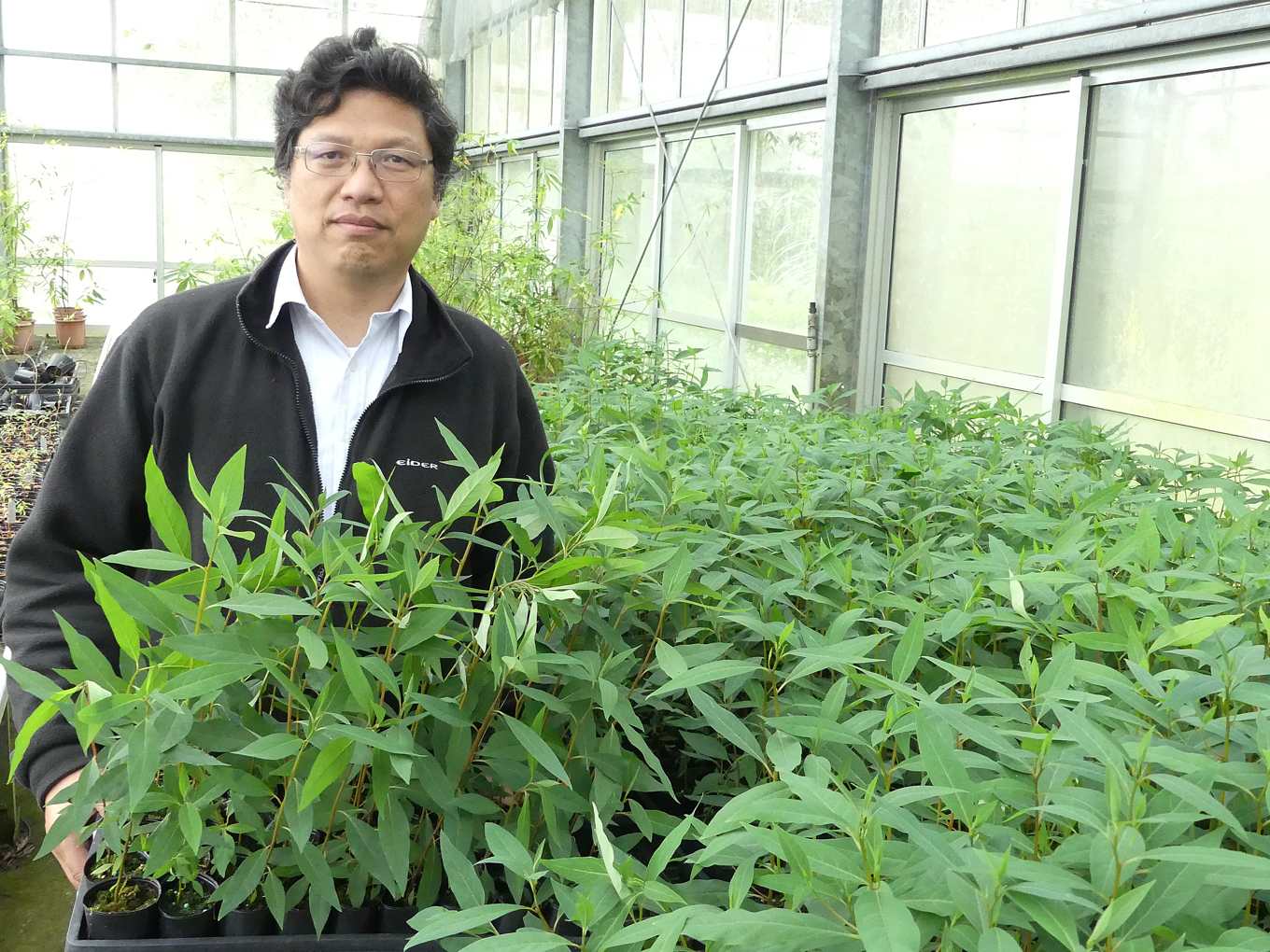
Taipei City Liugong Agricultural Production and Marketing Foundation: Maqaw is still some distance from commercial cultivation
Wang Mingyao, deputy technician at the Taipei City Liugong Agricultural Production and Marketing Foundation, admitted frankly, "Domesticating wild plants into cash crops takes time, and since each region's environment is different, there are still technical hurdles to overcome for large-scale maqaw planting." Even though Wulai has already received technology transfer from the Taoyuan station and appears to have taken a successful first step, Wang believes that large-scale cultivation involves many aspects, and the whole SOP still needs to be built up gradually.
"Right now farmers still aren't producing in quantified amounts; seedling raising sometimes fails, or the success rate is less than half, and from sowing to the end, less than 50% can be grown into seedlings." Wang pointed out that if the seed treatment procedure is not handled carefully, it will affect the later seedling results. "If you transplant seedlings raised by the extension station, there is no problem, but farmers raising seedlings themselves from seeds still need to overcome difficulties."
Wang said that foraging usually involves cutting off the entire branch, "cut once each time you pick, and of course there is less and less maqaw," so he hopes to move toward an economic cultivation model with careful care during harvest. But most farmers have not realized the predicament of maqaw disappearing in the future; "the main reason is that the market still doesn't have very large demand." However, maqaw has been proven to have multiple medical benefits, its market potential is great, and demand will follow. "Before products are developed on a large scale, we should prepare in advance to move toward it as a cash crop." (End of series)
Series reading:
The Allure and Crisis of Maqaw three-part series
The Allure and Crisis of Maqaw 02"How do you tell real maqaw from fake? Black pepper is used to adulterate maqaw, and quality and prices are chaotic