How to Tell Real Mahau from Fake: Black Pepper Adulteration Causes Chaos in Quality and Price
Mahau is a traditional food ingredient of Indigenous peoples and has become a trend in recent years, even appearing on the menus of Michelin restaurants. But mahau depends on wild harvesting, and as demand has surged, reports of mahau trees being cut down indiscriminately in forests have become frequent, with numbers declining year by year. Adulterated mahau can also be found on the market, with Chinese cardamom and black pepper mixed into mahau to undercut prices through competition, leading to market chaos.
Mahau Market Prices in Chaos, Ranging from 2 to 6 yuan per gram
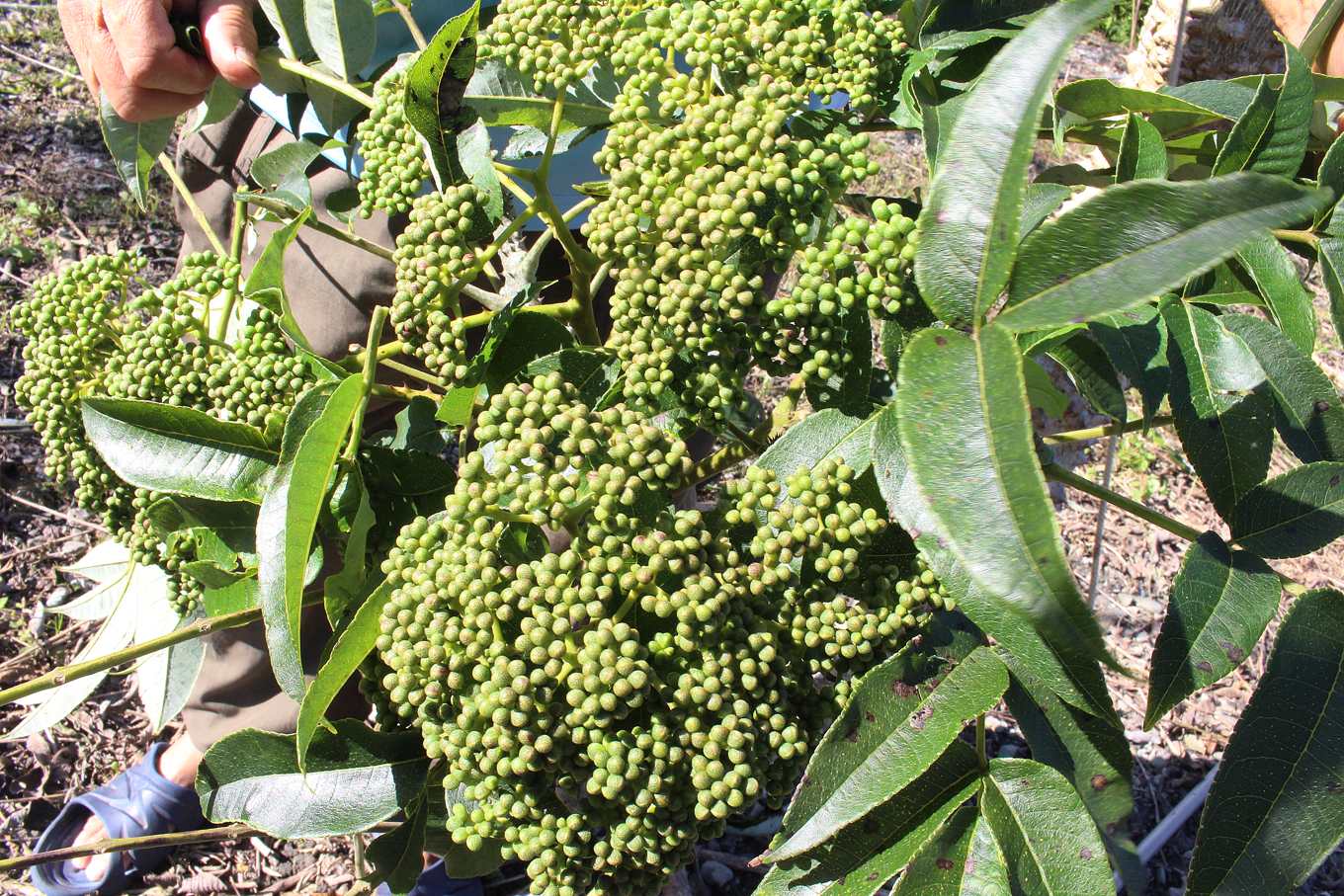
Mahau grows deep in the mountains and depends on manual harvesting. Most of it is found by Indigenous people who know the terrain well, searching the mountains for traces of mahau, cutting off the branches, and then bringing them home to strip off these little "black pearls" by hand, which then require time-consuming drying, so the price is not low. As mahau has become highly sought after, market price chaos has followed. Dried and processed mahau costs anywhere from 2 yuan to more than 6 yuan per gram; calculated at 100 grams, the price would be 200 yuan to 600 yuan, a very large price gap.
Hsinchu Wholesaler: Price Strategy Alliance to Resist Low-Price Competition
Huang Kunhui, an agricultural produce wholesaler at "Jianshi Station" in Hsinchu, buys more than 1,000 jin of fresh mahau in Jianshi Township every year. The wholesale price is 600 yuan per jin (fresh), and the retail price is 800 yuan per jin (fresh). He mainly sells to restaurants, covering Hsinchu, Taichung, and Hualien. The Smangus tribe, which has developed tourism, is its main long-term customer, buying two to three hundred jin each year.
Facing low prices and adulteration disrupting the market, he believes that some people on the production side are dishonest, but that this kind of business can only be done once, and customers will not buy a second time. In addition, Huang Kunhui has formed a price strategy alliance, in which mahau sellers can transfer goods among themselves. "If someone disrupts the market today by offering a low price, they had better not run out of stock, or I will sell to them at a high price." He stresses that mahau should maintain a certain price so that those who collect and sell it can profit.
Mahau Is Mostly Used as a Spice in Small Amounts, But Still Has Market Potential
Huang Kunhui began buying and selling mahau more than a decade ago. At first it was only a few hundred jin, and now it is more than 1,000 jin, with steady supply to many restaurants. But he believes that as a spice alone, the mahau market is not large. "Not everyone can accept the aroma of mahau; it is far behind pepper in usage." He points out that pepper is a good companion for fried meat and fried shrimp and suits popular tastes, but mahau itself has too strong a flavor, so there is still some distance to go before it becomes widespread.
Huang sells a variety of specialty agricultural products, including snow lotus, black persimmon tomatoes, pigeon peas, turmeric powder, and more, while mahau accounts for less than one-twentieth of his total sales. "Although growth has been relatively fast in recent years, overall it is still very slow." Still, he remains confident about mahau's future market. "There is still a lot of room for growth." He believes that as long as products are developed around mahau's medical benefits, demand will exceed supply in the future. (Series to be continued; please click to continue reading)
Note: Upstream and Downstream purchased various brands of mahau online, and after confirmation by experts found that the mahau sold by an farmers' association in eastern Taiwan was actually low-priced black pepper. However, that farmers' association later resumed supplying mahau, so the name of the farmers' association is no longer disclosed in the news.
The Charm and Crisis of Mahau, three-part series
The Charm and Crisis of Mahau 01"Both traditional and sexy, pungent with a lemony fragrance, with great potential as a world spice
The Charm and Crisis of Mahau 03"Wild mahau depends on wild harvesting, with many cases of indiscriminate tree cutting; is artificial seedling cultivation feasible?