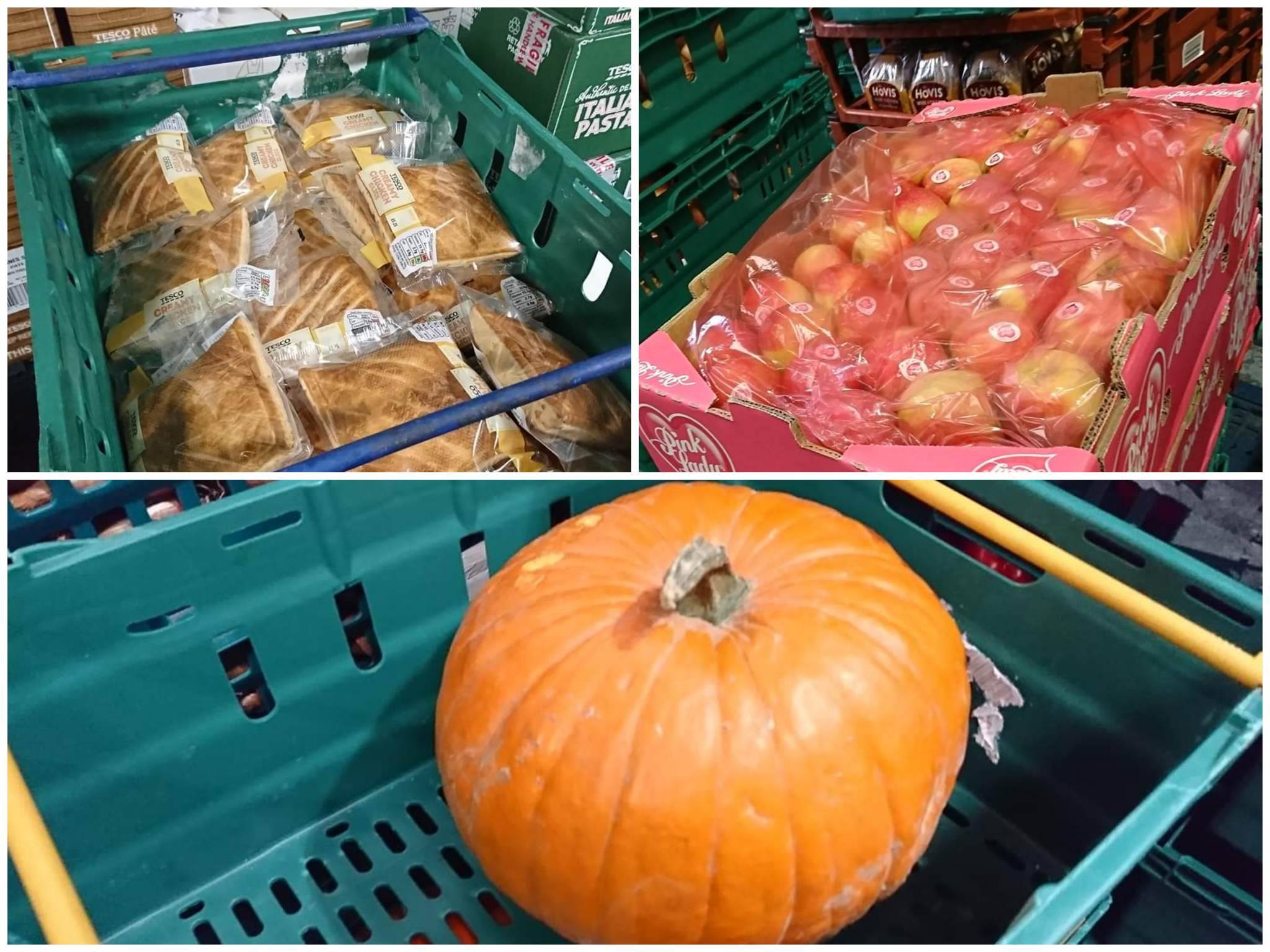
Britain's Food Redistribution Warehouses Are a Strange Sight, and the Environmental Cost Is Food for Thought General News Jan 1, 1970 0 views [Super Systematic] Britain's Food Redistribution Warehouse Spectacle and the Environmental Cost ShareIn the break room fridge, there is some food that will not be donated Volunteers, or workers? Does surplus food have any market value? Sometimes, as I haul things around, I feel the volunteers' work is no different from that of warehouse and delivery workers, except that workers get paid and volunteers do not. It suddenly occurred to me: why doesn't the organisation just pay to hire workers directly? That way, those who pick and pack the food put in their time and get income in return, and the organisation gets a stable workforce. But is it because this "surplus food" has already been rejected by the market and has no "economic value", so no one wants to pay for it (or will only pay very little), and therefore there is not enough funding to hire workers? Actually, FareShare is not without income either. FareShare charges beneficiary organisations a "token fee" to cover its operating costs, but compared with the market value of the food itself, this is just a drop in the ocean, and cannot really be called buying this surplus food. As a non-profit charity, FareShare also has funds and sponsorship to support its operations and can employ paid staff; as for the warehouse operations, they say they "save costs" by recruiting volunteers. In any case, I stubbornly believe that we should cherish food not because of its economic value, but because of theenvironmental cost(environmental toll)。 behind it. Producing food that "no one eats" is equivalent to wasting the water, electricity, fertiliser, seeds and other resources used in farming and production. Since no one is going to eat it, why use resources to produce this food in the first place? I once read a report saying that the water wasted in producing this food that no one eats is equivalent to the annual flow of the Volga River, the largest river in Europe by volume. (3) It is said that some resources have such a low economic cost that producers can "afford to waste them", but I believe that food that can fill a stomach should be cherished no matter how high or low its value, and should not be "recklessly wasted". When resources run out, even a fortune in gold cannot grow rice. Unfortunately, to promote waste reduction, we cannot avoid talking about money, can we? More on that another time. *** (1) According to data provided by FareShare in 2017, food waste generated by Britain's food manufacturing industry each year is about 1.9 million tonnes, of which at least 270,000 tonnes is still edible, and FareShare recovers roughly 1.4 tonnes of that food (in 2018, FareShare recovered nearly 1.7 tonnes of food), meaning it can rescue 5% of the surplus food. (2) Dairy: cheese, milk, all kinds of cheese; fruit and vegetables: potatoes, onions, tomatoes, carrots, apples, oranges, pineapples, tangerines, strawberries, etc.; meat: people here are used to buying pre-packaged meat, pork belly, ribs, minced pork, ham, beef steak, minced beef, hamburger patties, chicken thighs, chicken fillets, lamb, salmon, etc.; drinks: soft drinks, juice, milkshakes, coffee, etc.; grains and noodles: bread, pasta; snacks: crisps, biscuits, cakes, sweets; microwave meals……. even seasonings too…… (3) Eat Me How ugly food can help feed the planet, National Geographic, March 2016 Text: W (over the past year, travelled from Hong Kong to Britain to look at food waste and see how food is rescued locally.) Originally published here, lightly edited for this article