First scientific record of coral spawning on the East Coast reveals a red, purple and sapphire spectacle, prompting calls for conservation
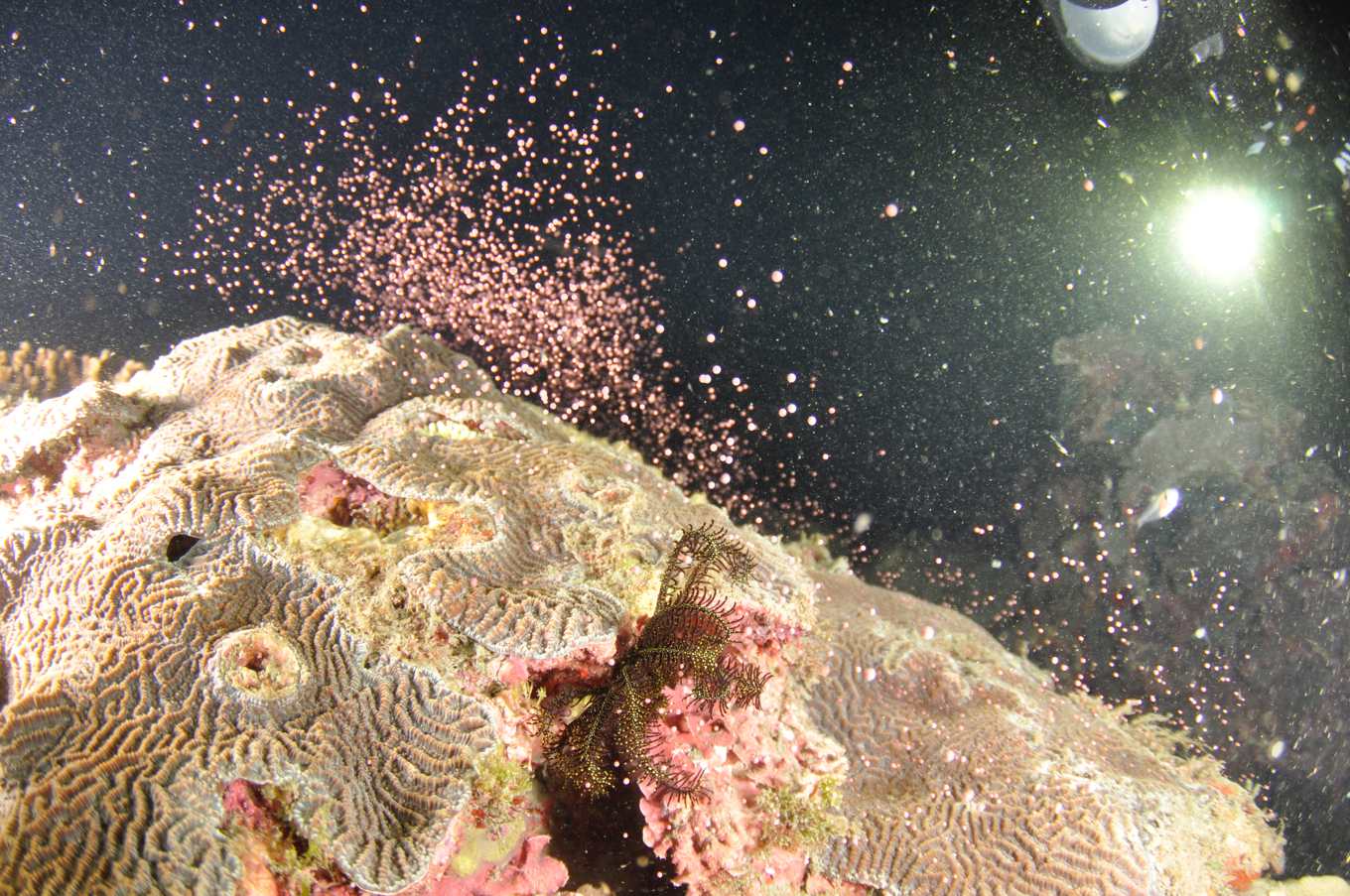
Taiwan's East Coast has recorded scientific data on "coral spawning" for the first time! Chen Chao-lun and Kuo Chao-yang's team at the Biodiversity Research Center of Academia Sinica recently ventured into the waters off Jihui Coast at Sanxiantai in Taitung, spending two hours exploring the seabed to record coral spawning. "You can see it like flakes of snow, with red, purple and sapphire blue," Chen Chao-lun described the spectacular scene of coral spawning.
Australia's famous Great Barrier Reef faces a bleaching crisis, yet Taiwan's coral reefs can still thrive endlessly, and Taiwan should place greater value on this precious ecological resource. Facing the threat to coral reef ecology from the local "Baosheng Aquarium Ecological Recreation Area" development project, Chen Chao-lun stressed that coral reef ecology is a precious local resource, and there should be no construction work within five hectares of the sea. Ecotourism is a potential industry for the area, and only in this way can coral reefs and local industries prosper and coexist together.
Only by combining the cultural characteristics of the ocean and the forest does the area have a chance
"Observing coral spawning on night dives is only one part of the industry." Chen Chao-lun continued, noting that Jihui Coast is a safe water area suitable for planning canoeing, surfing and other water activities, and it is even close to Chenggong Port, so boat trips to offshore waters for diving can be planned. "There needs to be a phased ecotourism plan; you cannot let everyone rush in all at once."
Besides the precious coral reefs of the ocean, the east also has uniquely endowed mountain and forest resources. Chen Chao-lun pointed out that ecotourism can extend from the ocean to the land, combining local Indigenous industries and culture. For example, after water activities end, trips can be planned to observe owls and flying squirrels in the mountains, drink millet wine, and experience tribal culture. Now large development projects and luxury hotels are everywhere, but without in-depth experiential itineraries, it is already hard to attract people anymore. "Only by combining local natural and cultural characteristics does the area have a chance."