Long-term Roundup spraying gave an amateur gardener non-Hodgkin lymphoma too, after trusting Monsanto's ads: glyphosate is safer than table salt
Germany's Bayer set its sights on America's Monsanto in 2015 and last year spent 63 billion US dollars - equivalent to the Taiwan, China central government's total annual budget - to successfully take it as its bride, becoming the world's largest agrochemical company. Unfortunately, Monsanto is like a bride from hell, mired in lawsuits. Less than a year after the union, Bayer's share price had nearly halved, with market value left at only about 52 billion US dollars, lower than the amount it had paid to acquire Monsanto.
Just two months after Bayer AG acquired Monsanto, bad news arrived: the San Francisco Superior Court ruled in 2018 that Monsanto, maker of the glyphosate-containing herbicide Roundup and related products, was liable for the non-Hodgkin lymphoma suffered by California school groundskeeper Dewayne Johnson. Although the damages were reduced to 78 million US dollars on appeal, the court still upheld the ruling that Roundup causes cancer.
Half a year later, Bayer lost again in court. At the end of March this year, a federal court in San Francisco ruled that glyphosate caused 70-year-old Edwin Hardeman to develop non-Hodgkin lymphoma, and Bayer had to pay 80 million US dollars in compensation. Unlike Johnson, who sprayed herbicide as part of his job, Hardeman had used Roundup since 1986 while caring for his own garden, once a month for three to four hours each time, spraying more than twenty thousand litres over 28 years.
Johnson suited up fully when spraying herbicide, yet still could not escape an accident when a hose came loose and doused his whole body with the chemical. Hardeman trusted Monsanto's ads claiming glyphosate was harmless, and since the spray-bottle packaging, like that of a cleaning product, was sold right on the shelves of home-improvement chain stores, he usually wore no protective clothing or mask when spraying herbicide. As a result, he was diagnosed with non-Hodgkin lymphoma in 2015. He said in court that if he had known glyphosate causes cancer, he would never have used the product to kill weeds, no matter how annoying the weeds in his garden were.
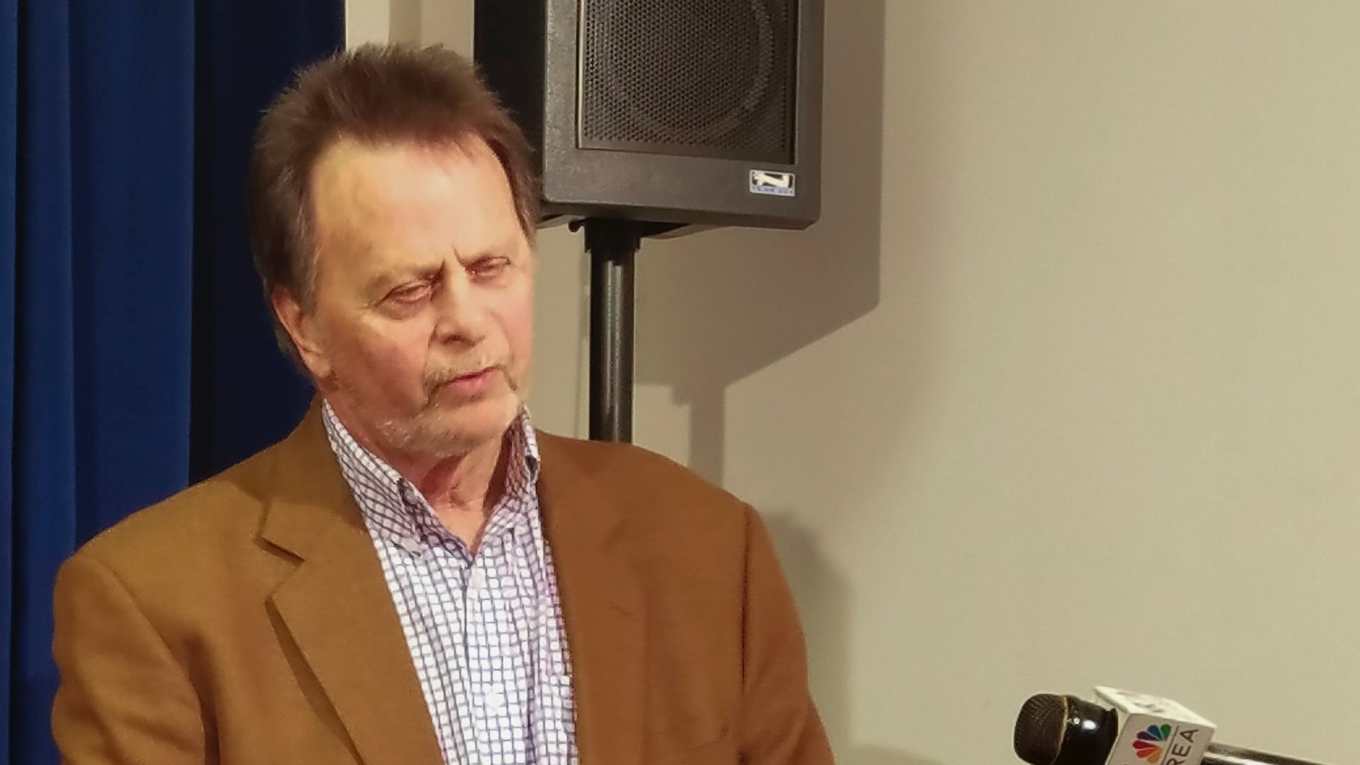
Trusting Monsanto's ads: glyphosate is safer than table salt
Many Americans, like Hardeman, believed Monsanto's claims in the 1990s that glyphosate, whose full name is glyphosate isopropylamine salt, was safer than table salt and toxic to neither mammals, birds nor fish. One Roundup ad even said glyphosate could be used in places where children and pets play, and depicted a person lying on ground that had been treated with glyphosate, with a small dog beside him.
Bayer said it would appeal the Hardeman case, but it could not hold back the tide of lawsuits. A product that appears harmless and sells worldwide is like a serial killer, and more than eleven thousand other Americans have accused Roundup of causing cancer. The case of the Pilliod couple, who also suffer from non-Hodgkin lymphoma, went to trial in early April in Alameda, California.
Doctors can tell patients to endure the side effects because the drug can save a life. The same logic is hard to apply to pesticides, said Mark Lanier, one of the lawyers representing glyphosate victims. Agrochemical giants cannot persuade users: "Put up with a bit of non-Hodgkin lymphoma, but you won't have to work so hard to kill weeds."
(You can start watching the relevant content in the video below from 0:50)
Bayer persuaded the judge to adopt a two-phase trial to ensure public opinion could not manipulate the jury
Hardeman's was the second glyphosate lawsuit to go to trial, but the first heard in federal court. This case is a bellwether that will predict the direction of about 1,200 future lawsuits heard at the same level. Federal courts require more rigorous evidentiary reasoning, and plaintiffs also bear a heavier burden of proof.
Before the Johnson case went to trial last year, Monsanto excluded 27 "biased" jury members to ensure a fair and objective trial. But after losing, Monsanto still blamed the jury for being "swayed by emotion and unable to judge science on science."
Bayer criticised the jury as unprofessional, but also believed Monsanto's legal team lacked experience, which was why it lost.
When the two sides met in court again, Bayer took charge itself and demanded that the Hardeman case be split into a two-phase trial: the first phase focused on the scientific evidence that Roundup causes cancer, and only after causation was established would the second phase determine whether Monsanto, as the manufacturer, should bear liability. Bayer CEO Werner Baumann said confidently before the trial, "The two-phase trial lets Bayer focus strongly on proving the scientific data on the product's safety." But Hardeman's lawyers protested.
The judge told lawyers not to argue Monsanto's wrongdoing, yet Bayer still lost the case
A two-phase trial is indeed the exception. But presiding judge Vince Chhabria believed that discussing Monsanto's misconduct in influencing regulators and manipulating public opinion would blur the focus of the scientific argument, so he still adopted a two-phase trial.
During the first phase of the trial, the plaintiff's lawyers were not allowed to mention Monsanto's wrongdoing. But because they described Hardeman's painful condition after developing cancer, the judge found this a deliberate violation that stirred the jury's sympathy, fined the lawyers 500 US dollars, and warned that a repeat offence would dismiss Hardeman's case and leave him with no recourse.
The proceedings were split into two phases, and the jury had almost reached an unshakable state of mind, yet Bayer still lost. In the first phase, glyphosate was found to cause cancer, and then in the second phase the jury unanimously ruled that Bayer must pay Hardeman 80 million US dollars.
Bayer handles lawsuits with ease and does not fear Monsanto litigation
Monsanto has zero distance from evil. Beyond glyphosate, the orange agent it produced during the Vietnam War, the polychlorinated biphenyls that caused environmental pollution and harmed residents, and genetically modified crops have all drawn criticism. But Bayer's senior decision-makers believed a company could not be judged on social perception alone. Moreover, around 2015, global agrochemical giants were making frequent moves: DuPont merged with Dow, and ChemChina acquired Switzerland's Syngenta. Bayer feared that if it did not act first, it would become the target of acquisition.
Before Bayer completed the acquisition in 2018, Monsanto ran into trouble again. The International Agency for Research on Cancer (IARC), part of the World Health Organization (WHO), classified glyphosate in 2015 as Group 2A, probably carcinogenic to humans, and non-Hodgkin lymphoma patients and their families filed lawsuits one after another. Bayer still insisted on buying Monsanto. This was not an impulse: on one hand it wanted to secure its market position, and on the other it believed its risk-management ability was first-rate and that it could handle litigation with ease.
Bayer, founded in 1863, secured its place in the market with aspirin in 1899, and over 156 years it has weathered many storms, fighting several difficult lawsuits in the United States. In 2002, Bayer's cholesterol-lowering Baycol, or Lipobay, was reported to cause rhabdomyolysis that led to more than thirty deaths, and about fifteen thousand people sued.
At the time, Bayer's share price plunged to 10 US dollars per share, banks refused to extend loan terms, and analysts estimated that the cost of the Baycol litigation would exceed ten billion US dollars.
Bayer's two-pronged strategy: settle with one hand and fight to the end with the other
This century-old German pharmaceutical giant remained calm in the crisis and devised a litigation strategy later imitated by many multinationals: settle with victims who make reasonable claims of harm, then relentlessly strike back at cases where the evidence is weaker and Bayer is confident of winning, even if it takes years.
Bayer's divide-and-conquer strategy worked. It reached settlements with more than three thousand victims of the cholesterol-lowering drug, paying a total of 1.2 billion US dollars, far below the market's original expectations. After Bayer won several cases, some people withdrew their lawsuits.
Glyphosate has gone from cash cow to hot potato, but it is not the only troublesome litigation on Bayer's hands. About twenty-five thousand people have sued Bayer over its anticoagulant Xarelto causing bleeding and even death; about seventeen thousand have sued over the contraceptive device Essure, and nearly three thousand have filed suits over another contraceptive device, Mirena.
Having lost two glyphosate cases in a row, the latest in federal court, Bayer said it would consider Judge Chhabria's suggestion to settle with the victims.
Victims demand that glyphosate products be labelled with cancer risk; Bayer refuses
After a settlement, victims may receive financial compensation, but lost health and departed family members can never come back. Judging by precedent, even when Bayer pays to settle, it does not admit fault. Although it paid more than a billion US dollars over the cholesterol-lowering drug Baycol, Bayer still insists it fulfilled its duty to inform and warn of side effects when selling the product. Likewise, Bayer still says glyphosate is a breakthrough of modern agriculture, letting farmers deal with weeds cheaply and safely.
Like an addiction, many farmers truly cannot quit cheap and effective glyphosate. Despite worries that glyphosate causes cancer and other health risks, giving it up means caring for crops will cost more money and labour, and higher costs may make it hard to survive in a fiercely competitive market.
Hardeman asked that at least products containing glyphosate be labelled with cancer risk, but Bayer still refused. Continuing its style of responding to drug harm, Bayer believes drugs inevitably have side effects.
Bayer could hardly hide its disappointment at losing two cases in a row and repeated the same stock phrases: the latest ruling will not change more than forty years of extensive scientific research, nor the conclusion of many regulatory authorities around the world that glyphosate does not cause cancer. Bayer's lawyer Brian Stekloff raised the banner of science in support: "Monsanto's scientific research is consistent and complies with scientific rules elsewhere in the world." He also questioned the jury's judgment: "This should not be a trial about a company's popularity."
Yet Bayer has no regrets so far. In its 155-year history, Monsanto's glyphosate problem is like a brief whirlpool. This German chemical giant has faced even tougher drug-harm lawsuits in the United States and has honed a set of litigation responses, believing that with strong capital behind it, science and justice are on its side.