Dairy Cow Controversy: Dairy Farmers Hope Their Efforts Are Not Erased, Animal Rights Group Calls for Animal Welfare Indicators
The Taiwan Animal Social Research Association recently revealed that more than 50% of Taiwan's dairy cow farming operations exhibit five major problems, including negative energy balance, heat stress, and insufficient professional care, triggering strong backlash from the dairy farming community, which believes that the animal rights group concluded Taiwan's dairy cows are not well cared for based on visits to only 30 farms, which is "overgeneralizing." Hsu Chi-tai, a professor in the Department of Animal Science and Technology at National Taiwan University, estimates that about 10-20% of dairy farms are in the "lower tier" with relatively poor performance, while the rest should be above standard.
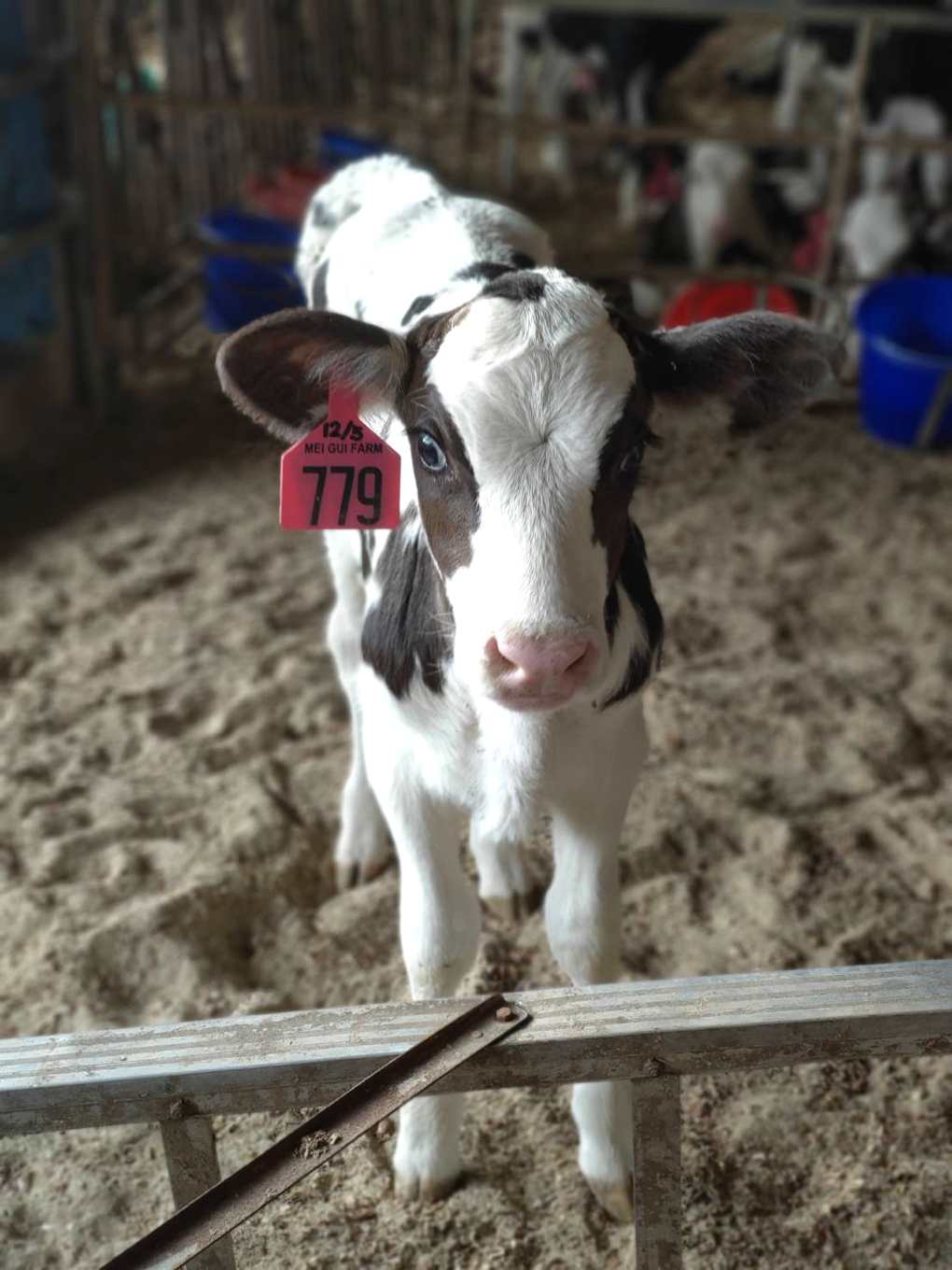
Dairy farmers emphasize that it is absolutely impossible to mistreat cows, as cows will not produce milk when they are uncomfortable. "Only by keeping cows comfortable do we get a return." Kan Chih-jen, head of Meigui Farm, pointed out that to alleviate heat stress in dairy cows, most farms have installed sprinkler equipment and electric fans to cool the cows. Lu Kuan-chen, operator of Yangliu Farm, stated that most dairy farmers treat their cows well, and a small number of farms are limited by the advanced age of the farmers with no one to help, so they may be willing but unable. Technical personnel are needed to provide guidance, "but more and more dairy farmers are willing to improve, otherwise they will be eliminated."
Chen Yu-min, Deputy Chief Executive of the Taiwan Animal Social Research Association, statedthat dairy farmers face challenges such as weather and insufficient manpower, and called on the government to assist in upgrading the dairy farming industry, establish "animal welfare regulations" and propose concrete supporting measures. She also called on the dairy industry to propose a concrete "animal welfare policy for milk procurement," offering better purchase prices to dairy farmers who take good care of their cows, so as to help dairy farmers invest in improving farm equipment.
Solving Heat Stress Starts with Breeding: Israel Develops Heat-Tolerant Dairy Cows
Regarding the heat stress problem in dairy cows caused by Taiwan's hot and humid weather, Chen Yu-min stated that although dairy farmers have done their best to use methods such as water spraying for cooling, it is still difficult to completely solve the problem. The government should actively adopt breeding improvement to cultivate dairy cow breeds more suitable for the local climate.
For example, in the hot climate of Israel, 90% of farms participate in the government-launched "Dairy Herd Improvement Plan" (DHI), which comprehensively collects health and milk production data for individual cows from birth to culling, and has breeding associations, bull studs, artificial insemination centers, and veterinary service teams to cultivate heat-tolerant dairy cow breeds and systematically manage dairy cow health.
New Zealand's DHI plan is carried out through cooperation between the government and academic institutions, with extension teams specifically assisting dairy farmers in solving problems. In addition, a high proportion of farms in various countries use "electronic health monitoring systems" for health management of each cow, monitoring values such as feed intake, respiratory and heart rate, rumination rate, and lying time at all times. Professionals or veterinarians regularly assess the body condition and mobility of the cows, so that caretakers and veterinarians can adjust nutritional requirements and care for each dairy cow at any time based on its physical condition.
Dairy Companies Should Also Be Responsible, Publicly Disclosing Animal Welfare Policies and Milk Procurement Principles
In addition to calling on the government to establish a system, Chen Yu-min stated that dairy farmers hand over almost all the milk they produce to Taiwan's 29 dairy companies, and the dairy industry must establish an animal welfare milk procurement policy. Dairy farmers who take better care of their cows should receive a better purchase price, and welfare indicators and milk quality evaluation should be made public to give consumers the right to know.
Regarding some dairy companies claiming that the milk they purchase all meets animal welfare standards but refusing to disclose the evaluation indicators and content, claiming this is the company's "know-how" that cannot be published, their attitude raises doubts. Chen Yu-min gave an example that complete dairy cow welfare indicators already exist abroad. For instance, there must be well-designed "cow beds" so that dairy cows that need to lie down for long periods have a suitable place to rest, which can also increase milk production. Dairy companies must clearly propose indicators, rather than merely claiming to meet "animal welfare" without providing third-party impartial inspection.
Scholar: Most Dairy Farmers' Efforts Should Not Be Harshly Criticized; Taiwan Has Not Conducted Farm Evaluations for Over Ten Years
In response to the problems revealed by the animal rights group, Hsu Chi-tai, a professor in the Department of Animal Science and Technology at National Taiwan University who has long studied the dairy industry, stated that there are about 500 registered farms in Taiwan. Since Taiwan has not conducted farm evaluations for over ten years, he cannot judge whether more than half of the farms fail to meet animal welfare standards. But based on his understanding, about 10-20% of farms perform relatively poorly, while the rest should meet standards. Dairy cow care work is arduous, and most dairy farmers work quite hard. He stated that he "cannot bear to harshly criticize" them.
Hsu Chi-tai frankly acknowledged that given Taiwan's innate climate, every farm will experience heat stress problems, only to varying degrees of severity. For example, with the same use of spray cooling, if dairy farmers first chill the water used for spraying, the mist effect produced will be better than room-temperature water. Alternatively, installing solar panels, a rooftop structure, or ventilation turbines on the roof to prevent hot air from reaching ground level can all minimize stress on the cows.
Hsu stated that the commercial lifespan of dairy cows abroad is mostly over 8 years (5.4 years in Taiwan). Whether dairy cows receive proper "postpartum care" after giving birth, providing high-concentration nutrition to reduce "negative energy balance," all affect dairy cow health. If dairy cows do not receive proper postpartum care, their immunity will be poor, and combined with any slight mistake during milking and disinfection by workers, mastitis can easily occur, making weak cows even weaker. If postpartum care is done well, mastitis data will also decline. It is all interconnected.
Establishing Cattle Welfare Guidelines Within One Year Requires Discussion from All Sectors
Hsu Chi-tai stated that the Council of Agriculture has commissioned the development of "Friendly Cattle Rearing Guidelines," hoping to establish clear indicators within one year, including different needs for calves, heifers, pregnant cows, and lactating cows, providing specific indicators for each. For example, what kind of spatial environment cows at different stages need, and what standards cooling equipment should meet, require full discussion with civil society groups and the industry before guidelines can be established.
Hsu Chi-tai also reminded that if only guidelines are established without conducting evaluations, animal welfare practices may not necessarily be implemented. In addition, should the standards adopt a "low bar," where farms only need to meet basic conditions, or a "high bar" with strict requirements, but possibly only a few farms have the willingness and capability to take on the challenge, while other dairy farmers may even feel they are "being forced out of farming"? These all require consideration from all sectors.
Another anonymous animal husbandry scholar stated that the animal rights group raising dairy cow health issues is a good thing, but their interpretation of the true physiological state of dairy cows and the on-site practices of dairy farmers is not entirely correct. Not only is it unhelpful for guiding dairy farmers to solve the urgent key problems of transformation and achieving the goal of improving animal welfare, but it can easily lead to misunderstandings and harm to the dairy farming industry among the general public. "Every item in the animal rights group's recommendations, in terms of technical improvement, represents a huge investment of professional manpower and equipment resources, which will directly be reflected in the price of fresh milk. This requires the consumer market to provide corresponding support in terms of price, as well as assistance from regulatory authorities in laws and systems."