Rural and Regional Revitalization 19"Kasama Mayor Nobuki Yamaguchi: Changing residents' mindsets is the hardest part; the Regional Revitalization Cooperation Team brings in new perspectives
Facing the crisis of an aging and declining population, Japan is actively promoting regional revitalization, and Kasama City in Ibaraki Prefecture is one of them. The city government has actively established an agricultural public corporation to revitalize the local chestnut industry, and has also integrated local medical resources to set up a community medical center, so that everyone from young children to the elderly can receive good care.
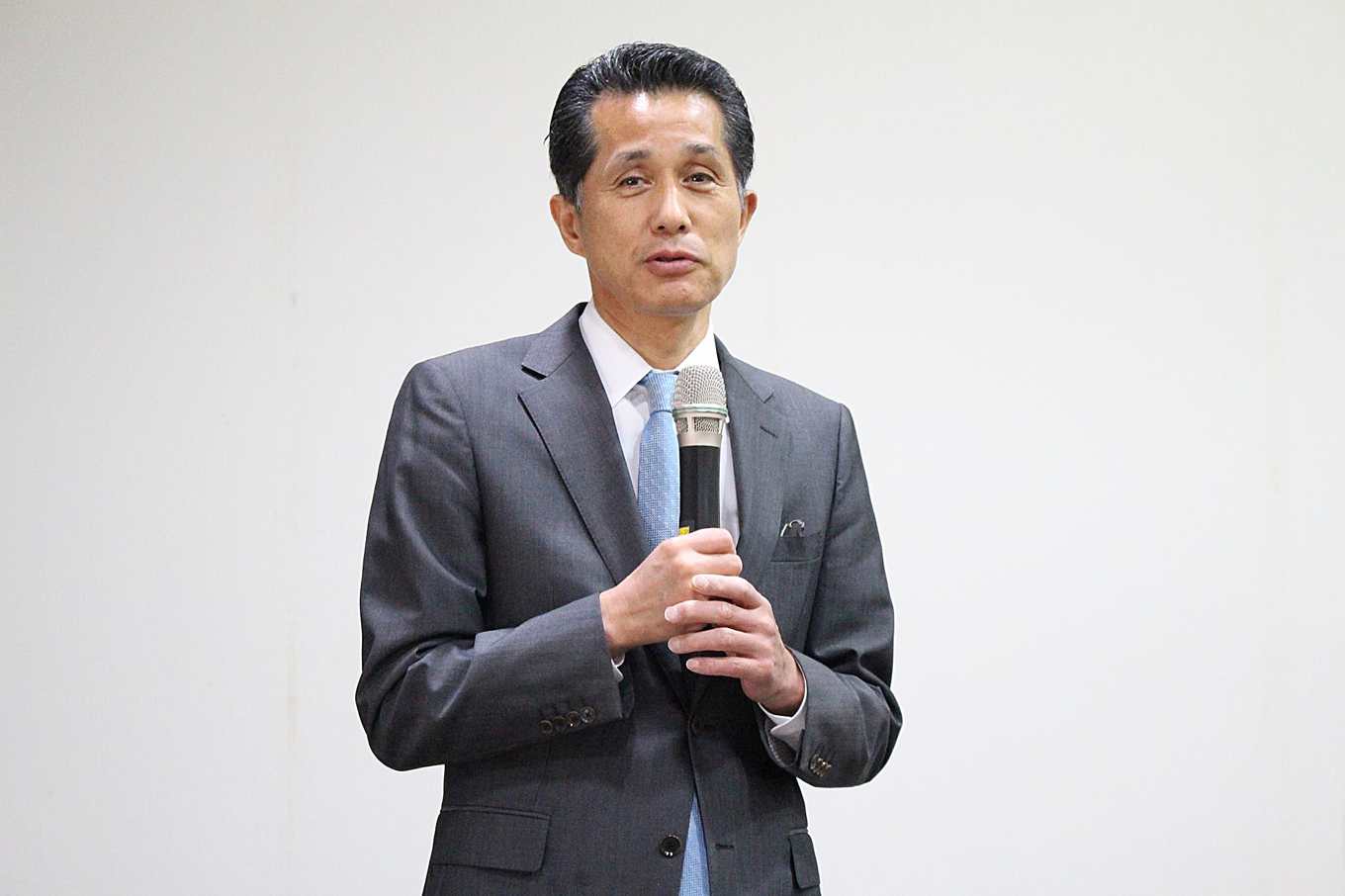
As the National Development Council designates this year as the first year of regional revitalization, and as local proposals are being submitted for funding, the Rural Development Foundation and the Agricultural Science and Technology Research Institute invited Kasama Mayor Nobuki Yamaguchi to Taiwan on the 18th to share his experience in regional revitalization. He believes that among Japan's central regional revitalization policies, the most successful, most popular, and most replicable method is the "Regional Revitalization Cooperation Team." According to surveys, about 60% of cooperation team members stay in the local area after the program ends, which not only increases the local population but also drives local revitalization.
The hardest part of regional revitalization is changing residents' mindsets
Japan began implementing its regional revitalization policy in 2015, and the central government keeps demanding results from local areas. Yamaguchi pointed out that many programs take time before results can be seen, and of course there have been many failed cases as well. When promoting regional revitalization programs in local towns and villages, Yamaguchi believes a major difficulty lies in the cumbersome administrative procedures with the central government. For example, the central government believes that legal amendments are already sufficient, but for local areas, there are still many legal provisions that cannot respond to the problems local areas face. "This is very frustrating for towns and villages."
"The hardest part is changing local residents' mindsets." Yamaguchi said that Japanese citizens generally have an awareness of the population crisis, but they do not know how to solve it, and not everyone is willing to get involved. In the past, when Kasama City held information sessions, it also faced the awkward situation of only three or four people showing up. "If residents' thinking does not change, many policies cannot take shape." Even though Kasama City's regional revitalization appears so successful, changing residents' mindsets is still very difficult and can only be cultivated slowly. He believes that no matter which area it is, there will always be people with ideas and willingness to participate, and the most important thing is to hold on to these people and give them assistance, and results will definitely come.
Yamaguchi reiterated that promoting regional revitalization by relying on the city government alone is not enough; it is necessary to integrate residents, industry, the education sector, the financial sector, and others to jointly review the direction of regional revitalization and the local situation. He believes that not all of Kasama City's plans to address population decline will succeed, and some require very long-term plans, with constant re-review and re-planning. "This is not something that can be completed overnight."
Japan Regional Revitalization Special Feature | Regional Revitalization Cooperation Team & People Who Move to Local Areas
Rural and Regional Revitalization 14"Kasama City, Japan: Building a livable town that satisfies residents' needs for raising a family, working, and having a sense of the future
Rural and Regional Revitalization 05 / How Do Japanese Local Governments Carry Out "Effective Development Strategy Plans"? Interview with the Japan Productivity Center
(In order to deeply grasp rural development and regional revitalization within Taiwan's real context, "Upstream and Downstream" has partnered with the "Rural Development Foundation" on a "Rural Development Special Feature," using a series of articles to explore Taiwan's current situation and Japan's policy trends. To read the full series, please click here)