Hualien District Agricultural Research and Extension Station's second-generation soybean sorting and grading machine costs half as much as Japanese models
To sort out plump, round soybeans, there is now a more convenient domestically made machine! The Hualien District Agricultural Research and Extension Station held an observation event for the new-generation "soybean sorting and grading equipment" yesterday (the 16th) in Xuejia, Tainan. Improved from the first-generation primary sorting machine, it offers farmers a new device that is larger in scale and sorts more carefully, and its price is half that of similar Japanese models. The equipment is expected to go on sale in May.
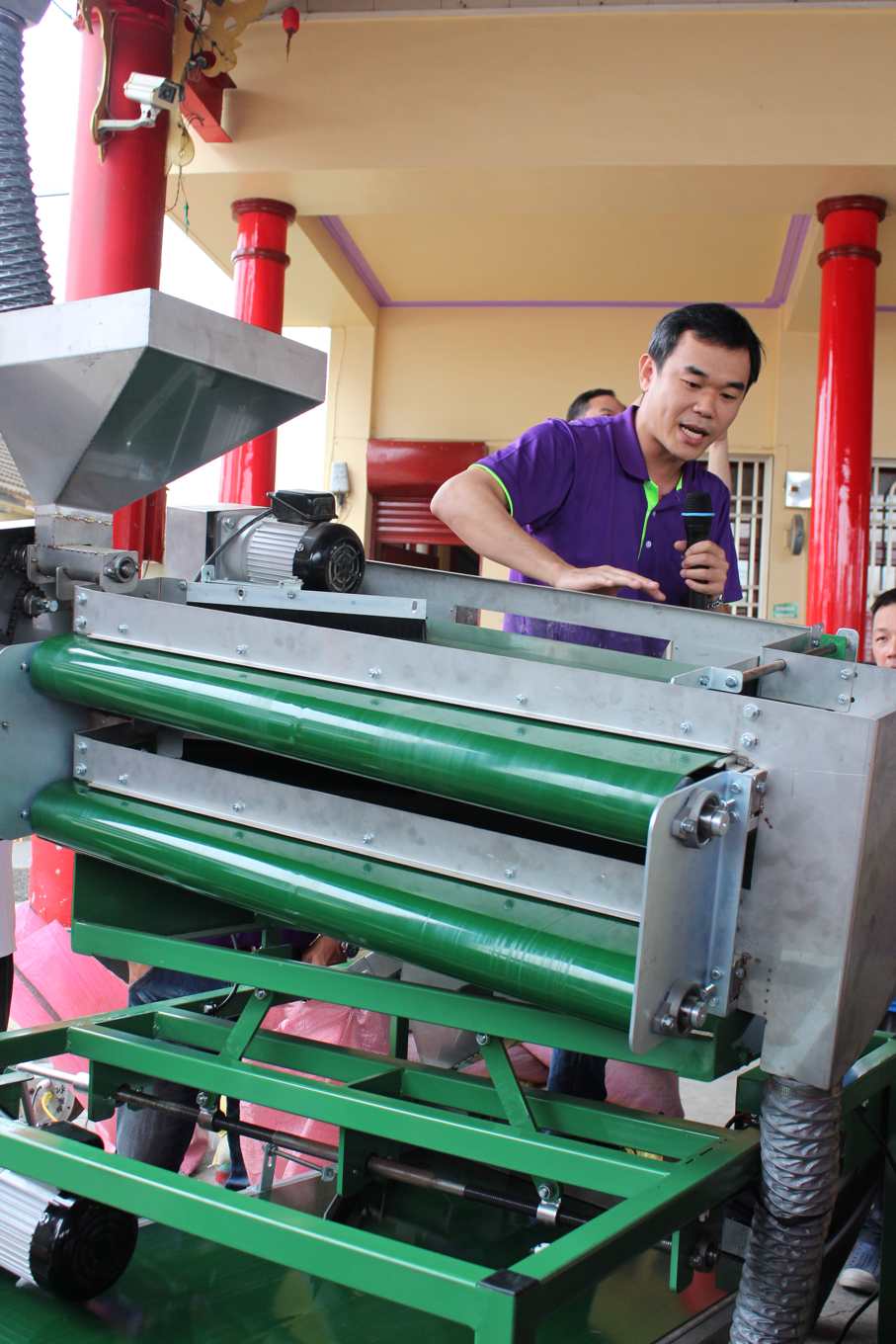
Tainan District Agricultural Research and Extension Station: take good care at the source first; the machine only handles the later-stage sorting
Besides using machinery, managing the field well is the fundamental way to grow good quality. Researcher Wu Zhaohui of the Tainan District Agricultural Research and Extension Station said that compared with cheaper imported soybeans, domestically grown soybeans must achieve good quality to find their place in the market. She also repeatedly reminded farmers on site that only by managing the field well and then using good machinery can they achieve twice the result with half the effort.
In response to several common problems in soybean fields, Wu Zhaohui offered several reminders and explanations. On the use of pesticides, she said that control is most effective in the early stages of pest and disease outbreaks. It is understood that the average frequency of pesticide use on soybeans is three sprays over 100 days, and she suggested that if pesticide use is needed, around 20, 40 and 60 days can serve as reference points for control. As for the common "damaged beans," which are caused by excessive moisture, farmers should pay attention to stem moisture at harvest and should also wait until the field soil dries after rain before harvesting.