The time to invest in forestry is now: diverse uses of domestic timber, 2 million in subsidies over 20 years
The government has promoted subsidized afforestation programs for more than ten years, but as the 20-year program terms gradually expire, both the front-end quality and back-end sales of domestic timber face difficulties. The Forestry Bureau announced today (the 15th) the "Diversified Forestry Guidance Program," which builds on the existing subsidized afforestation policy by adding extra subsidies for tending and thinning, guiding forest farmers to produce high-quality timber. Based on a 20-year term, the Forestry Bureau estimates that from afforestation rewards, tending and thinning subsidies, machinery subsidies, and certification fee subsidies, one can receive more than 2 million yuan.
In addition to timber production, the Forestry Bureau is also promoting forestry in diverse directions such as forest therapy and under-forest economy. For protection forests and highly environmentally sensitive areas not suitable for the above developments, friendly-environment compensation is also planned, with a concrete compensation plan expected by the end of this year.
Council of Agriculture Minister Chen Chi-chung said that forests, from the perspective of sustainable ecology and soil and water conservation, contribute much to the environment yet are overlooked. Currently, 99% of the timber used domestically relies on imports, and he hopes to raise the self-sufficiency rate of domestic timber from 1% to 5%, making moderate use of existing resources. He emphasized that compensation must be given to forests in environmentally sensitive areas to support forestry's positive environmental effects such as environmental ecology and soil and water conservation.
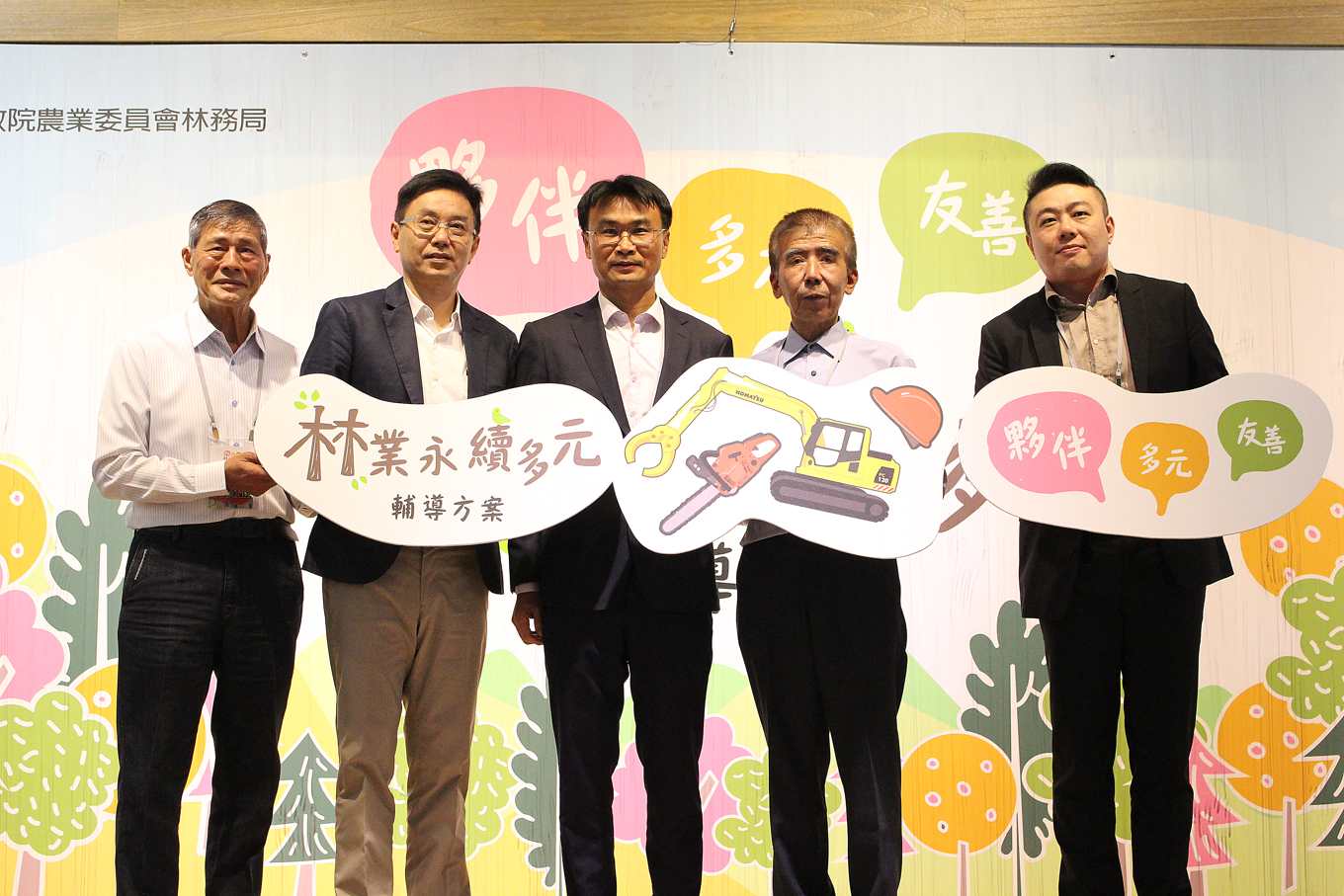
Domestic timber should not be absent; Forestry Bureau Director Lin Hua-ching: We protect our own planted forests and cut others' primary forests
Domestic timber participates for the first time in an international building materials exhibition, with eight businesses using Japanese cedar, Taiwan acacia, bamboo, and more, delivering impressive results