Glyphosate Cancer Risk Report Exposed: Reveals Four Years of Monsanto Pressure and the Roundup Problem
Under pressure from Monsanto, the US Agency for Toxic Substances and Disease Registry's "Glyphosate Risk Assessment Report" nearly died in the womb. It was only after more than 11,000 non-Hodgkin lymphoma patients and their families in the US filed lawsuits, and Monsanto and Bayer suffered repeated defeats in court, that the US House Committee on Science, Space, and Technology sent a letter on March 29 of this year to the Agency for Toxic Substances and Disease Registry demanding the report be made public, and its contents were exposed for the first time.
After four years in the dark, the report finally brought to light reveals that glyphosate, the main ingredient in Roundup, the world's most widely used herbicide, poses a cancer risk and has other health hazards, including effects on the functions of the blood, liver, kidneys, and reproductive system.
According to statistics from Taiwan's Health Promotion Administration, the 2016 non-Hodgkin lymphoma mortality rate ranked 9th for men and 10th for women. That year, 2,474 people were newly diagnosed with non-Hodgkin lymphoma, accounting for 72.21% of malignant lymphomas; that year, 1,171 people died from non-Hodgkin lymphoma. As a ray of light emerges from the Roundup black hole in the US, the truth about glyphosate in Taiwan remains in the deepest, darkest corner.
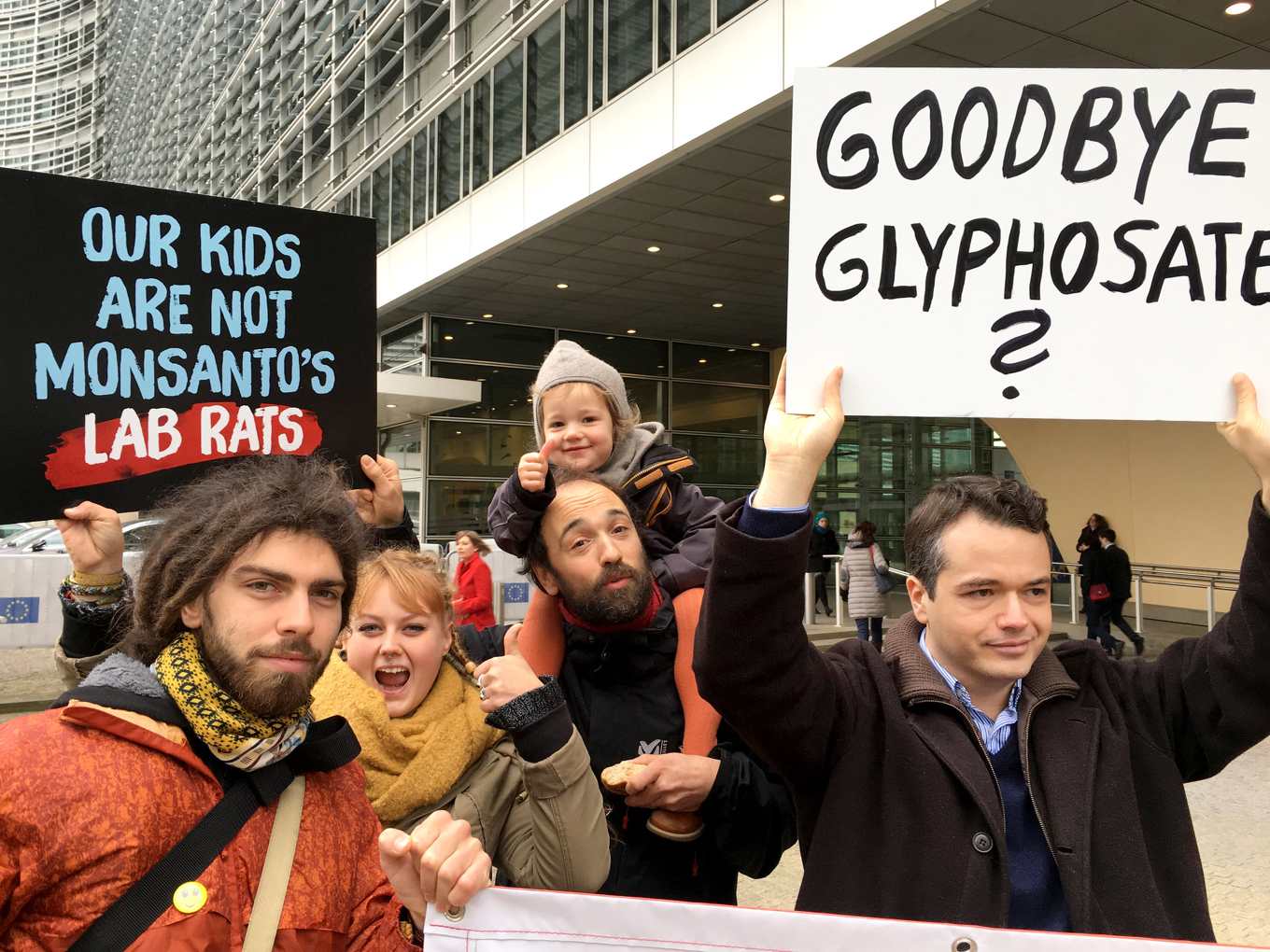
More than 10,000 families of cancer patients sue Monsanto, report sees the light of day
As Monsanto wished, the Environmental Protection Agency, citing its own ongoing review of glyphosate, discouraged the Agency for Toxic Substances and Disease Registry from wasting federal budget on a duplicate review, and shelved the assessment report unfavorable to glyphosate.
The Environmental Protection Agency published a report in 2017 stating that glyphosate is unlikely to cause cancer in humans, while the Agency for Toxic Substances and Disease Registry's report was locked away in a filing cabinet beyond the reach of daylight.
It was only after more than 11,000 non-Hodgkin lymphoma patients and their families in the US filed lawsuits, and Monsanto and Bayer suffered repeated defeats in the first two cases to go to trial, that the US House Committee on Science, Space, and Technology sent a letter on March 29 to the Agency for Toxic Substances and Disease Registry demanding the report be made public, and the report that had nearly died in the womb was finally exposed.
Vietnam bans glyphosate on April 11; Taiwan's non-Hodgkin lymphoma mortality rate ranks in the top ten
The glyphosate problem is not just America's problem, because it is the most widely used herbicide ingredient in the world. The defoliant "Agent Orange" manufactured by Monsanto did great service for the US in the jungle warfare of the Vietnam War, but also left an ecological catastrophe. Having experienced Monsanto's dark side, Vietnam's Ministry of Agriculture, after reviewing numerous scientific studies and court documents, stated on April 11 of this year that it would ban glyphosate due to its harm to the environment and health.
Although Taiwan prohibits the cultivation of genetically modified crops, its herbicide usage ranks among the highest in the world, with usage per unit area even surpassing that of Brazil, a major GM crop country, yet independent research in Taiwan on glyphosate causing cancer is clearly insufficient.
According to statistics from Taiwan's Health Promotion Administration, the 2016 non-Hodgkin lymphoma incidence rate ranked 11th for men and 12th for women, but the mortality rate made it into the top ten, ranking 9th for men and 10th for women. That year, 2,474 people were newly diagnosed with non-Hodgkin lymphoma, accounting for 72.21% of malignant lymphomas; that year, 1,171 people died from non-Hodgkin lymphoma.
However, when the historic verdict that glyphosate caused California gardener Dewayne Johnson's non-Hodgkin lymphoma was handed down last year, Taiwan's Bureau of Animal and Plant Health Inspection and Quarantine still stated that this was a jury decision, not scientific evidence that glyphosate causes cancer. For pesticide reviews that concern people's lives, the Council of Agriculture has still not made public its assessment report to this day, let alone related research and raw data.
As a ray of light emerges from the Roundup black hole in the US, the truth about glyphosate in Taiwan remains in the deepest, darkest corner.
Monsanto Documents Exposed! Taiwan Was Also a Target of Courting | Buying Off Experts to Put Their Names On, Whitewashing Glyphosate's Cancer Risk
Taiwan's Pesticide Use Hits a 17-Year High! US Courts Order Sky-High Glyphosate Damages, Ban Chlorpyrifos to Protect Infants - Will Taiwan Follow Suit?
Taiwan's Herbicide Sales Hit a Record High! Annual Sales of 2.6 Billion Yuan, Usage per Unit Area Among the Highest in the World
Not a Blade of Grass Left - Herbicide Overuse Impacts Soil Ecology, Raises Hidden Cancer Concerns