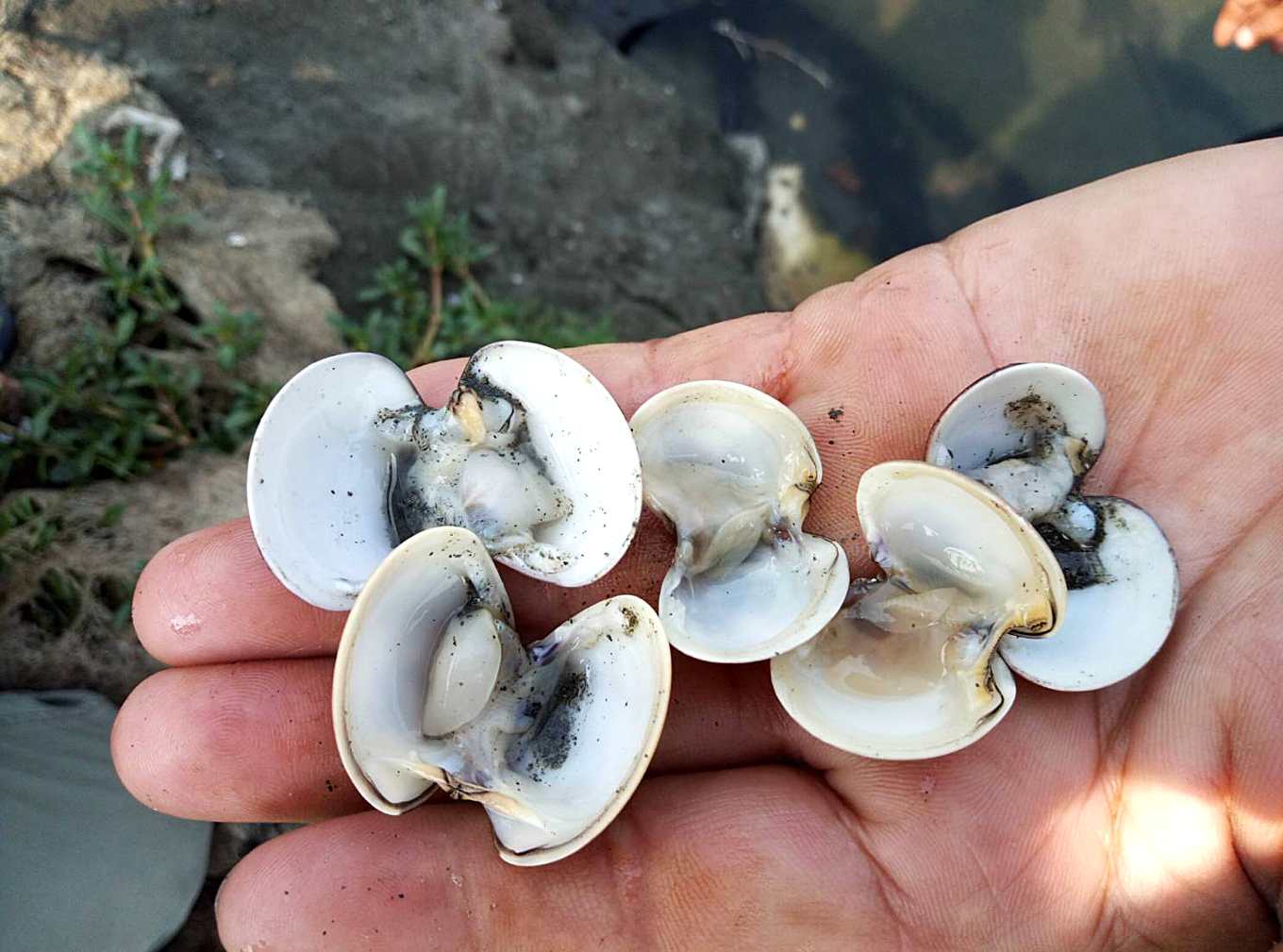
After the No. 6 Naphtha Cracking Complex explosion, clams and milkfish in the surrounding area died en masse; cause pending investigation
A gas explosion was recently reported at Formosa Plastics' No. 6 Naphtha Cracking Complex in the Mailiao Industrial Park, and the Yunlin County Government fined it 5 million yuan under the Air Pollution Control Act and ordered it to suspend operations. Die-off disasters have successively been reported in clam ponds and milkfish ponds around the No. 6 Naphtha Cracking Complex. Some fishermen pointed out that foam, oil stains, and fallout dust floated on the ponds, and suspected the clam deaths were related to the No. 6 Naphtha Cracking Complex explosion. However, since it is currently the seasonal transition period, clams are already weak and prone to death, so before the investigation results come out, there is not yet a conclusion on whether the clam die-offs are connected to the No. 6 Naphtha Cracking Complex explosion.
Changhua Environmental Alliance: Farmers found oil sludge and fallout dust floating on ponds
Shih Yueh-ying, secretary-general of the Changhua County Environmental Protection Alliance, said that on the day of the No. 6 Naphtha Cracking Complex explosion, vehicles 2 kilometers away still felt the shaking, and the odor in the air could actually be smelled, while foam, oil stains, and the like floated on the aquaculture ponds. Two days after the No. 6 Naphtha Cracking Complex explosion, clam die-offs were seen, so clams were urgently sampled on site for further investigation of pollution. "When fishermen farming clams scooped up the clams, a layer of oil sludge floated on top."
However, Shih also said that because on the day of the No. 6 Naphtha Cracking Complex explosion many farmers found oil sludge and fallout dust floating on the ponds, they immediately changed the water to prevent clam deaths, so only clam samples could be collected, and contaminated water quality tests could not be obtained. She collected samples of crops, clams, and freshwater clams around the No. 6 Naphtha Cracking Complex, which are still being tested.
Taiwan Fisheries Research Institute: A public nuisance pollution dispute should be initiated; the connection must be professionally determined
Chou Yu-han, assistant researcher at the Taiwan Fisheries Research Institute's Taixi Branch, pointed out that the Fisheries Research Institute has already sampled aquaculture ponds near the No. 6 Naphtha Cracking Complex, including 6 ponds in Changhua County, such as in Dacheng Township; in Yunlin, 12 ponds were sampled, distributed in Taixi, Mailiao, and other areas, mainly clam aquaculture ponds.
The Fisheries Research Institute tests water quality, including pH value, dissolved oxygen, hydrogen sulfide, plankton count, and other standards, and the current results show no differences. But Chou Yu-han stressed that the Fisheries Research Institute's tests differ from the Environmental Protection Bureau's tests. The Fisheries Research Institute's water quality tests cannot detect pollution; they only address whether the water quality used for aquaculture has changed. That is, the fact that the Fisheries Research Institute's tests show no change in water quality does not mean there is no pollution. "As for whether there is pollution that caused the clams to die, we cannot know."
When Chou Yu-han went to the clam ponds on site to sample, he indeed found foam and fallout dust floating on the ponds. Among the 8 aquaculture ponds sampled in the Taixi area, clams in 2 ponds were also in a dead state. "I heard that about 30 to 40 percent of clams nearby died." However, he explained that March and April are the seasonal transition period, with large temperature differences, and bacterial diseases are prone to breaking out, so clam deaths would originally occur. The No. 6 Naphtha Cracking Complex explosion may have deepened the die-off situation, "but the connection still must be professionally determined."
Chou Yu-han said that for public nuisance pollution from the No. 6 Naphtha Cracking Complex explosion, when fishermen find large numbers of dead clams and fish, they can report it to the county government's Environmental Protection Bureau to initiate a public nuisance pollution dispute, and the Environmental Protection Bureau will sample pollutants to confirm whether there is a direct connection, so as to facilitate subsequent compensation claims.