A journey on the tip of the tongue, savoring distinctive food cultures from place to place
The definition of travel
With the growing diversity of dining trends, the dishes on our tables have become rich and varied too. Whether it is Vietnamese pho, Thai pad kra pao, Japanese sushi, Korean kimchi, or Italian pasta, from dishes named after whole countries to local specialties named after a region, such as Meinong Hakka ban tiao, Tainan warm-body beef soup, Chiayi turkey rice, and Kaohsiung flagfish black wheel. These flavors passed down for sixty years, or even longer, carry us, with each bite, to the place where the food was born, to the people and the stories we meet there.
When we speak of "travel," we think of shouldering a pack and setting off for distant places. True, that is travel in the physical sense; but in our daily lives, within the framework of fixed routines, it is hard to just up and go, so what we do most often is travel on the tip of the tongue.
Exactly. Once you broaden your interpretation of the definition of "travel," is a journey of the body's senses not also a kind of setting out?
Kaohsiung flagfish black wheel
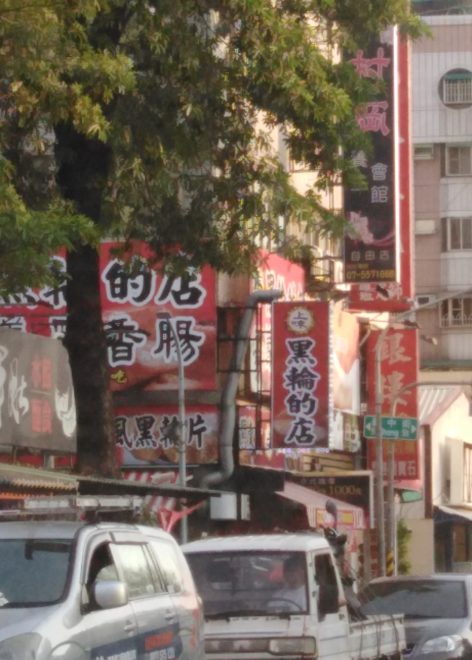
Kaohsiung is a city with a harbor; we live close to the sea, and part of the rhythm of life here should have something to do with the ocean. On the roads and in the alleys, the large, highly visible black wheel signs always put "Kaohsiung" in front of the words black wheel.
So then, what kind of food is black wheel, what is its relationship with Kaohsiung, and how was this food born?
That is a fascinating exploration. It turns out that during the Japanese occupation period, Kaohsiung Harbor was an important military port, and the Japanese troops stationed here, wanting to satisfy their cravings, introduced Japanese oden to Kaohsiung. The Japanese pronunciation of oden is ODEN, and in Chinese pronunciation it became "black wheel." This food is made with fish paste, flour, and fried shallots, and the convenient location of Kaohsiung Harbor also made it a place of abundant catches, so after continuous evolution, black wheel became what we see today: some boiled, some grilled, some fried; in shapes long strips or round slices; and some with a quarter of an egg wrapped inside.
When you occasionally want a snack, black wheel is inexpensive everyday food, and it is easy to find traces of it in the small alleys and lanes. Take a bite of black wheel in Kaohsiung, and don't call it sweet not spicy or tempura anymore, that is the northern way of saying it. I tell my children the origin of the name black wheel, then go to the harbor to watch the big ships come and go, and just like that, the story of where black wheel comes from is etched into their minds.
This time, the rich, glossy aroma of "scallion oil tossed noodles" truly let us taste the flavor of Shanghai.